
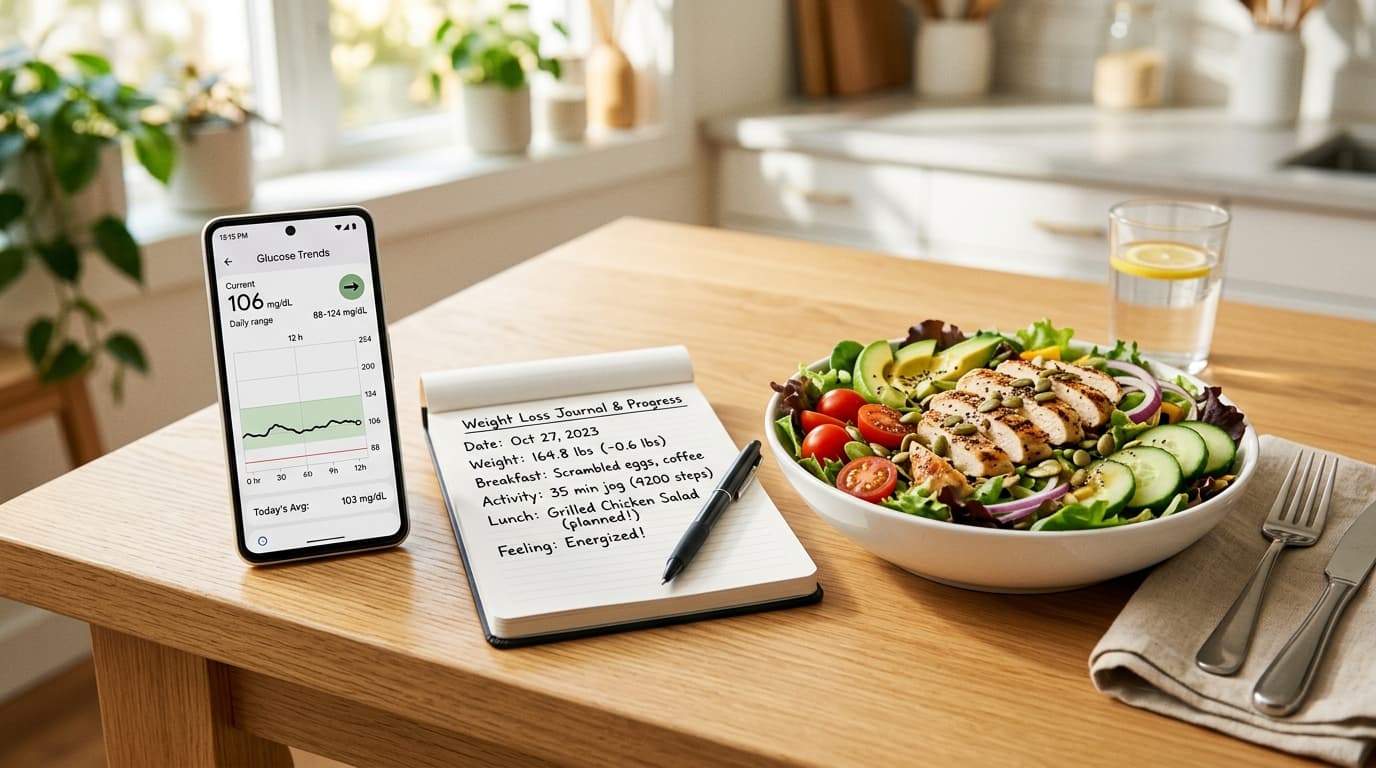
CGM for Weight Loss: 4.1 kg Average Loss in Clinical Trials
Clinical research shows CGM users lose 4.1 kg versus 1.8 kg with standard diets. How real-time glucose data drives food awareness, insulin optimization, and sustainable fat loss.
The Glucose-Insulin-Fat Storage Connection
Weight gain and weight loss are ultimately governed by energy balance, but the hormonal environment — particularly insulin — determines how efficiently the body stores or burns fat. When you eat carbohydrates, blood sugar rises and the pancreas releases insulin to shuttle glucose into cells. A modest glucose rise triggers a proportional insulin response, and the body efficiently processes the fuel. A large glucose spike, however, triggers an outsized insulin surge that not only clears glucose from the blood but actively promotes fat storage and suppresses fat oxidation. This is why two meals with identical calorie counts can have dramatically different metabolic effects: a balanced plate of salmon, vegetables, and quinoa might raise glucose by 25 mg/dL, while a bowl of white pasta with marinara might spike glucose by 80 mg/dL — producing 3 times the insulin response and shifting the body toward storage rather than burning. A continuous glucose monitor makes this invisible metabolic process visible in real time, allowing you to identify which specific foods in your diet trigger the largest insulin surges and replace them with lower-spike alternatives.
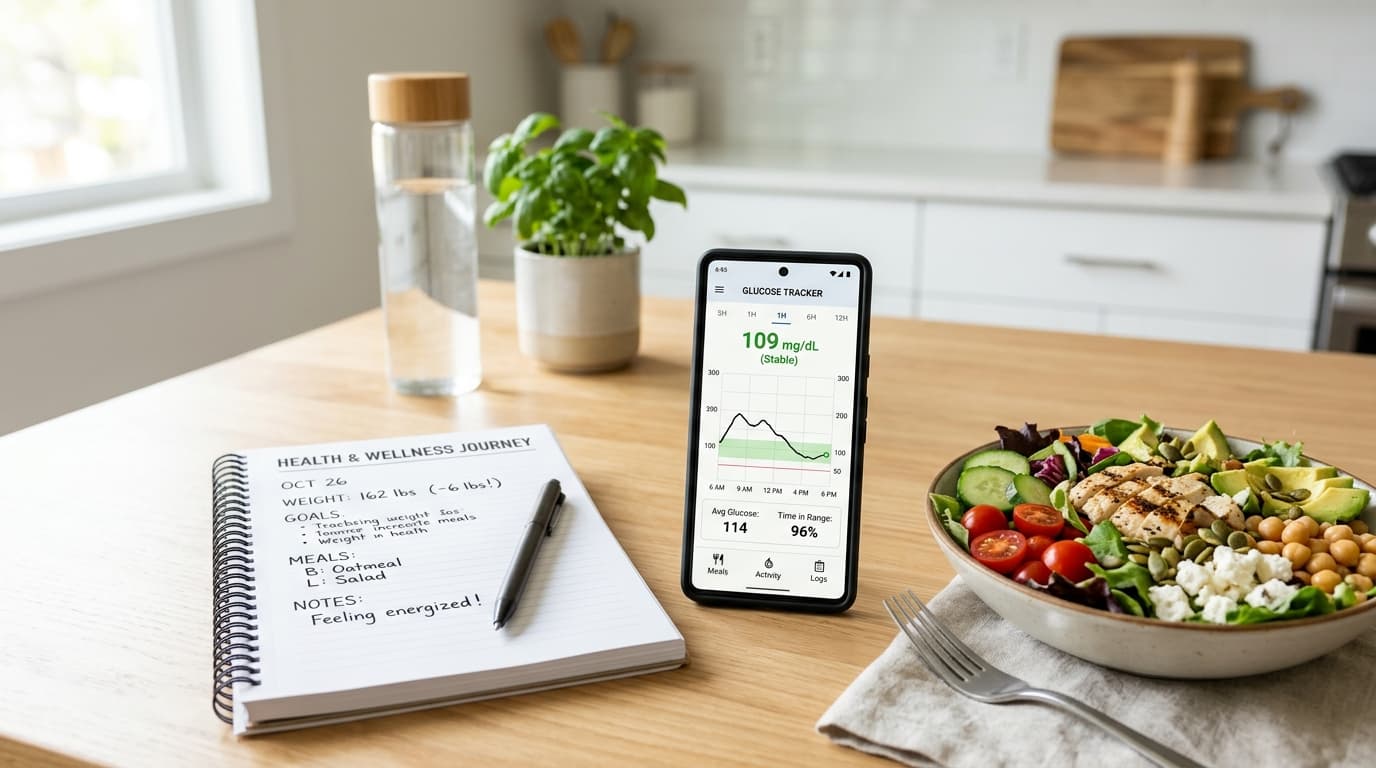
What CGM Data Reveals About Your Diet
Most people are surprised by what their CGM data shows. Foods considered "healthy" can produce significant glucose spikes in certain individuals due to differences in gut microbiome composition, insulin sensitivity, meal timing, and genetic factors. A 2015 landmark study published in Cell (Zeevi et al.) demonstrated that glucose responses to identical foods varied by up to 4x between individuals — meaning that oatmeal might be a stable food for one person and a 60 mg/dL spike for another. CGM data reveals these individual responses within days. Common discoveries include unexpected spikes from fruit smoothies (which deliver concentrated fructose and glucose without fiber), white rice (glycemic index of 73), and "healthy" granola bars (which often contain 20-30 grams of sugar). Conversely, many users discover that adding fat or protein to carbohydrate-heavy meals dramatically blunts the glucose spike — eating cheese before bread, for example, can reduce the spike by 40% according to research published in Diabetes Care.
Does CGM Actually Help You Lose Weight?
The evidence for CGM-assisted weight loss is promising but nuanced. Signos is the only CGM-based service with FDA clearance for weight management, and their clinical data reports average user weight loss of 5 to 10 pounds over 3 months. A 2023 study published in Nature Medicine found that participants using CGMs combined with a coaching app lost 3.6% of body weight over 12 weeks, compared to 1.5% in the control group. The mechanism is behavioral rather than pharmacological: CGM provides immediate, visual feedback that makes the consequences of food choices tangible. Seeing a glucose spike of 80 mg/dL after pizza is more motivating than reading a nutrition label. However, a CGM alone does not cause weight loss — it provides the data to inform better decisions. Users who combine CGM insights with consistent dietary changes, portion awareness, and regular exercise achieve the best outcomes. Most weight loss-focused CGM services recommend wearing a sensor for 3 to 6 months to establish new habits, then transitioning to periodic check-ins.
Practical Tips for Weight Loss with a CGM
Four evidence-based strategies maximize weight loss when using a continuous glucose monitor. First, eat protein or fat before carbohydrates at every meal — a 2024 study in Diabetes, Obesity and Metabolism showed that eating vegetables and protein before starches reduced postmeal glucose spikes by 35%. Second, take a 10 to 15 minute walk after meals — walking starts within 30 minutes of eating reduces glucose peak magnitude by 20 to 30%. Third, identify and replace your top 5 spike-causing foods over the first 2 weeks of CGM use — this single intervention accounts for most of the dietary improvement. Fourth, track your fasting glucose each morning — a consistently elevated fasting glucose (above 100 mg/dL) suggests underlying insulin resistance that may require additional medical evaluation. CGM services like Signos provide an AI-driven glucose score for each meal that simplifies this process, automatically flagging high-spike foods and suggesting alternatives.
Best CGM Options for Weight Loss
For weight loss-focused CGM use, three options stand out. The Signos service ($199-399/month) is the only FDA-cleared CGM platform for weight management, pairing a prescription CGM sensor with an AI coaching app that provides personalized glucose targets and meal scoring. Nutrisense ($225-399/month) includes 1-on-1 registered dietitian coaching alongside CGM data, offering the most comprehensive guided experience. For budget-conscious users, the OTC Dexcom Stelo ($99/month) or Abbott Lingo ($49/month) provide raw glucose data without subscription coaching — ideal for self-directed users who are comfortable interpreting their own data. All options require no prescription for the OTC path, or a simple telehealth visit for prescription services. Most users find that 2 to 3 months of CGM data is sufficient to identify patterns and build lasting dietary habits.