
CGM and Sleep: How Nocturnal Glucose Affects Sleep Quality
Blood sugar below 54 mg/dL or above 180 mg/dL disrupts sleep architecture. CGM overnight data reveals dawn phenomenon, nocturnal hypoglycemia, and glucose-sleep patterns.
The Bidirectional Relationship Between Glucose and Sleep
Glucose and sleep exist in a powerful feedback loop: poor sleep disrupts glucose regulation, and unstable glucose disrupts sleep quality. Research published in the Annals of Internal Medicine demonstrated that just one night of sleep restriction (4 hours instead of 8) reduced insulin sensitivity by 25% to 33% the following day, leading to higher postmeal glucose spikes, increased hunger hormones, and greater calorie consumption. Conversely, blood sugar fluctuations during the night — particularly drops below 70 mg/dL — trigger counter-regulatory hormone release (epinephrine, cortisol, glucagon) that causes arousal, sweating, and sleep fragmentation even if the sleeper does not fully wake up. A continuous glucose monitor is the only consumer device that can track both sides of this relationship: it shows how tonight's sleep affects tomorrow's glucose, and it reveals how today's meals and bedtime snack affect tonight's glucose stability during sleep.
What CGM Reveals During Sleep
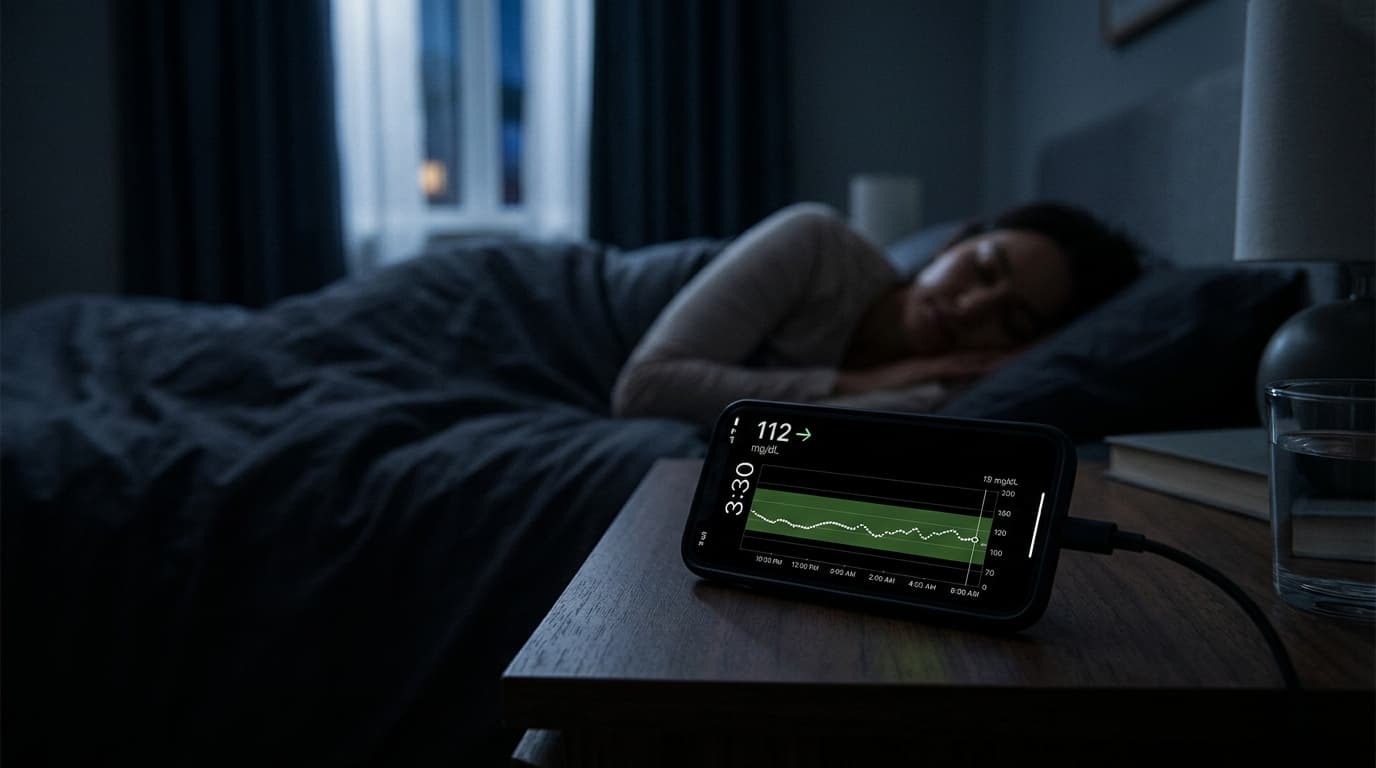
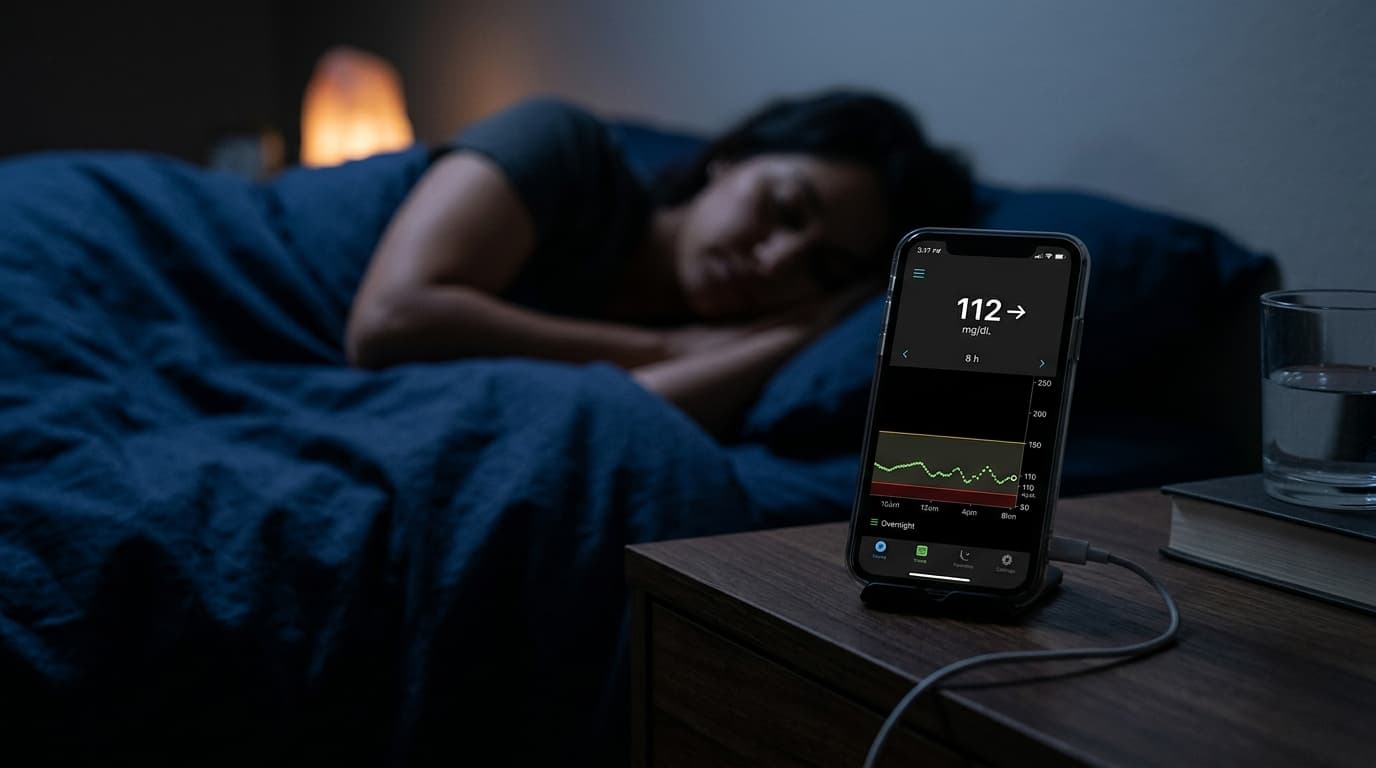
Overnight CGM data typically shows one of several patterns. The ideal pattern is a flat, stable glucose trace between 70 and 100 mg/dL from bedtime to waking, indicating good metabolic health and appropriate evening nutrition. The dawn phenomenon pattern shows a glucose rise beginning between 3 AM and 6 AM, climbing 15 to 40 mg/dL before the person wakes — caused by the circadian release of cortisol and growth hormone. This affects up to 50% of people with diabetes and is also visible in many non-diabetic individuals. The late-meal spike pattern shows elevated glucose (above 120 mg/dL) for 2 to 4 hours after bedtime, caused by eating a large or high-carbohydrate meal within 2 hours of sleep — this is associated with reduced sleep quality and longer time to fall asleep. The nocturnal hypoglycemia pattern shows glucose dipping below 70 mg/dL during sleep, which is dangerous for insulin users and can cause nightmares, night sweats, and morning fatigue in anyone.
How to Improve Sleep Through Glucose Optimization
CGM data reveals several actionable strategies for improving sleep through glucose management. Finishing your last meal at least 3 hours before bedtime allows glucose to return to baseline before sleep onset — CGM data consistently shows that eating within 2 hours of bed elevates overnight glucose by 15 to 30 mg/dL compared to earlier meals. Avoiding high-glycemic foods at dinner reduces the magnitude and duration of the post-dinner glucose elevation. A small protein-rich snack at bedtime (e.g., a handful of almonds, cottage cheese, or a protein shake) can prevent nocturnal hypoglycemia and stabilize overnight glucose in people who tend to drop low during sleep. For people with a pronounced dawn phenomenon, a pre-bed snack containing slow-digesting carbohydrates (such as a tablespoon of peanut butter on whole-grain toast) can blunt the early-morning glucose rise. Tracking these interventions over 5 to 7 nights with a CGM provides clear evidence of which strategies work for your body.
Sleep Trackers and CGM: Combining Data Streams
Pairing a CGM with a sleep tracker (such as an Oura Ring, Whoop, Apple Watch, or Fitbit) creates a comprehensive overnight health picture. Sleep trackers provide data on sleep duration, sleep stages (light, deep, REM), heart rate variability, and respiratory rate. Overlaying this data with overnight CGM glucose traces reveals correlations that neither device can show alone. Common insights include: nights with glucose variability above 20 mg/dL correlate with 15 to 25% less deep sleep; nocturnal glucose drops below 70 mg/dL coincide with heart rate spikes and sleep stage transitions; and fasting glucose the morning after a poor sleep night is typically 5 to 15 mg/dL higher than after a well-rested night. CGM subscription services like Nutrisense and Levels integrate with Apple Health, Google Fit, and Oura, allowing users to view glucose alongside sleep data in a single dashboard. This multi-sensor approach represents the future of personalized health optimization.