
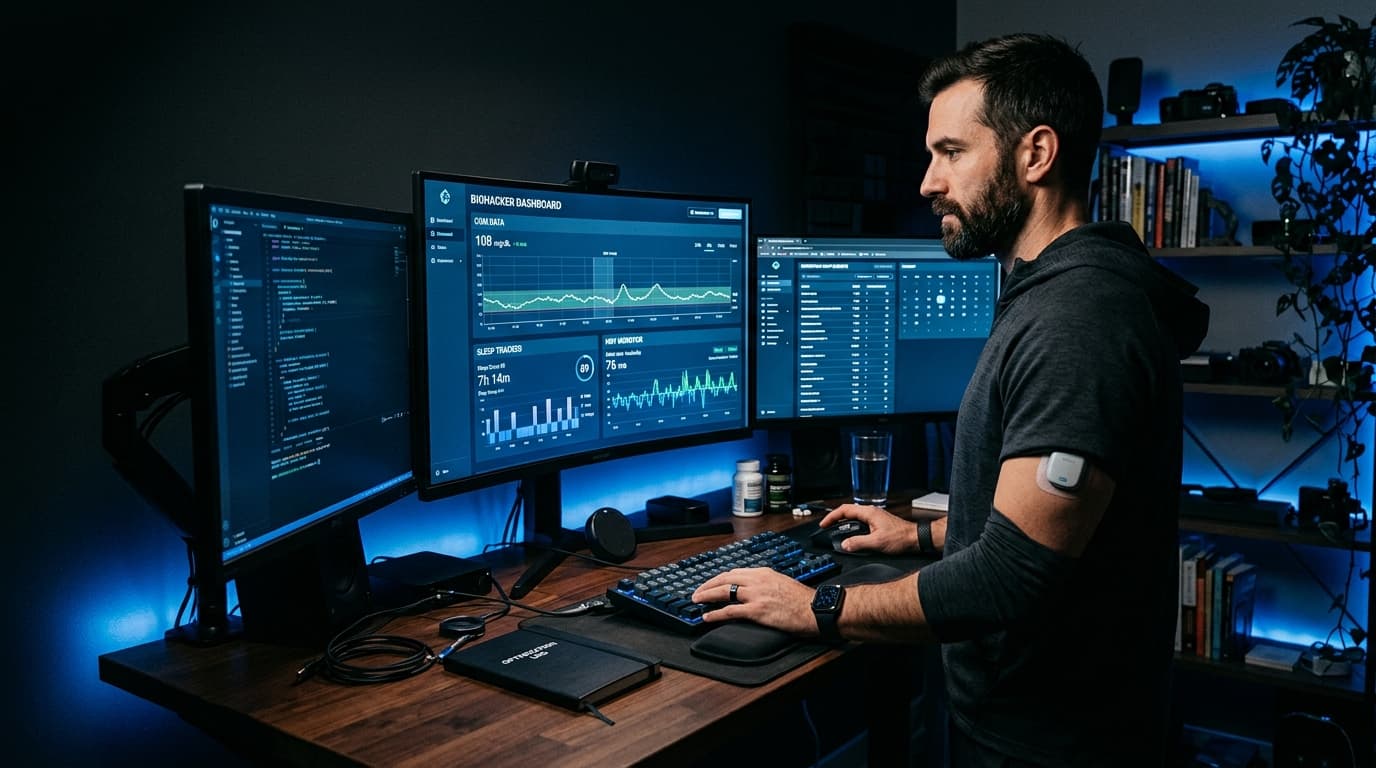
CGM for Biohacking: Personalized Metabolic Optimization in 2026
Using a continuous glucose monitor for biohacking — track 288 daily glucose readings to personalize nutrition, quantify metabolic flexibility, and optimize performance.
CGM as the Ultimate Biohacking Tool
Biohacking is the practice of using data, science, and self-experimentation to optimize biological performance. Among all consumer health wearables, a continuous glucose monitor provides the most metabolically relevant, real-time data stream available outside a clinical laboratory. Heart rate monitors track cardiovascular load. Sleep trackers estimate rest quality. But a CGM tracks the body's primary fuel system — how efficiently you process food into energy, how stable your metabolic environment is throughout the day, and how external factors like stress, sleep, exercise, and supplements affect your core metabolic machinery. For serious biohackers, this data enables controlled experiments that produce objective, quantifiable results within days rather than weeks. Instead of guessing whether a new supplement or diet protocol is "working," a CGM shows the metabolic impact in real time, measured in mg/dL of glucose and percentage of time in range.

Running Metabolic Experiments with CGM Data
The biohacker's approach to CGM is systematic: establish a baseline, change one variable, measure the result, and iterate. A typical experiment cycle lasts 3 to 5 days per variable. For example, to test whether apple cider vinegar before meals reduces glucose spikes (a popular biohacking claim), you would eat the same meal at the same time for 3 days without ACV, then repeat with 1 tablespoon of ACV 15 minutes before the meal for 3 days, and compare the average glucose spike magnitude. CGM data makes this comparison objective and precise. Published research supports some biohacking interventions: a 2021 study in BMJ Open Diabetes Research & Care confirmed that vinegar consumption reduced postmeal glucose peaks by 20 to 30% in healthy adults. Other common CGM experiments include testing the glycemic impact of different cooking methods (al dente vs soft-cooked pasta), comparing processed vs whole food versions of the same macronutrient profile, measuring the effect of cold exposure on glucose (cold showers, ice baths), and quantifying the glucose response to specific supplements (berberine, chromium, cinnamon).
Key Metrics Biohackers Track
Beyond raw glucose values, biohackers focus on several derived metrics from CGM data. Glucose variability (measured by coefficient of variation) indicates metabolic stability — a CV below 20% suggests excellent glucose regulation in a non-diabetic person. Fasting glucose consistency (measured each morning before eating) reveals baseline metabolic health — values consistently above 95 mg/dL may indicate early insulin resistance even if A1C is normal. Postmeal glucose delta (the difference between pre-meal and peak post-meal glucose) quantifies the body's response to specific foods — a delta below 30 mg/dL is considered optimal by most CGM wellness services. Time above 140 mg/dL captures cumulative exposure to glucose levels associated with increased cardiovascular and metabolic risk. And mean glucose over 14 days provides a CGM-derived estimate of metabolic health that is more granular than a quarterly A1C blood test. The Levels app popularized the concept of a "metabolic score" that combines these metrics into a single 0-100 daily score, gamifying the optimization process.
How Long Should Biohackers Wear a CGM?
Most biohackers find that 1 to 3 months of continuous CGM use is sufficient to map their metabolic landscape — identifying their worst food offenders, optimal meal timing, exercise impact, and sleep-glucose relationship. After this initial learning phase, the marginal value of continuous monitoring decreases because the primary patterns have been identified and behavior changes implemented. The recommended approach is an intensive initial period of 4 to 8 weeks wearing a sensor continuously, followed by periodic 2-week check-ins every 2 to 3 months to verify that habits are holding and to test new interventions. At $49 to $99 per month for an OTC CGM, this approach costs $200 to $600 for the initial phase — comparable to a comprehensive blood panel but with thousands of data points instead of a single snapshot. For biohackers who want guided coaching, Nutrisense ($225-399/month) and Levels ($199/month) provide structured programs with dietitian support and app-based analytics that accelerate the learning curve.