
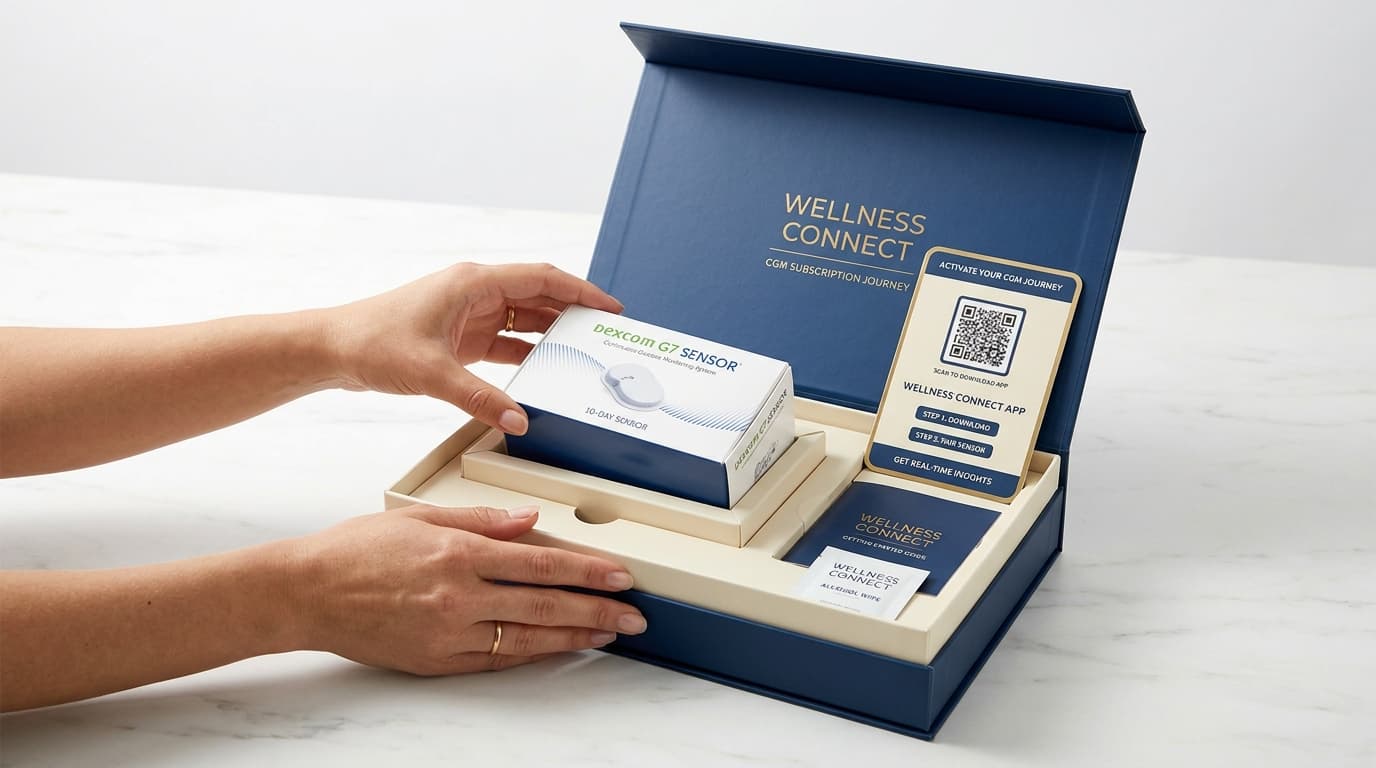
CGM Subscription Services Compared: 2026 Guide
CGM subscription services pair a continuous glucose monitor sensor with a software platform — and sometimes a registered dietitian — to help non-diabetic users optimize metabolic health, lose weight, or improve athletic performance. Unlike buying a CGM directly from a pharmacy, these subscriptions bundle the sensor cost with an app that provides personalized insights, glucose scoring, meal analysis, and in some cases, 1-on-1 nutritionist coaching. Monthly prices range from $149 (January AI annual plan) to $399 (Nutrisense and Signos month-to-month), with most services offering significant discounts for 6-month and annual commitments.
The 5 major CGM subscription services serving the US market in 2026 take meaningfully different approaches. Nutrisense differentiates with included registered dietitian coaching on every plan — no other service provides this level of human guidance as a standard feature. Levels Health has built the most sophisticated metabolic scoring algorithm and app experience for self-directed biohackers. Signos is the only service with FDA clearance for weight management, making it the most clinically validated option for weight loss. January AI uses a unique digital twin technology that predicts glucose responses even when you are not wearing a sensor. Veri offers the simplest, most affordable entry point for beginners who want glucose insights without data overload.
All 5 services use either Abbott FreeStyle Libre or Dexcom sensors as the hardware component, meaning the underlying glucose data comes from the same FDA-cleared devices. The differentiation is entirely in the software, coaching, and interpretation layer built on top of that data. This is an important distinction: you are paying $149 to $399 per month not just for a glucose sensor, but for the intelligence that transforms raw glucose numbers into actionable dietary and lifestyle recommendations.
All CGM Subscription Services
Nutrisense
Nutrisense pairs Abbott Libre CGM sensors with 1-on-1 registered dietitian coaching and a comprehensive mobile app. It offers the most complete guided CGM experience, combining continuous glucose data with personalized nutrition advice, meal logging, and AI-driven glucose scoring. Plans range from month-to-month flexibility to annual commitments that reduce the per-month cost significantly.
Levels Health
Levels Health is an AI-driven CGM platform built for biohackers, athletes, and health-conscious individuals who want deep metabolic data without the need for a dietitian. Its standout feature is the proprietary metabolic score that quantifies how meals, exercise, and sleep affect glucose stability. The app delivers best-in-class data visualization and has cultivated a large, engaged community around metabolic health optimization.
Signos
Signos is the first CGM-based weight management platform to receive FDA clearance, making it the most clinically validated option for people whose primary goal is losing weight. It uses Dexcom sensors and pairs real-time glucose data with an AI coach that recommends optimal exercise timing and meal choices specifically to maximize fat burn and minimize glucose spikes. The platform is narrowly focused on weight loss, which is both its strength and limitation.
Veri
Veri is a metabolic health platform that combines Abbott Libre CGM sensors with a clean, intuitive app focused on meal scoring and habit tracking. Originally launched in Europe, Veri has expanded to the US market and offers a competitive annual price point. Its app emphasizes simplicity and behavior change, making it a strong choice for people who want glucose insights without being overwhelmed by data. Optional dietitian coaching is available as an add-on for users who want guided support.
January AI
January AI differentiates itself with a glucose prediction engine that can forecast how specific foods will affect your blood sugar — even when you are not actively wearing a sensor. After an initial learning period with a CGM, the platform builds a "digital twin" of your metabolism and continues generating meal predictions based on your historical data. This makes it the most affordable long-term option, since users can cycle on and off the physical sensor while still receiving insights.
CGM Service Pricing Comparison
All prices are per month. Annual plans offer the lowest per-month cost.
| Service | Monthly Plan | Annual Plan | CGM Brand | Dietitian | FDA Cleared | Rating |
|---|---|---|---|---|---|---|
| Nutrisense | $399/mo | $225/mo | Abbott Libre | Included | No | 4.5 |
| Levels Health | $299/mo | $199/mo | Dexcom / Abbott | No | No | 4.4 |
| Signos | $399/mo | $199/mo | Dexcom | No | Yes (weight management) | 4.3 |
| Veri | $299/mo | $175/mo | Abbott Libre | No | No | 4.1 |
| January AI | $288/mo | $149/mo | Abbott Libre | No | No | 3.9 |
Who Needs a CGM Subscription Service?
CGM subscription services are designed for people who want guided interpretation of their glucose data rather than raw numbers alone. If you have type 1 or type 2 diabetes and already work with an endocrinologist, a subscription service is generally not necessary — your doctor's office provides the clinical interpretation, and you can purchase CGM sensors directly through your pharmacy with insurance coverage. Subscription services exist for a different audience: health-conscious consumers, people with prediabetes, weight loss seekers, athletes, and biohackers who do not have a medical team interpreting their glucose data.
The alternative to a subscription service is buying an over-the-counter CGM (Dexcom Stelo at $49 to $99/month or Abbott Lingo at $49/month) and interpreting the data yourself using the manufacturer's basic app. This is a viable approach for self-motivated individuals who are comfortable researching glucose science independently. A subscription service adds value through proprietary algorithms that score and contextualize your data, coaching from dietitians or AI systems, and structured programs that guide behavior change over weeks and months.
For most first-time CGM users who want guidance, Nutrisense offers the best combination of human coaching and comprehensive data analysis. For self-directed users who prefer data-rich apps over human interaction, Levels Health provides the most sophisticated analytics platform. For users whose primary goal is weight loss, Signos is the only FDA-cleared option specifically validated for that purpose.
How CGM Subscription Services Work: Sensor + App + Support
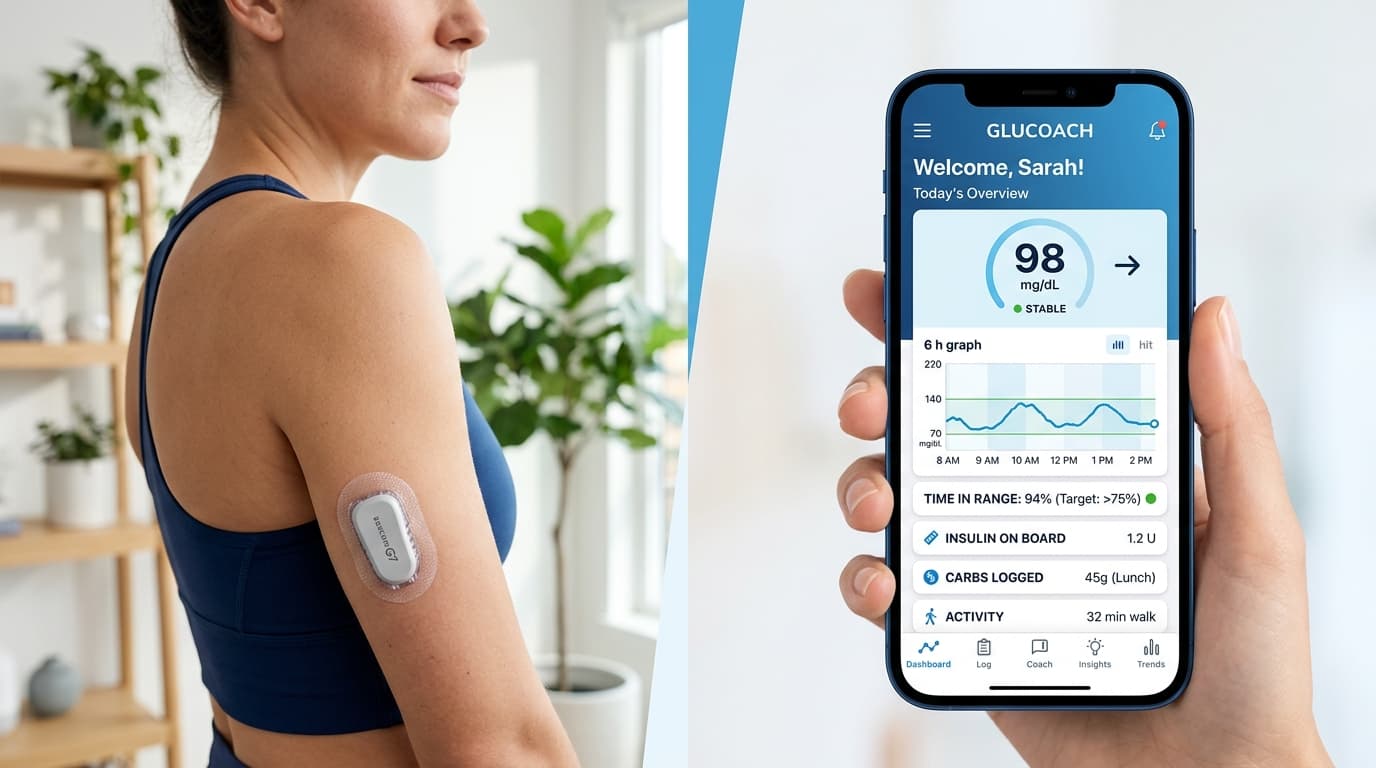
A CGM subscription service bundles 3 components: a continuous glucose monitor sensor (typically Abbott FreeStyle Libre or Dexcom G7), a proprietary smartphone app with analytics and insights, and varying levels of human support ranging from AI-only to registered dietitian coaching. A continuous glucose monitor sensor is a small, disposable biosensor worn on the back of the upper arm or abdomen that measures interstitial glucose every 1-5 minutes through an electrochemical reaction. The app layer processes raw glucose data into actionable metrics — meal scores, daily averages, glucose variability percentages, and trend analysis over 7-, 14-, and 30-day windows. Services that include dietitian coaching (Nutrisense, Veri) pair this data with 1-on-1 consultations via in-app messaging or scheduled video calls, typically offering 1-4 sessions per month depending on the plan tier.
Monthly pricing ranges from $49 (January AI) to $399 (Nutrisense premium). This 8x spread reflects the support tier: AI-only services cost $49-89/month, while dietitian-included services cost $149-399/month. A 2025 survey by Insider Intelligence found that 62% of CGM subscription users selected their service based on the coaching component rather than the app features alone. Annual plans reduce costs by 15-30% compared to month-to-month billing — Nutrisense drops from $399/month to $225/month on an annual commitment, a 44% reduction. All subscription services require the user to apply and wear the CGM sensor themselves — no clinic visit is needed for sensor insertion, and sensors ship directly to the user's home every 2-4 weeks.
The sensor itself accounts for roughly 30-50% of the subscription cost, with the remainder covering software development, cloud infrastructure, and human coaching labor. This explains why even the cheapest subscription service ($49/month for January AI) is priced at or above the retail cost of an OTC CGM sensor alone — the app analytics layer must be funded on top of the hardware. For a detailed breakdown of how subscription pricing compares to standalone sensor purchases, see the CGM service pricing breakdown.
Who Benefits Most from a CGM Service vs Buying a Sensor Directly?
If you have a diabetes diagnosis and insurance coverage, buying a prescription CGM directly through your pharmacy or durable medical equipment (DME) supplier costs $15-75/month — significantly less than any subscription service. A DME supplier is a Medicare- or insurance-contracted company that ships medical devices and supplies directly to patients. Subscription services make economic sense for 3 user profiles: (1) people without insurance coverage who want structured guidance rather than raw data, (2) wellness users seeking dietary coaching alongside glucose data, and (3) weight loss-focused users who benefit from accountability and behavioral nudges.
The 2024 emergence of OTC CGMs (Stelo at $49-99/month, Lingo at $49/month) created direct price competition with budget subscription services. A consumer can now buy an OTC CGM for $49/month and get raw glucose data without any subscription — which pressures services like January AI and Levels to justify their app analytics as worth the incremental cost above a standalone sensor. According to Abbott's 2025 Q1 earnings report, Lingo attracted over 200,000 users in its first 6 months, many of whom would previously have been subscription service customers.
The highest-value use case for subscription services remains the first 3-6 months of CGM use, when users are still learning to interpret glucose patterns. A 2024 Nutrisense outcomes study found that users who completed 3 months of dietitian-guided CGM monitoring reduced their average post-meal glucose spike by 23 mg/dL — compared to a 9 mg/dL reduction in users who wore a CGM without coaching. After the initial learning phase, many users downgrade to an OTC sensor or stop wearing a CGM entirely, having internalized the dietary changes. For a head-to-head comparison of the 2 most popular services, see Nutrisense vs Levels.
FDA Clearance in CGM Services: What Signos's Approval Means
Signos is the only CGM subscription service with FDA clearance for a health claim — specifically, weight management. FDA clearance(distinct from FDA approval) means a device or service has demonstrated substantial equivalence to a legally marketed predicate or, in Signos's case, received a De Novo classification establishing an entirely new regulatory category. This De Novo classification, granted in 2024, means Signos can legally market its service as a tool for losing weight, while competitors can only describe their services as "wellness" or "metabolic health" platforms without making weight loss efficacy claims.
The distinction matters for 3 reasons: credibility — physicians are more likely to recommend an FDA-cleared service than an unregulated wellness app; insurance reimbursement potential — FDA-cleared devices have a pathway to coverage that wellness products lack; and clinical adoption — healthcare systems can integrate FDA-cleared tools into treatment protocols without the liability concerns of uncleared consumer products. No other CGM subscription service has applied for or received FDA clearance as of April 2026. Signos's clinical trial submitted for the clearance included 786 participants and demonstrated a statistically significant mean weight loss of 5.2% body weight over 12 weeks compared to 1.8% in the control group. For more on Signos specifically, see the Signos CGM review.