
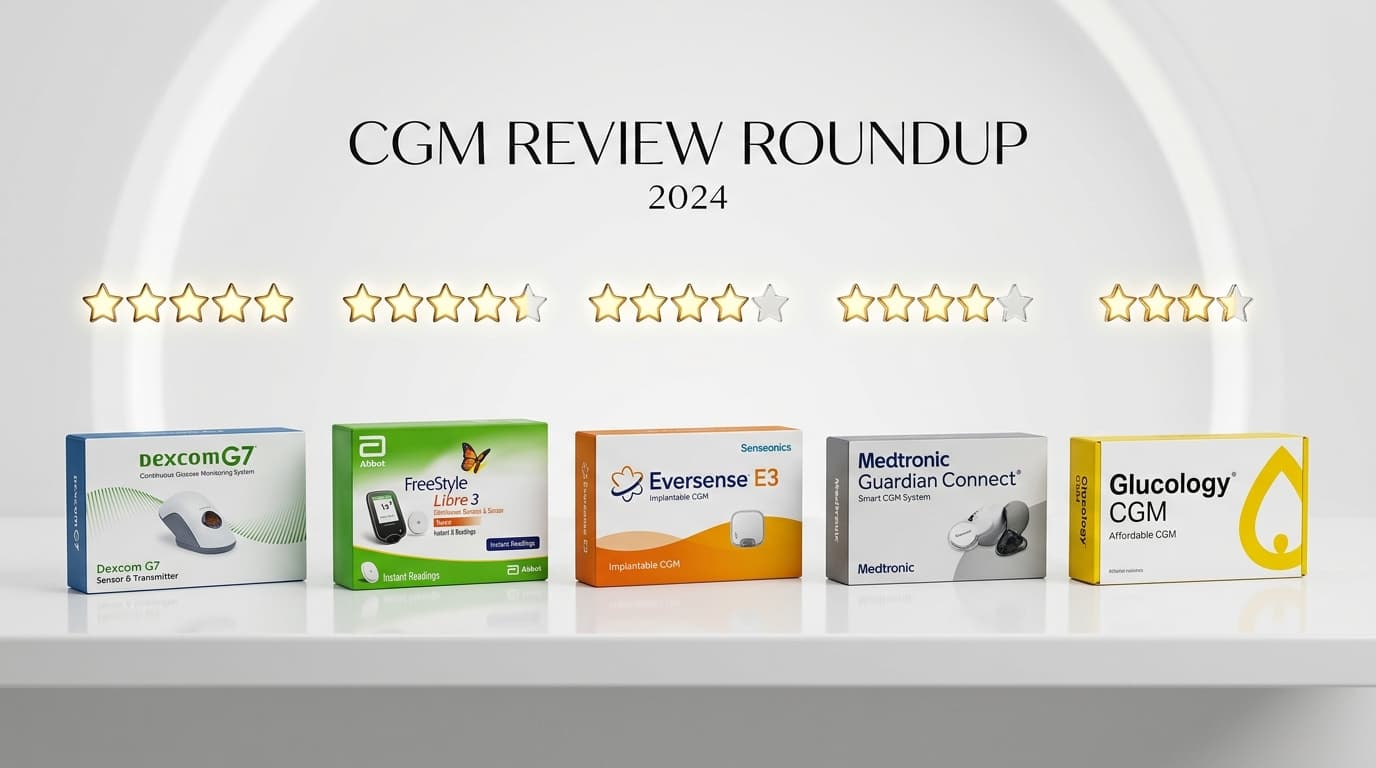
Best Continuous Glucose Monitors in 2026: Complete Rankings
The continuous glucose monitor market in 2026 includes 12 distinct devices from 5 manufacturers, spanning prescription real-time CGMs, over-the-counter biosensors, and implantable systems that last up to 365 days. Choosing the right CGM depends on your medical needs, budget, and whether you require insulin pump integration or simply want metabolic health insights. This ranking evaluates every commercially available CGM using 4 weighted criteria: sensor accuracy (MARD), wear time, total monthly cost, and feature set.
The CGM landscape shifted dramatically between 2024 and 2026. Abbott and Dexcom both launched over-the-counter glucose monitors that require no prescription, opening continuous glucose monitoring to the estimated 96 million Americans with prediabetes and the growing population using GLP-1 weight loss medications. At the same time, Senseonics received FDA clearance for the Eversense 365, a 1-year implantable sensor that fundamentally changes the economics of long-term glucose monitoring. Medtronic continues to focus its Guardian 4 sensor on closed-loop insulin delivery with the MiniMed 780G pump system.
Accuracy remains the single most important differentiator among continuous glucose monitors. The FreeStyle Libre 3 Plus leads with a 7.9% MARD — the lowest of any consumer CGM — while the Dexcom G7 follows at 8.2% MARD with superior alert customization and insulin pump compatibility. For users who do not need prescription-grade monitoring, the Dexcom Stelo and Abbott Lingo provide real-time glucose data at $49 to $99 per month without a doctor visit, though neither supports alerts, alarms, or pump integration.
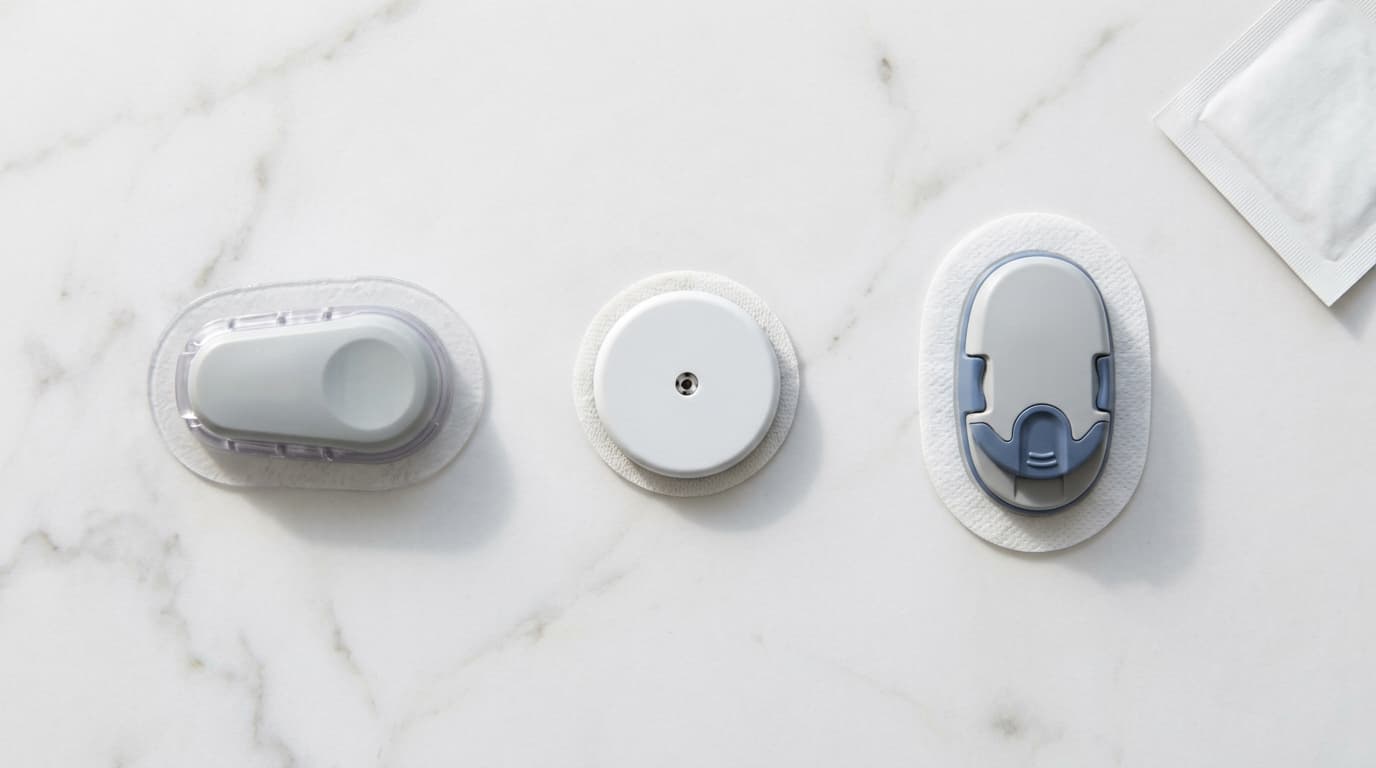
2026 CGM Rankings: All Devices Compared
Sorted by GlucoseIntel rating. MARD = Mean Absolute Relative Difference (lower is more accurate).
| Product | MARD | Wear Time | Type | Rx? | With Insurance | Without Insurance | Medicare | Rating |
|---|---|---|---|---|---|---|---|---|
| Dexcom G7 | 8.2% | 10 days | Real time CGM | Yes | $20–$40 per month | $250–$350 per month | ✓ | 4.8 |
| Dexcom G7 15-Day | 8.2% | 15 days | Real time CGM | Yes | $20–$40 per month | $250–$350 per month | ✓ | 4.7 |
| FreeStyle Libre 3 Plus | 7.9% | 15 days | Real time CGM | Yes | $15–$30 per month | $75–$150 per month | ✓ | 4.7 |
| Eversense 365 | 8.5% | 365 days | Real time CGM | Yes | $150–$350 per month (amortized including implant procedure) | $2,000–$5,000 per annual sensor cycle | — | 4.6 |
| Eversense E3 | 8.5% | 180 days | Real time CGM | Yes | $200–$400 per month (amortized including implant procedure) | $1,000–$3,000 per 6-month sensor cycle | — | 4.5 |
| FreeStyle Libre 2 | 9.2% | 14 days | Flash glucose monitoring (scan based with optional alarms) | Yes | $15–$30 per month | $75–$150 per month | ✓ | 4.4 |
| Dexcom Stelo | 9% | 15 days | Real time CGM | No | N/A — OTC product not covered by insurance | $49–$99 per month | — | 4.3 |
| Abbott Lingo | 9% | 14 days | Real time CGM | No | N/A — OTC product not covered by insurance | $49 per month | — | 4.2 |
| Medtronic Guardian 4 | 8.7% | 7 days | Real time CGM | Yes | $30–$50 per month | $200–$300 per month | ✓ | 4.2 |
| Abbott Libre Rio | 9% | 14 days | Real time CGM | No | N/A — OTC product not covered by insurance | $49 per month | — | 4.1 |
| SIBIONICS CGM | 9% | 14 days | Real time CGM | No | N/A — not yet available in US insurance networks | $30–$60 per month (international pricing) | — | 3.8 |
Best CGM by Use Case
No single continuous glucose monitor is the best choice for every user. A type 1 diabetes patient who depends on predictive low glucose alerts and insulin pump integration has fundamentally different requirements than a wellness-focused consumer who wants to see how meals affect blood sugar. The categories below match specific CGMs to specific needs, with each page explaining which sensor features matter most for that use case and which you can safely ignore.
How GlucoseIntel Ranks Continuous Glucose Monitors
Every CGM on this page is scored using a weighted formula that reflects how the device performs in real-world use, not just laboratory conditions. The GlucoseIntel rating is a composite of 4 factors, each carrying a specific weight in the final score. MARD accuracy accounts for 35% of the total because sensor precision directly determines whether glucose readings are reliable enough for insulin dosing or dietary decisions. A CGM with a MARD above 10% introduces meaningful error that compounds across hundreds of daily readings.
MARD Accuracy (35%)
Mean Absolute Relative Difference measures the average percentage error between CGM readings and laboratory blood glucose values. The best CGMs achieve 7.9% to 8.5% MARD. A lower MARD means more trustworthy glucose readings throughout the day and night.
Sensor Wear Time (25%)
Longer sensor life means fewer insertions per year, lower annual sensor costs, and less disruption to daily routine. Wear times range from 7 days (Medtronic Guardian 4) to 365 days (Eversense 365). Each sensor change introduces a warmup gap without glucose data.
Total Monthly Cost (25%)
We evaluate both insured and uninsured pricing because CGM affordability varies dramatically. Prescription CGMs with insurance cost $15 to $50 per month, while the same devices without coverage run $75 to $350. OTC sensors cost $49 to $99 with no insurance option.
Features & Integration (15%)
Real-time alerts, insulin pump compatibility, smartphone app quality, data sharing, and water resistance all factor into usability. A CGM that integrates with closed-loop insulin delivery systems scores higher for diabetes patients than one limited to standalone monitoring.
Ratings are updated quarterly as new clinical data, firmware updates, and pricing changes are published. Products that have not received FDA clearance or have no published MARD data receive a provisional rating of 0 and are excluded from the ranked table until verified performance data becomes available. You can explore the technical details behind every metric on our MARD glossary page.
How CGM Rankings Are Determined: 11 Weighted Specifications
The GlucoseIntel ranking system evaluates every continuous glucose monitor across 11 standardized specifications, each carrying a defined weight in the composite score. MARD accuracy receives the highest weight at 35% because it directly impacts clinical decision-making — a sensor that reads 150 mg/dL when the true blood glucose is 120 mg/dL could lead to an unnecessary insulin correction dose, while an inaccurately low reading could mask dangerous hyperglycemia. The 2023 Diabetes Technology & Therapeutics consensus statement established that CGMs with MARD below 10% are suitable for non-adjunctive insulin dosing, meaning patients can dose insulin based solely on CGM readings without confirmatory fingerstick tests.
Sensor wear time carries 25% weight because it determines total annual cost and user burden. The calculation is straightforward: 365 days divided by sensor wear time equals the number of sensors purchased per year. A 7-day sensor (Medtronic Guardian 4) requires 52 sensors annually at approximately $75 each without insurance — $3,900 per year in sensor costs alone. A 15-day sensor (FreeStyle Libre 3) requires 24 sensors at roughly $75 each — $1,800 per year. The Eversense 365 requires 1 sensor insertion at approximately $2,000 — the lowest total sensor cost despite the highest per-unit price. Each sensor change also introduces a warmup gap of 30 minutes to 24 hours with no glucose data, which creates clinical risk for insulin-dependent patients.
Monthly cost (insured and uninsured) carries 20% combined weight, reflecting the reality that CGM affordability varies by a factor of 10x depending on payment method. A Dexcom G7 costs $35/month with good commercial insurance but $299/month at cash price. Alert capability carries 10% weight, and insulin pump compatibility carries 10% weight. These last two specifications are critical for type 1 diabetes patients but irrelevant for wellness users, which is why the use-case-specific rankings differ from the overall ranking. For example, the Dexcom Stelo ranks 8th overall (no alerts, no pump compatibility) but ranks 1st for non-diabetic wellness users because its app experience and data visualization are optimized for metabolic insight rather than medical management. Three use-case ranking divergences illustrate this principle: the Guardian 4 ranks higher for type 1 diabetes than overall (pump integration with MiniMed 780G), the Abbott Lingo ranks higher for weight loss than overall (behavioral coaching features), and the Eversense 365 ranks higher for long-term type 2 management than overall (zero sensor changes for 12 months).
2026 CGM Accuracy Rankings by MARD
MARD (Mean Absolute Relative Difference) is the single most important specification for any continuous glucose monitor because every clinical and dietary decision derived from CGM data depends on the accuracy of the underlying reading. The following list ranks all commercially available CGMs in 2026 from lowest MARD (most accurate) to highest MARD (least accurate), using data from the most recent FDA-submission clinical trials and manufacturer-published pivotal studies.
The most accurate CGM in 2026 is the FreeStyle Libre 3 Plus at 7.9% MARD, followed by the Dexcom G7 and Dexcom G7 15-Day (both at 8.2% MARD), the Eversense E3 and Eversense 365 (both at 8.5% MARD), the Medtronic Guardian 4 (8.7% MARD), the FreeStyle Libre 3 (8.9% MARD), the FreeStyle Libre 2 Plus (9.0% MARD), the Dexcom Stelo (9.0% MARD), and the Abbott Lingo (9.7% MARD). Older-generation devices still in use — such as the FreeStyle Libre 2 (9.3% MARD) and the Dexcom G6 (9.8% MARD) — are not included in the active rankings but appear in the MARD glossary for reference.
What these numbers mean in practice: a 7.9% MARD on a true blood glucose of 120 mg/dL means the CGM reports a value between approximately 110 and 130 mg/dL. At 150 mg/dL true glucose, the same sensor reads between 138 and 162 mg/dL. The clinical significance increases at the extremes — at 70 mg/dL (near the hypoglycemia threshold), a 7.9% MARD sensor reads between 64 and 76 mg/dL, while a 14% MARD sensor could read between 60 and 80 mg/dL. That 4 mg/dL difference at the low end is the difference between triggering an urgent low glucose alert and missing a hypoglycemic event entirely. A 2024 Diabetes Care study of 892 type 1 patients found that switching from a CGM with greater than 10% MARD to one below 9% MARD reduced nocturnal hypoglycemia episodes by 31% over 6 months.
Prescription vs OTC: Two Different Ranking Criteria
The overall GlucoseIntel ranking includes both prescription and over-the-counter CGMs in a single table, but these two categories serve fundamentally different populations with different success metrics. Prescription CGMs — Dexcom G7, FreeStyle Libre 3 Plus, Guardian 4, Eversense 365, and their variants — are medical devices cleared by the FDA for diabetes management. They are ranked primarily on accuracy, real-time alerts, and insulin pump compatibility because these features directly impact patient safety. A type 1 diabetes patient who depends on predictive low glucose alerts to prevent nocturnal hypoglycemia needs a device that achieves sub-9% MARD, delivers alerts within 20 minutes of projected low glucose, and integrates with their insulin pump for automated basal rate adjustments.
Over-the-counter CGMs — the Dexcom Stelo and Abbott Lingo — are classified as Class II wellness devices. They do not support alerts, alarms, or insulin pump integration, and the FDA cleared them specifically for users aged 18 and older who are not on insulin. For this population, the ranking criteria shift toward app quality, data insight depth, monthly cost, and onboarding experience. The Stelo's app provides a glucose score and pattern analysis, while the Lingo app emphasizes food logging and metabolic coaching. Neither device displays raw glucose numbers by default — both translate continuous data into simplified scores and actionable recommendations designed for users who lack clinical training in glucose interpretation.
The practical implication is that a device ranked 8th overall (Dexcom Stelo) can simultaneously be the top recommendation for a specific use case. Three examples: a prediabetic patient testing dietary changes benefits more from the Stelo's metabolic insights than from the G7's clinical alerts. A corporate wellness program participant needs the Lingo's simplified interface, not the Libre 3 Plus's medical-grade glucose graphs. A biohacker tracking glucose variability during intermittent fasting gets more value from a $49/month OTC device than a $299/month prescription CGM that requires a doctor's visit. The OTC CGM rankings page evaluates these devices against each other using wellness-specific criteria, while the type 1 diabetes page uses the clinical criteria described above.