
Foods That Spike Blood Sugar: 20 Surprising High-GI Items to Watch
20 surprising foods that spike blood sugar — white rice, instant oatmeal, rice cakes, dried dates, corn flakes, and more. CGM data reveals why these foods cause larger spikes than expected.
Why Some "Healthy" Foods Cause Large Blood Sugar Spikes
A blood sugar spike occurs when glucose rises more than 30 mg/dL above your pre-meal baseline within 60 minutes of eating. Many foods marketed as healthy — or assumed to be safe for blood sugar — produce spikes of 50 to 100+ mg/dL in CGM data, rivaling the impact of candy and soda. The most common reasons foods spike glucose more than expected are: high glycemic index from processing (instant oatmeal vs steel-cut oats), concentrated natural sugar with no fiber (dried fruit, fruit juice), rapidly digestible starch with minimal protein or fat (white rice, rice cakes, baked potatoes), and deceptive serving sizes (a "small" bowl of rice can contain 45-60 grams of carbohydrate). CGM data from services like Levels and Nutrisense consistently reveals that 70 to 80% of users are surprised by at least 3 foods they assumed were blood sugar-friendly. Understanding which foods spike glucose is the first step toward making evidence-based substitutions.
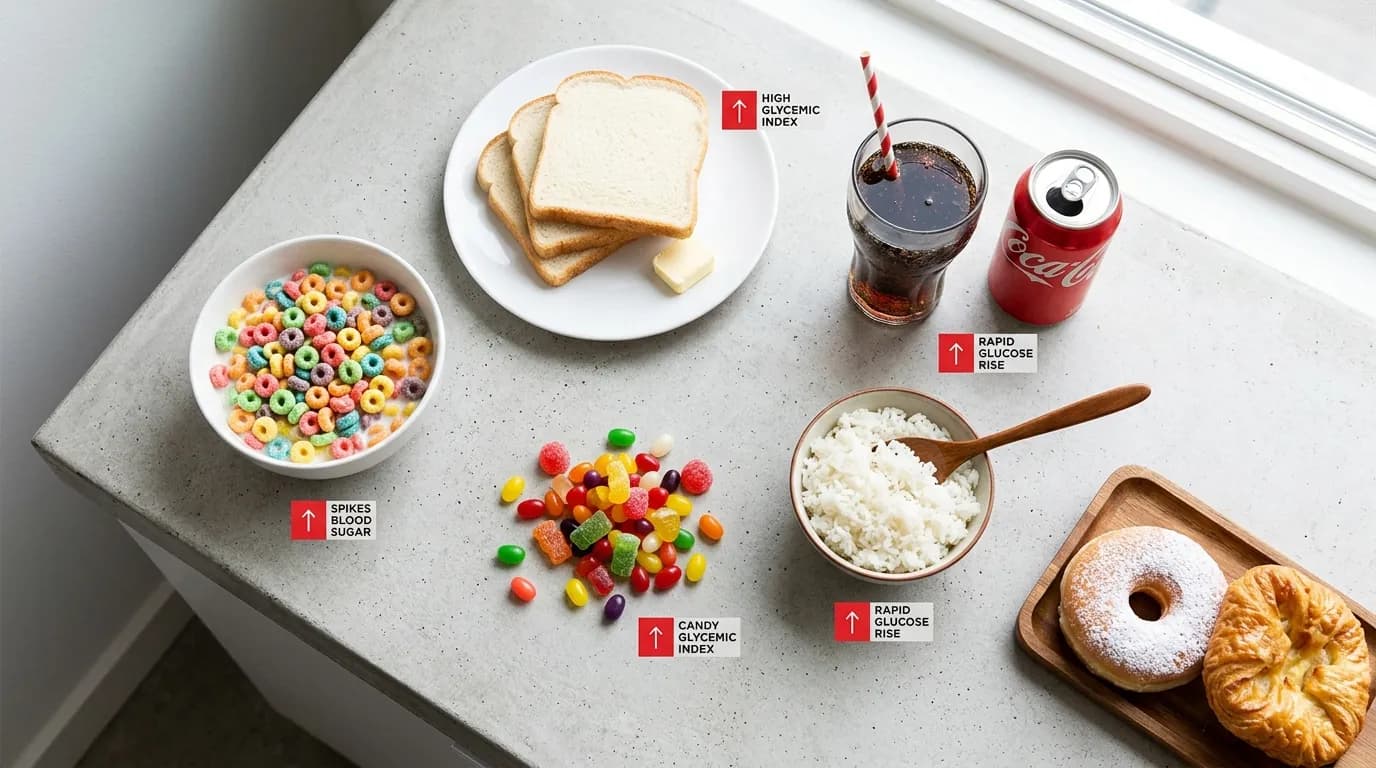
The 20 Surprising Spike Foods
These 20 foods produce unexpectedly large glucose responses in CGM data. White rice (GI 73, GL 29 per cup) is the single most common spike food globally — a standard restaurant portion of 2 cups delivers a GL of 58. Instant oatmeal (GI 79, GL 17) spikes nearly as much as white bread despite its "heart-healthy" reputation. Rice cakes (GI 82, GL 17 per 2 cakes) are almost pure rapidly-digestible starch. White bread (GI 75, GL 10 per slice) is a well-known spike food, but many people underestimate that 2 slices for a sandwich delivers GL 20. Dried dates (GI 103, GL 42 per 100g) have the highest GI of any whole food — a single Medjool date delivers GL 18. Corn flakes (GI 81, GL 21 per cup with milk) are essentially glucose delivery vehicles. Baked russet potato (GI 85, GL 26 per medium) spikes more than table sugar by GI. Sushi rice (GI 89, GL 36 per cup) is white rice cooked with sugar and vinegar — the sugar adds to an already high-GI food. Pineapple (GI 66, GL 11 per cup) produces moderate-to-high spikes, especially in juice form. Honey (GI 61, GL 12 per tablespoon) is metabolized identically to sugar despite its "natural" image.
More Spike Foods: Hidden Sources of High Glucose Impact
The remaining 10 spike foods include some that catch even experienced health-conscious eaters off guard. Orange juice (GI 50, GL 12 per cup) — while its GI is moderate, a standard large glass (16 oz) delivers GL 24, equivalent to eating 4 oranges without the fiber that normally slows absorption. Energy bars (GI 50-75 depending on brand) — many bars marketed for fitness contain 25 to 40 grams of carbohydrate, producing GL 15 to 25. Ripe bananas (GI 62) spike significantly more than green bananas (GI 42) because ripening converts resistant starch to sugar — a fully brown-spotted banana can raise glucose by 40 to 60 mg/dL. White pasta overcooked (GI 64) loses its al dente advantage (GI 46) and becomes a high-spike food. Granola (GI 55-70, GL 20-30 per cup) contains concentrated oats, sugar, and dried fruit in dense calorie packages. Fruit smoothies (GI 50-68) deliver concentrated liquid sugar from multiple fruits blended together. Parsnips (GI 97) have one of the highest GIs of any vegetable. Pretzels (GI 83, GL 16 per ounce) are pure refined starch. Watermelon (GI 72, GL 4 per serving) is worth noting as a common misconception — despite its high GI, normal portions produce minimal glucose impact due to low carb density.
How to Reduce Spikes from Your Favorite Foods
You do not have to eliminate high-GI foods from your diet — strategic modifications can reduce glucose spikes by 25 to 50% while still enjoying the foods you love. For white rice, cook it with 1 teaspoon of coconut oil, cool in the refrigerator for 12 hours, then reheat — this increases resistant starch content by up to 60% and reduces available glucose (Sudhair James, 2015, College of Chemical Sciences, Sri Lanka). For bread, choose sourdough (GI 54) over white (GI 75) — the lactic acid from fermentation slows glucose absorption. For potatoes, eat them cooled as potato salad rather than hot and baked — cooling creates retrograde starch that lowers effective GI by approximately 30 points. For oatmeal, choose steel-cut (GI 55) over instant (GI 79) and add a tablespoon of almond butter (protein + fat). For fruit, eat the whole fruit rather than juice or dried versions — the intact cell structure and fiber slow absorption. For pasta, cook al dente (GI 46) rather than soft (GI 64) and toss with olive oil. For all high-GI foods, apply the "veggie first" strategy — eating vegetables and protein before the starch reduces the spike by 29% according to the Shukla et al. research. A continuous glucose monitor lets you test each modification and confirm the reduction in your personal data.