
30 Best Foods for Stable Blood Sugar: Evidence-Based Choices
30 foods that stabilize blood sugar ranked by category — proteins, healthy fats, vegetables, legumes, and whole grains. Each with GI, GL, and the mechanism behind glucose stability.
Proteins That Stabilize Blood Sugar
Protein-rich foods produce minimal direct glucose elevation and stimulate insulin through incretin hormones, making them the strongest foundation for blood sugar stability. Salmon (GI 0, GL 0) provides 22 grams of protein and 2 grams of omega-3 fatty acids per 3-ounce serving, with zero carbohydrate impact on blood sugar. A 2020 study in the Journal of Clinical Endocrinology and Metabolism found that omega-3-rich fish consumed 3 times per week improved insulin sensitivity by 14% over 8 weeks. Eggs (GI 0, GL 0) deliver 6 grams of protein with negligible glucose impact — CGM data consistently shows flat glucose curves after an egg-based breakfast. Chicken breast (GI 0, GL 0) provides 26 grams of protein per 3-ounce serving. Greek yogurt (plain, unsweetened, GI 11, GL 3) contains 15 to 20 grams of protein per cup and produces a glucose rise of less than 15 mg/dL in most individuals. Turkey (GI 0, GL 0) provides 25 grams of protein with high tryptophan content. Sardines (GI 0, GL 0) offer 23 grams of protein plus 1.4 grams of omega-3s per can. Cottage cheese (GI 10, GL 1) provides 14 grams of protein per half-cup with casein protein that digests slowly over 4 to 6 hours, providing sustained amino acid delivery.
Healthy Fats for Glucose Stability
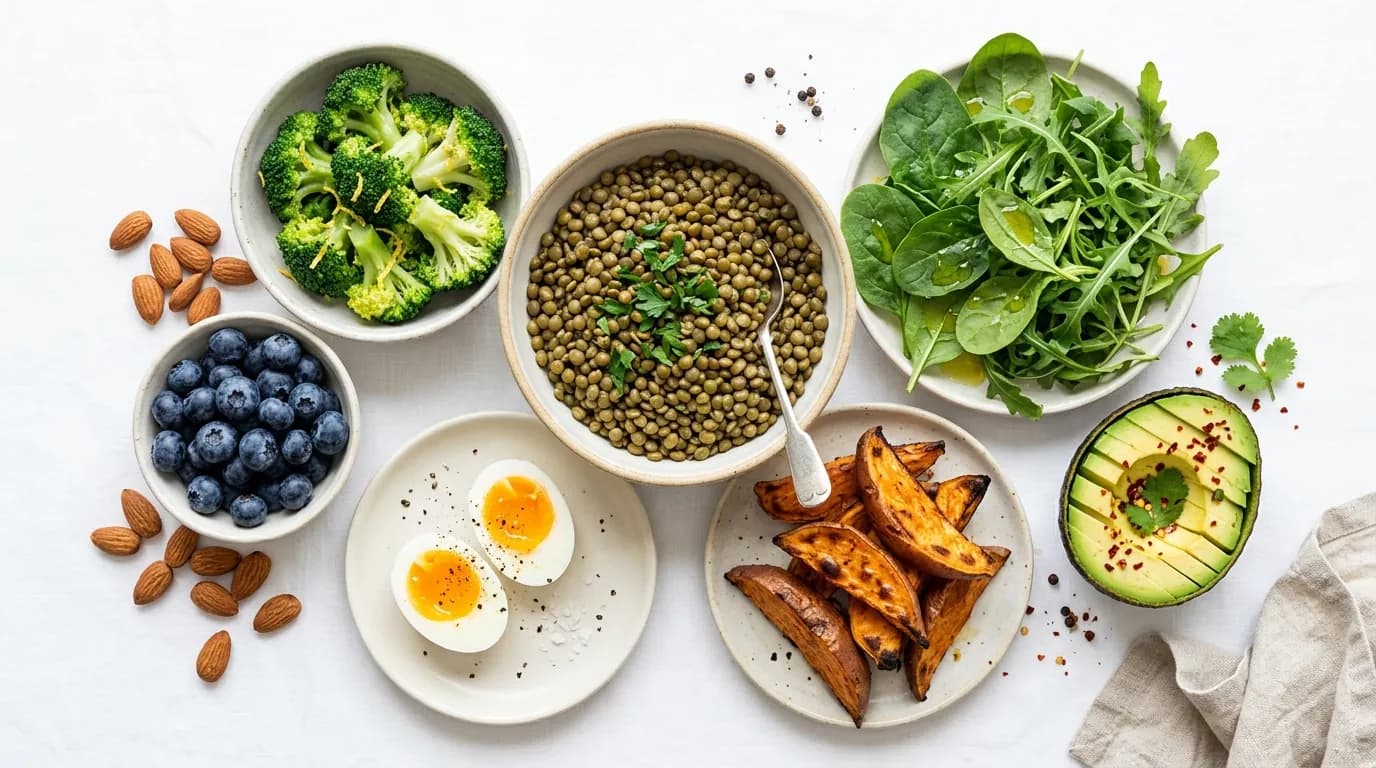
Dietary fats do not raise blood glucose directly and slow the absorption of carbohydrates consumed at the same meal. Avocado (GI 15, GL 1) delivers 15 grams of monounsaturated fat and 7 grams of fiber per half fruit — CGM data shows that adding half an avocado to a sandwich reduces the postmeal spike by 22% compared to the sandwich alone. Extra virgin olive oil (GI 0, GL 0) contains oleic acid and polyphenols that improve insulin sensitivity; a 2017 study in Diabetes Care demonstrated that 25 mL of olive oil consumed with a high-GI meal reduced the 2-hour glucose AUC by 20%. Almonds (GI 0, GL 0, 23 almonds = 1 serving) provide 6 grams of protein and 14 grams of fat; a 2011 study in Metabolism showed that consuming 2 ounces of almonds with a high-carb meal reduced the glycemic response by 30%. Walnuts (GI 15, GL 0) offer alpha-linolenic acid (plant omega-3) that supports insulin receptor function. Chia seeds (GI 1, GL 0) absorb 10 to 12 times their weight in water, forming a gel that physically slows gastric emptying. Flaxseed (GI 0, GL 0, ground) provides 3 grams of fiber per tablespoon and lignans that have been associated with improved fasting glucose in a 2018 Nutrition Reviews meta-analysis.
Vegetables and Leafy Greens
Non-starchy vegetables contain minimal digestible carbohydrate and are rich in fiber, minerals, and polyphenols that support glucose metabolism. Spinach (GI 15, GL 0) provides virtually zero glucose impact with 4 grams of fiber per cooked cup and magnesium — a mineral involved in over 300 enzymatic reactions including insulin signaling. Broccoli (GI 10, GL 1) delivers sulforaphane, a compound shown in a 2017 Science Translational Medicine study (Axelsson et al.) to reduce fasting glucose by 10% in obese type 2 diabetes patients over 12 weeks. Bell peppers (GI 15, GL 1) provide 169% of daily vitamin C per cup with negligible glucose impact. Kale (GI 15, GL 1) contains alpha-lipoic acid, an antioxidant that enhances glucose uptake in muscle cells. Brussels sprouts (GI 15, GL 1) offer 4 grams of fiber per cup. Cauliflower (GI 15, GL 1) is a versatile rice and potato substitute that reduces meal GL by 70 to 90% compared to the starchy originals. Asparagus (GI 15, GL 1) contains inulin, a prebiotic fiber that feeds beneficial gut bacteria associated with improved glucose tolerance in the Zeevi et al. microbiome research.
Legumes: The Underrated Blood Sugar Champions
Legumes combine slow-digesting carbohydrate, plant protein, and soluble fiber in a single food — producing the flattest glucose curves of any carbohydrate-containing food category. Lentils (GI 32, GL 5 per half-cup cooked) are the standout performer: they contain 9 grams of protein, 8 grams of fiber, and 20 grams of carbohydrate per serving, producing a glucose rise of only 15 to 25 mg/dL in most individuals. A 2012 Archives of Internal Medicine study found that consuming 1 cup of legumes daily for 3 months reduced A1C by 0.5% compared to whole wheat fiber supplementation. Chickpeas (GI 28, GL 8) provide 15 grams of protein per cup with a notably flat CGM curve. Black beans (GI 30, GL 7) contain 15 grams of fiber per cup — more than half the daily recommended intake. Kidney beans (GI 24, GL 7) produce among the lowest glucose responses of any starch-containing food. Green peas (GI 48, GL 3) combine carbohydrate and protein with a moderate GI but very low GL per serving. Navy beans (GI 31, GL 9) offer 19 grams of fiber per cup cooked, the highest of any common legume.
Whole Grains That Keep Blood Sugar Stable
Not all whole grains are equal for blood sugar — the key differentiator is whether the grain is intact or processed. Steel-cut oats (GI 55, GL 10 per half-cup dry) maintain their dense grain structure, requiring longer digestion time and producing a moderate, sustained glucose elevation over 2 to 3 hours. By contrast, instant oatmeal (GI 79, GL 17) from the same grain produces a faster, taller spike because the pre-cooking and rolling process has broken down the starch structure. Quinoa (GI 53, GL 13 per cup cooked) provides 8 grams of complete protein alongside its carbohydrate, and the protein content blunts the glucose response. Barley (GI 28, GL 11 per cup cooked) has the highest beta-glucan content of any grain — a soluble fiber that forms a viscous gel in the small intestine, slowing glucose absorption by up to 40% according to a 2012 European Journal of Clinical Nutrition study. Buckwheat (GI 49, GL 12) contains D-chiro-inositol, a compound that improves insulin signaling. Pearl barley in soups and stews produces some of the flattest glucose curves of any grain, with CGM data typically showing less than 20 mg/dL elevation above baseline.