
Alcohol and Blood Sugar: Effects, Risks, and What CGM Data Shows
Alcohol produces a biphasic glucose response — initial spike from carbs, then delayed hypoglycemia 6-12 hours later. Risk by beverage type, CGM patterns, and safety guidelines.
How Alcohol Affects Blood Sugar: The Biphasic Response
Alcohol produces a unique two-phase glucose pattern that makes it one of the most misunderstood substances in blood sugar management. The first phase depends on the beverage: alcoholic drinks containing carbohydrates — beer (10-15g carbs per 12 oz), cocktails with juice or soda (15-40g carbs), and sweet wine (3-8g carbs per 5 oz) — raise blood sugar in the first 30 to 60 minutes just like any other carbohydrate source. CGM data during this phase shows a typical postmeal-style spike of 20 to 60 mg/dL depending on the drink. The second phase is the critical one: 6 to 12 hours after alcohol consumption, blood sugar often drops to abnormally low levels as the liver prioritizes ethanol metabolism over its normal glucose production (gluconeogenesis). The liver normally releases 6 to 8 grams of glucose per hour overnight to maintain stable blood sugar during sleep. When alcohol is present, the liver redirects its enzymatic machinery to break down ethanol — specifically, the enzyme alcohol dehydrogenase converts ethanol to acetaldehyde, which requires NAD+ that would otherwise be used in gluconeogenesis. This metabolic competition suppresses hepatic glucose output by up to 45%, creating a window of vulnerability for hypoglycemia.
CGM Patterns by Beverage Type
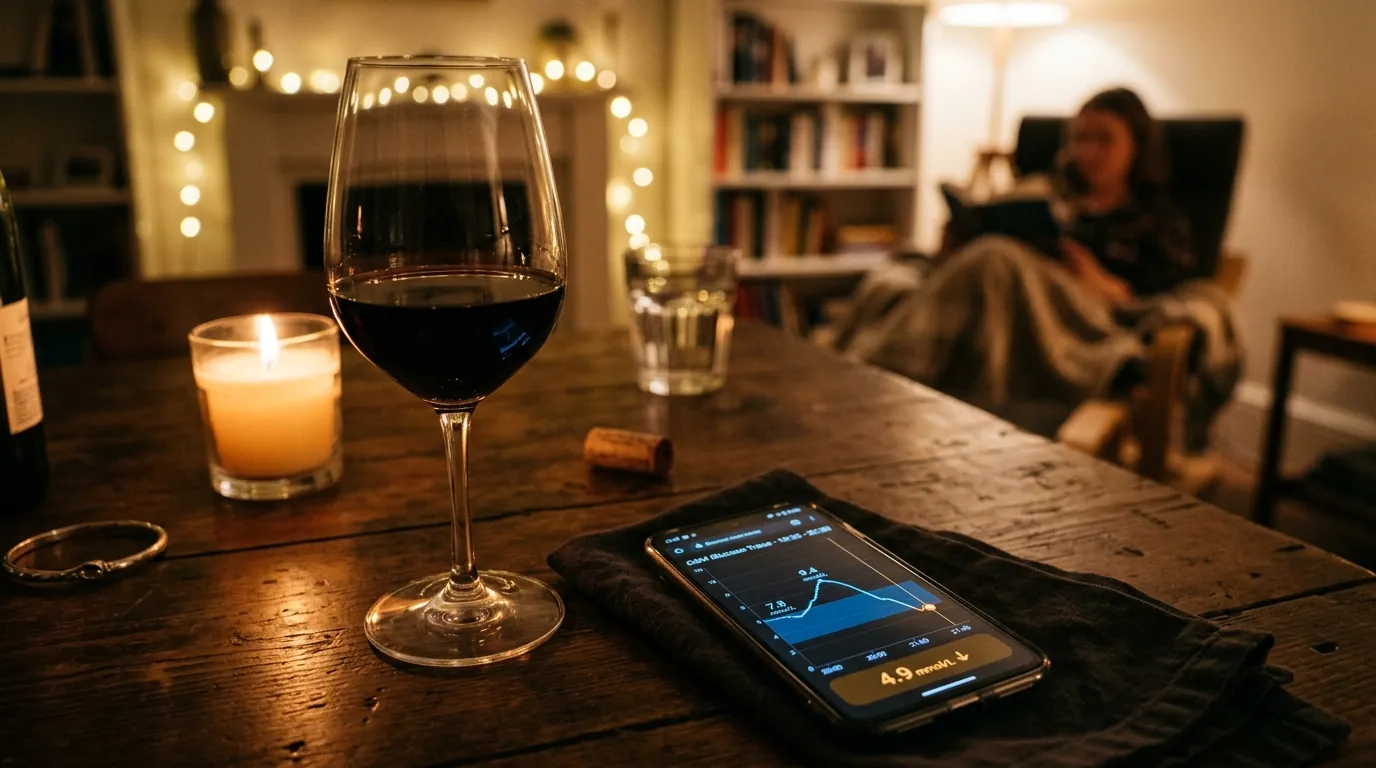
CGM data reveals distinctly different glucose signatures for different alcoholic beverages. Beer (GI 66, 10-15g carbs per 12 oz) produces the most carbohydrate-driven initial spike, with 2 beers commonly causing a 40 to 60 mg/dL rise followed by a drop below baseline 6 to 8 hours later. A 2019 study in Diabetes Technology and Therapeutics showed that beer drinkers with type 1 diabetes had 3.2 times the risk of overnight hypoglycemia compared to non-drinking nights. Red wine (3-4g carbs per 5 oz) produces a small initial rise of 10 to 20 mg/dL — the polyphenol resveratrol in red wine may actually improve short-term insulin sensitivity, but the overnight suppression of gluconeogenesis still occurs. A 2015 Annals of Internal Medicine trial found that 150 mL of red wine daily for 2 years improved fasting glucose by 2 mg/dL in type 2 diabetes patients. Spirits with sugar-free mixers (vodka-soda, gin-tonic with diet tonic) produce minimal initial glucose rise because they contain zero carbohydrate, but the delayed hypoglycemia effect is identical — CGM data commonly shows a glucose nadir of 55 to 65 mg/dL between 2 AM and 5 AM after 2 to 3 standard drinks consumed in the evening. Cocktails with sugary mixers (margarita, rum-and-Coke, mojito) produce the worst combined effect: a large initial spike from 30 to 50 grams of sugar followed by the same delayed hypoglycemia.
Alcohol and Diabetes: Risk Assessment
The combination of alcohol and diabetes medication creates specific safety concerns that CGM data can help manage but not eliminate. People taking insulin face the highest risk: alcohol-induced suppression of hepatic glucose output combined with exogenous insulin can produce severe hypoglycemia (below 54 mg/dL) that requires emergency treatment. The American Diabetes Association recommends that people with diabetes limit alcohol to 1 drink per day for women and 2 for men, always consume alcohol with food (never on an empty stomach), check blood glucose before bed and have a carbohydrate snack if glucose is below 100 mg/dL, and wear a CGM with low-glucose alerts enabled on drinking nights. Sulfonylurea medications (glipizide, glyburide) also increase hypoglycemia risk when combined with alcohol because they stimulate insulin release independent of glucose levels. Metformin carries a theoretical risk of lactic acidosis with excessive alcohol, though this is rare at moderate intake. For people without diabetes, moderate alcohol (1-2 drinks) has been associated with improved insulin sensitivity in some epidemiological studies, but the overnight glucose drop is still detectable on CGM data and warrants awareness.
Practical Guidelines for Drinking with CGM Monitoring
Five evidence-based guidelines minimize alcohol-related glucose disruption when using a CGM. First, eat a meal containing protein, fat, and slow-digesting carbohydrate before or while drinking — this provides a sustained glucose source that counteracts the overnight suppression of hepatic glucose output. Second, choose lower-carb options to minimize the initial spike: dry wine (2-4g carbs per glass), spirits with sugar-free mixers, or light beer (5-8g carbs) rather than regular beer, cocktails, or sweet wine. Third, set a low-glucose alert at 70 mg/dL on your CGM before going to bed — this provides an early warning of the delayed hypoglycemia that typically occurs 6 to 12 hours after drinking. Fourth, have a bedtime snack containing 15 to 25 grams of slow-digesting carbohydrate (crackers with peanut butter, an apple with cheese) if your pre-bed glucose is below 120 mg/dL. Fifth, limit intake to 1 to 2 standard drinks per occasion — the delayed hypoglycemia risk increases substantially with 3 or more drinks, and CGM data consistently shows that the glucose nadir is 10 to 15 mg/dL lower per additional drink beyond 2. Review your CGM data the morning after drinking to learn your personal response pattern and adjust your strategy for future occasions.