
Time in Range: The 70% TIR Target and Why It Matters for A1C
Time in Range measures the percentage of glucose readings between 70-180 mg/dL. The 70% TIR target, its correlation with A1C, and why it replaced averages.
What Is Time in Range?
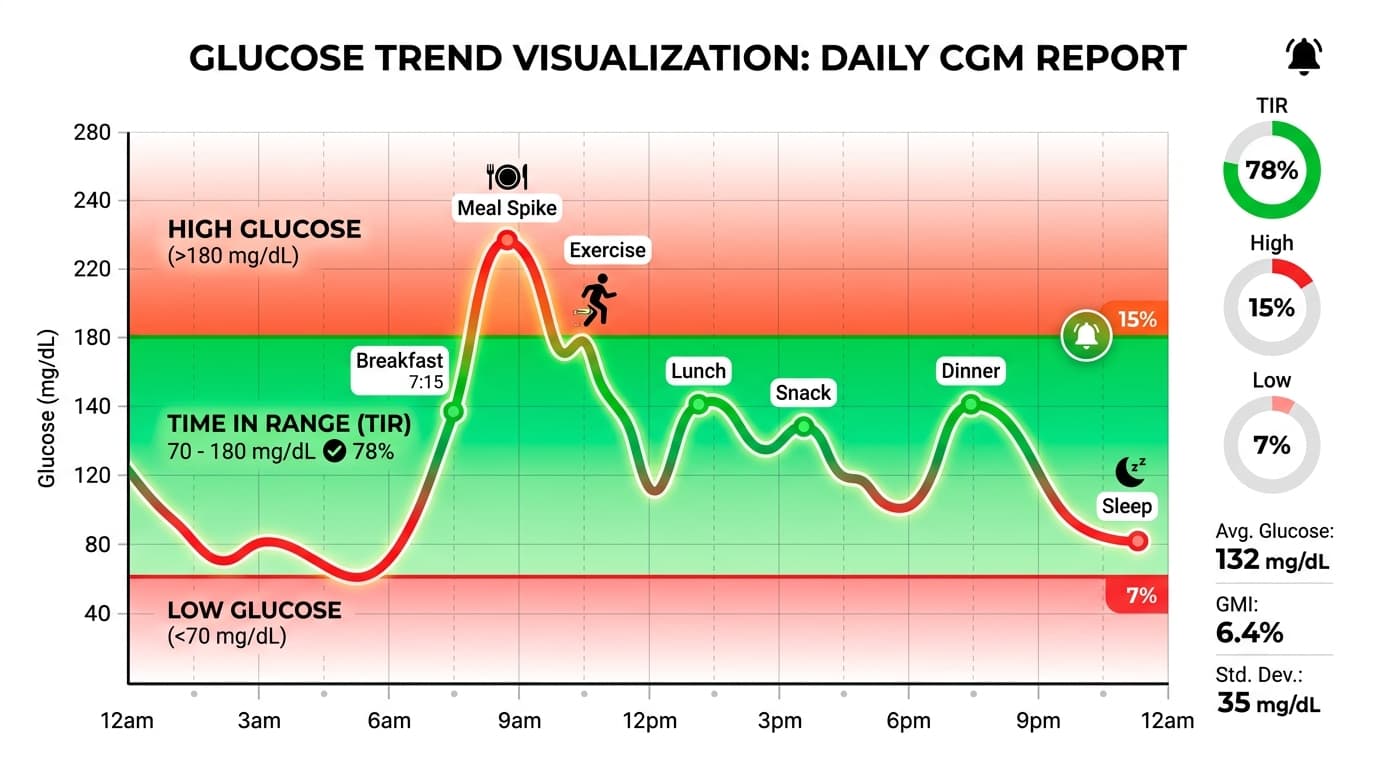
Time in range (TIR) is the percentage of time your glucose stays within a defined target zone, typically 70 to 180 mg/dL for most adults with diabetes. A TIR of 70% means your glucose was in the target zone for approximately 16 hours and 48 minutes out of 24 hours. TIR has emerged as the most clinically meaningful metric from continuous glucose monitor data because it captures both hyperglycemia and hypoglycemia in a single number, reflects day-to-day glucose control more accurately than a quarterly A1C test, and directly correlates with diabetes complication risk. The International Consensus on Time in Range (2019), endorsed by the American Diabetes Association, established TIR targets that are now standard clinical practice worldwide. Unlike A1C, which reflects a 2-to-3-month average and can mask dangerous glucose swings, TIR from a CGM provides a real-time, granular picture of how well blood sugar is being managed hour by hour.
TIR Targets by Population
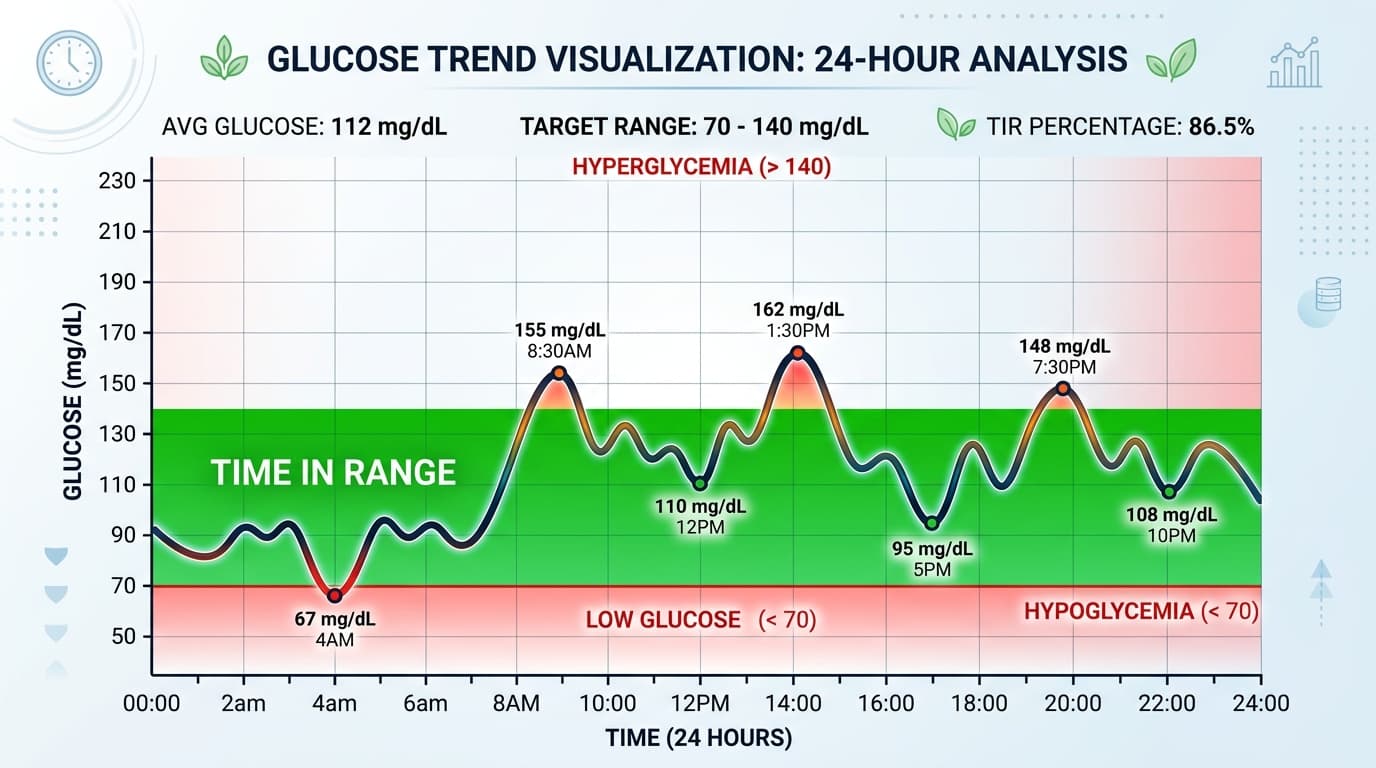
International consensus guidelines define different TIR targets for different populations. For most adults with type 1 or type 2 diabetes, the target is TIR greater than 70% (70-180 mg/dL), with time below range (less than 70 mg/dL) under 4% and time below 54 mg/dL under 1%. For older adults and high-risk populations, the target is more lenient: TIR greater than 50% with time below range under 1%. For pregnant women with diabetes, the target range narrows to 63-140 mg/dL with TIR greater than 70%, reflecting the stricter glucose control needed during pregnancy. For non-diabetic wellness users, an informal target of TIR greater than 90% (70-140 mg/dL) is commonly recommended by CGM subscription services like Levels and Nutrisense, though this is not an official clinical guideline. These standardized targets allow clinicians to set clear, measurable goals and track progress over weeks and months using CGM data.
The Clinical Significance of Each 5% Improvement
Research has demonstrated that every 5 percentage point increase in TIR produces meaningful health benefits. A landmark 2019 study published in Diabetes Care analyzed data from 3,262 CGM users and found that each 10% decrease in TIR was associated with a 64% increased risk of retinopathy progression and a 40% increased risk of microalbuminuria (an early marker of kidney damage). Conversely, each 5% increase in TIR corresponds to an estimated A1C reduction of approximately 0.5%. Moving TIR from 50% to 70% — a 20 percentage point improvement — is associated with an A1C drop of roughly 2.0%, a 50% reduction in retinopathy risk, and significant reductions in diabetes distress and quality-of-life burden. For people with type 1 diabetes, CGM-driven improvements in TIR have been shown to reduce emergency department visits for hypoglycemia by 50% or more. This evidence base is why TIR has replaced A1C as the primary outcome measure in many clinical trials.
How to Improve Your Time in Range
Improving TIR requires addressing both highs and lows. To reduce time above range (hyperglycemia), the most effective interventions are pre-bolusing insulin 15 to 20 minutes before meals, reducing refined carbohydrate intake, taking a 10-to-15-minute walk after meals (shown to reduce postmeal spikes by 20-30%), and optimizing basal insulin timing to address the dawn phenomenon. To reduce time below range (hypoglycemia), consider adjusting insulin doses on exercise days, setting predictive low glucose alerts on your CGM, keeping fast-acting glucose accessible, and reviewing the 15-15 rule (consume 15 grams of carbs, recheck in 15 minutes). Closed-loop insulin pump systems that integrate with CGM data can improve TIR by 10 to 15 percentage points compared to manual pump therapy by automatically adjusting basal insulin delivery based on predicted glucose trends. For non-diabetic users, simply reducing high-glycemic foods and adding protein or fat to carbohydrate-heavy meals typically improves TIR within 1 to 2 weeks of CGM-guided behavior changes.