
CGM and Insulin Pump Integration: 3 Closed-Loop Systems in 2026
3 closed-loop CGM-pump systems in 2026 — Medtronic 780G, Tandem Control-IQ, and Omnipod 5. How automated insulin delivery uses real-time CGM glucose data.
What Is a Closed-Loop Insulin Delivery System?
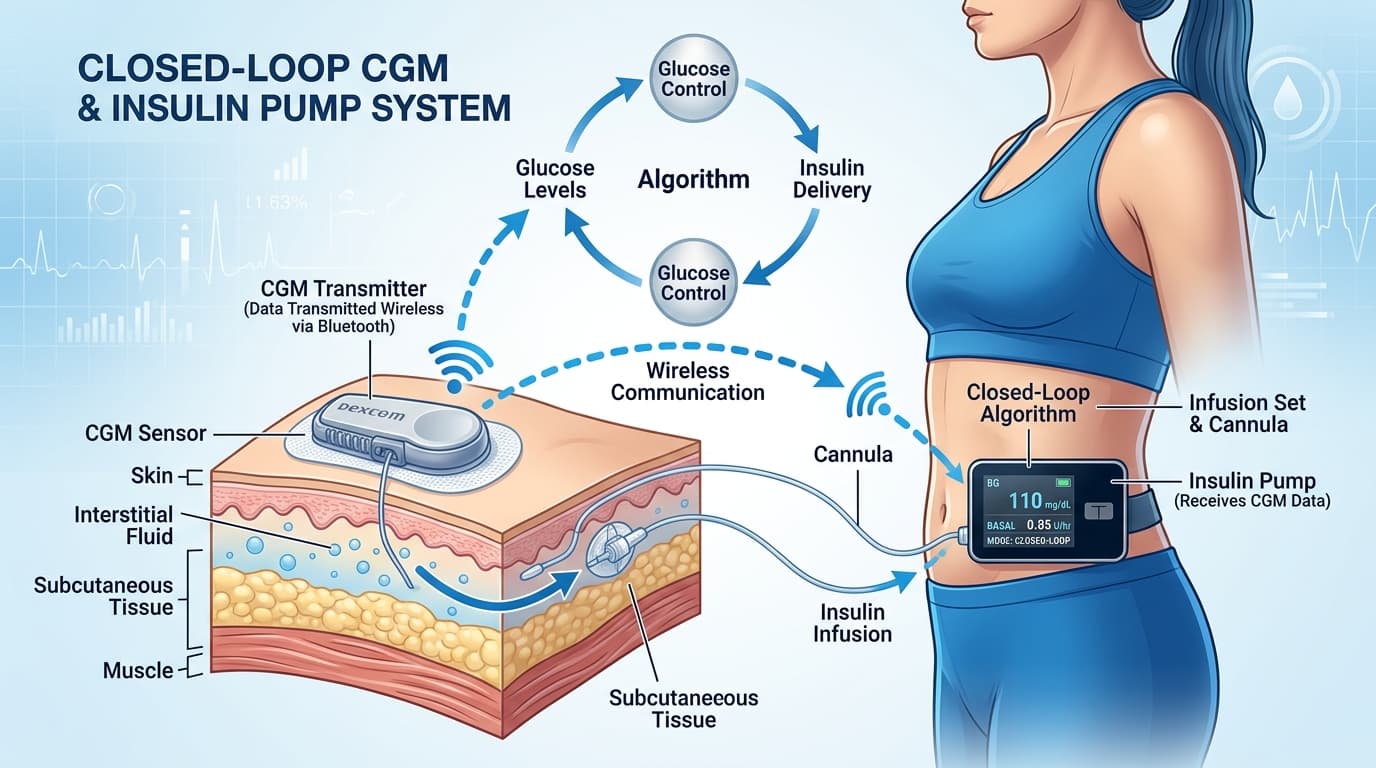
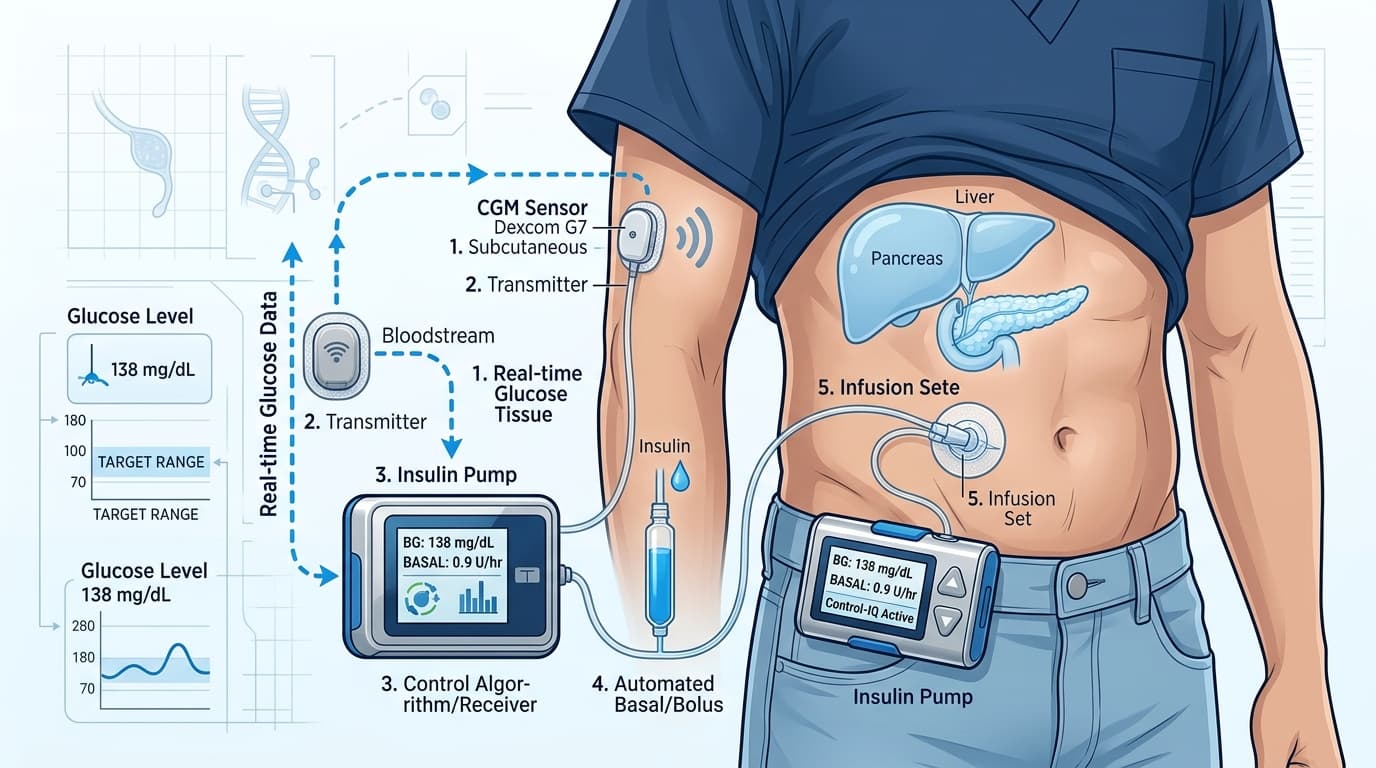
A closed-loop system — also called an automated insulin delivery (AID) system or artificial pancreas — combines three components: a continuous glucose monitor that provides real-time glucose data, an insulin pump that delivers precise doses of rapid-acting insulin, and a control algorithm that uses CGM readings to automatically adjust insulin delivery. The CGM sends glucose values to the algorithm every 5 minutes. The algorithm calculates the optimal basal insulin rate based on the current glucose value, the direction and rate of glucose change, the amount of insulin already active in the body, and the user's personalized insulin sensitivity settings. It then instructs the pump to increase, decrease, or suspend basal insulin delivery accordingly. This automated loop runs 24 hours a day, reducing the burden of manual insulin management and achieving tighter glucose control than either CGM or pump therapy alone. Clinical trials consistently show that closed-loop systems increase time in range by 10 to 15 percentage points compared to sensor-augmented pump therapy without automation.
Current Closed-Loop Systems Available in 2026
Three FDA-cleared closed-loop systems dominate the U.S. market in 2026. The Medtronic MiniMed 780G pairs with the Guardian 4 CGM and uses the SmartGuard algorithm to adjust basal insulin every 5 minutes, with an auto-correction bolus feature that delivers small correction doses when glucose rises above a configurable target (100 or 120 mg/dL). The Tandem t:slim X2 with Control-IQ integrates with the Dexcom G7 and uses a model-predictive algorithm to increase or decrease basal rates and deliver automatic correction boluses when glucose is predicted to exceed 180 mg/dL. The Omnipod 5 is a tubeless, pod-based pump that integrates with the Dexcom G7 and uses the SmartAdjust algorithm for automated basal adjustments. Each system requires the user to manually bolus for meals, but the automated basal adjustments handle overnight glucose management, inter-meal drift, and corrections for high glucose — the tasks that consume the most cognitive energy in traditional pump therapy.
CGM Requirements for Closed-Loop Systems
Not every CGM is compatible with closed-loop pump systems. Only integrated CGMs (iCGM) that meet the FDA's accuracy and reliability standards can be used as the glucose input for automated insulin delivery. As of 2026, the Dexcom G7 is the most widely integrated CGM, compatible with both the Tandem Control-IQ and Omnipod 5 systems. The Medtronic Guardian 4 is exclusively paired with the MiniMed 780G. The Eversense E3, despite its excellent accuracy, is not yet integrated with any commercial insulin pump, though Senseonics has announced partnerships with pump manufacturers for future integration. Over-the-counter CGMs like the Dexcom Stelo and Abbott Lingo are explicitly excluded from pump integration because their regulatory clearance is for wellness use only, not insulin dosing decisions. For a closed-loop system to function safely, the CGM must provide readings at least every 5 minutes, maintain connectivity greater than 90% of the time, and have a validated MARD below 10%.
Clinical Outcomes: How Closed-Loop Changes Diabetes Management
The evidence supporting closed-loop therapy is robust and growing. The landmark 6-month iDCL trial (2019, published in the New England Journal of Medicine) demonstrated that Control-IQ increased time in range from 61% to 71% and reduced time below range from 3.6% to 1.6% compared to sensor-augmented pump therapy without automation. A 2024 meta-analysis in The Lancet Diabetes & Endocrinology covering 28 randomized controlled trials found that closed-loop systems reduced A1C by 0.4% and increased time in range by an average of 2.5 hours per day across all age groups. Overnight glucose control showed the most dramatic improvement: time in range between midnight and 6 AM increased by 20 percentage points with closed-loop therapy. For families with children on insulin pumps, the reduction in overnight hypoglycemia provides peace of mind that is difficult to quantify but consistently reported as life-changing. The combination of CGM and automated insulin delivery represents the most significant advance in type 1 diabetes technology since the insulin pump itself.