
CGM Data and Glucose Reports: AGP, Trends, and 288 Daily Readings
Reading CGM reports — Ambulatory Glucose Profile, daily trends, 288 readings per day, glucose variability metrics, and how to interpret your continuous glucose data.
Understanding Your CGM Data
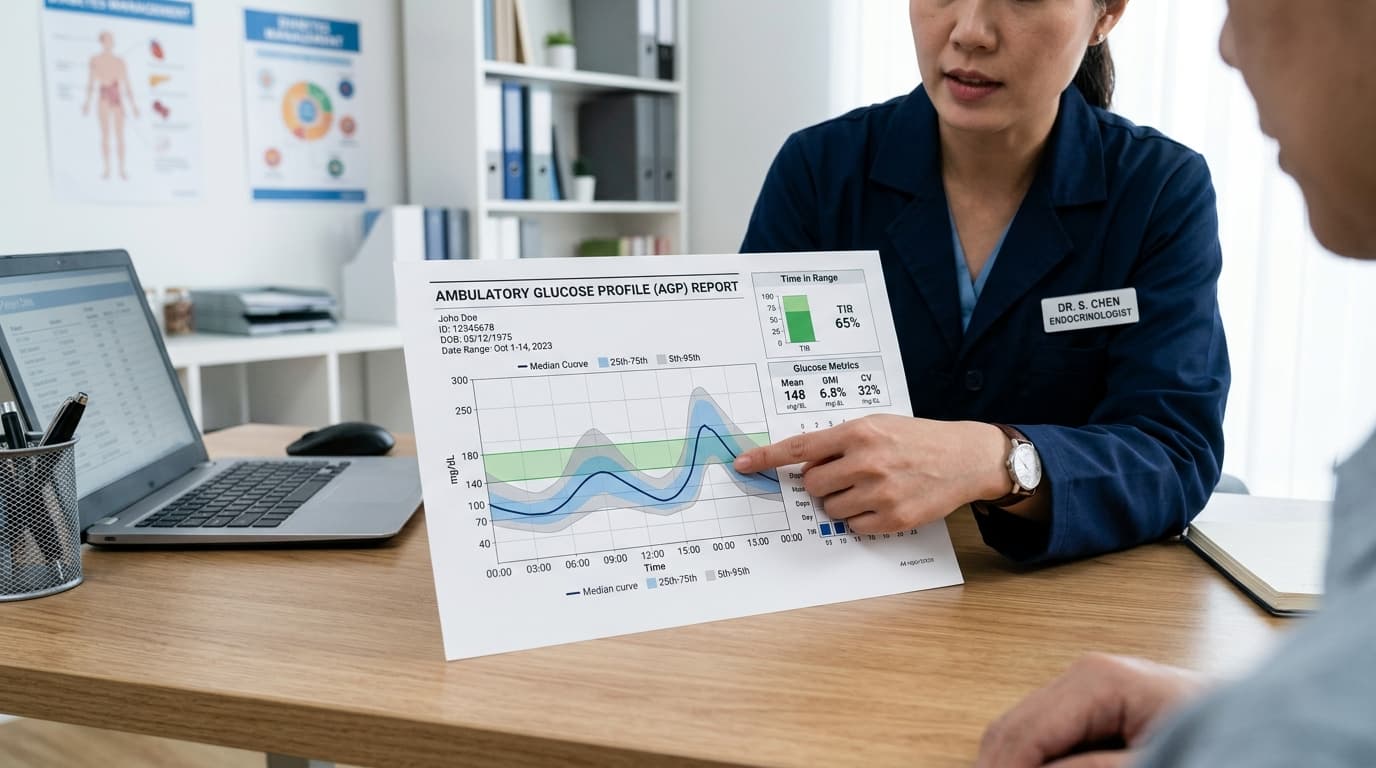
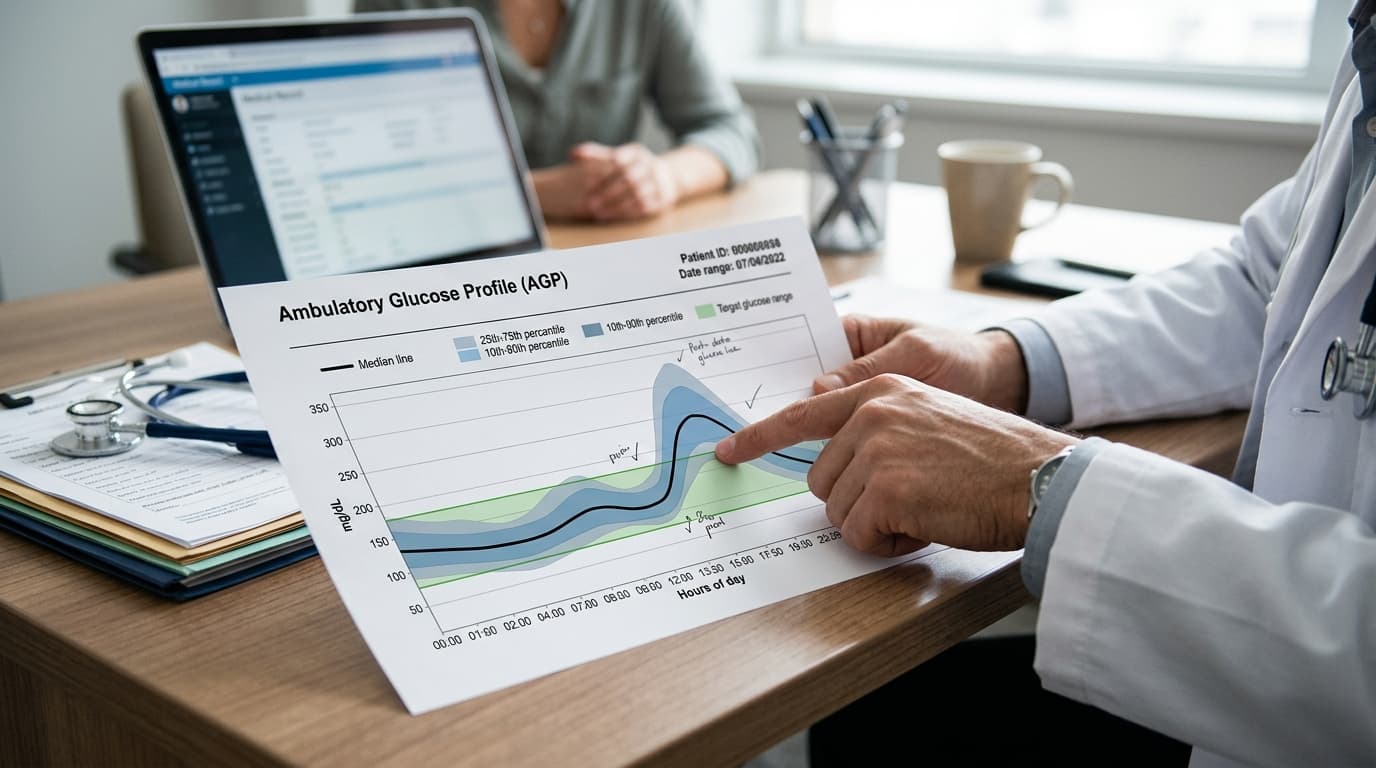
A continuous glucose monitor generates an extraordinary volume of data — 288 readings per day for a 5-minute interval device, or 1,440 per day for a 1-minute device like the FreeStyle Libre 3. Raw glucose values alone are difficult to interpret, which is why every CGM platform organizes data into standardized reports. The most important report format is the Ambulatory Glucose Profile (AGP), adopted by the International Diabetes Center and endorsed by the American Diabetes Association. An AGP condenses 14 days of CGM data into a single-page visual summary showing your median glucose line, the interquartile range (25th to 75th percentile band), and the 10th to 90th percentile range across each hour of the day. This composite view reveals recurring patterns that day-by-day graphs would obscure. Key metrics displayed alongside the AGP include time in range, glucose management indicator (GMI), coefficient of variation, and average glucose.
Trend Arrows and What They Mean
Trend arrows are real-time directional indicators that appear alongside your current glucose reading on the CGM app. They show not just where your glucose is, but where it is headed. A flat horizontal arrow means glucose is stable (changing less than 1 mg/dL per minute). A single up or down arrow indicates a moderate rate of change (1 to 2 mg/dL per minute). A double up or double down arrow signals a rapid change (more than 2 mg/dL per minute). Trend arrows are clinically significant for insulin dosing: if glucose reads 150 mg/dL with a double up arrow, it may reach 180 mg/dL within 15 minutes and could warrant a correction dose. If glucose reads 100 mg/dL with a down arrow, eating a snack may prevent a low. The Dexcom G7 uses a 5-arrow system (double up, single up, flat, single down, double down). The FreeStyle Libre 3 uses a similar system with slightly different rate thresholds. Understanding trend arrows transforms CGM from a reactive monitoring tool into a predictive one.
Glucose Patterns to Watch For
CGM data reveals 5 critical glucose patterns that fingerstick testing typically misses. The dawn phenomenon is a pre-waking glucose rise between 3 AM and 8 AM caused by counter-regulatory hormone release, visible as a consistent upward slope on overnight CGM graphs. Postmeal spikes appear as sharp peaks 30 to 90 minutes after eating, with the height and duration indicating how well your body handles that specific food. Nocturnal hypoglycemia shows as glucose dropping below 70 mg/dL during sleep — a dangerous pattern that occurs in up to 40% of people on insulin and is undetectable without continuous monitoring. Compression lows are false low readings caused by sleeping on the sensor arm, identifiable by their sudden onset and equally sudden resolution. Reactive hypoglycemia appears as a spike-and-crash pattern where glucose rises sharply after a high-carbohydrate meal, then drops below baseline 2 to 4 hours later.
Sharing CGM Data with Your Healthcare Team
Every major CGM platform includes cloud-based data sharing for clinicians. Dexcom uses Clarity (clarity.dexcom.com), which generates AGP reports, daily overlay graphs, and exportable CSV files. Abbott uses LibreView (libreview.com), which provides similar reporting for FreeStyle Libre users. Senseonics data integrates with both Glooko and Tidepool platforms. During a telehealth or in-person visit, your clinician can access 14 to 90 days of CGM data and identify patterns that inform medication adjustments, dietary recommendations, and insulin dosing changes. Many endocrinologists now require CGM data as a prerequisite for appointments, as a 2-week AGP report provides more actionable information than a single A1C blood test. CGM subscription services like Nutrisense and Levels also offer data sharing with their in-house dietitians and health coaches through their proprietary apps.