
CGM Accuracy and MARD: Understanding the 8-14% Range Across Devices
MARD ranges from 8.1% to 14.2% across CGM devices. How Mean Absolute Relative Difference measures accuracy and what the numbers mean for real-world glucose readings.
What Is MARD and Why Does It Matter?
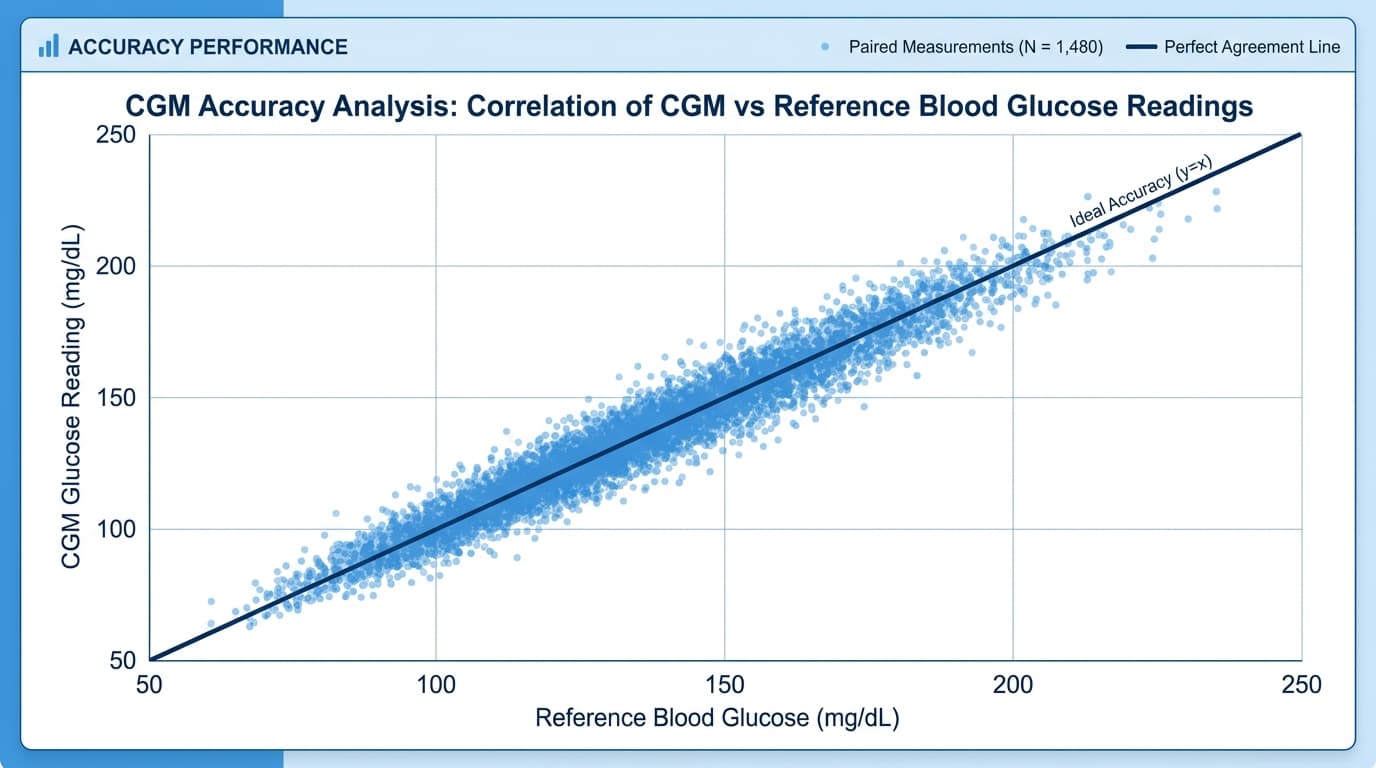
Mean Absolute Relative Difference (MARD) is the single most important number for evaluating CGM accuracy. It quantifies the average percentage difference between a CGM sensor reading and a simultaneous reference blood glucose measurement taken from a laboratory analyzer (typically a YSI glucose analyzer). A MARD of 8% means, on average, the CGM value deviates from the true blood glucose by 8%. Lower MARD equals higher accuracy. For context, a CGM with 8% MARD reading 100 mg/dL has an expected range of 92 to 108 mg/dL. The FDA evaluates MARD data from clinical trials when deciding whether to clear a CGM for commercial sale. Most regulatory agencies expect a MARD below 10% for devices intended for insulin dosing decisions. As of 2026, the FreeStyle Libre 3 leads with a MARD of 7.9%, followed by the Dexcom G7 at 8.2%, and the Eversense E3 at 8.5%.
How MARD Is Calculated in Clinical Trials
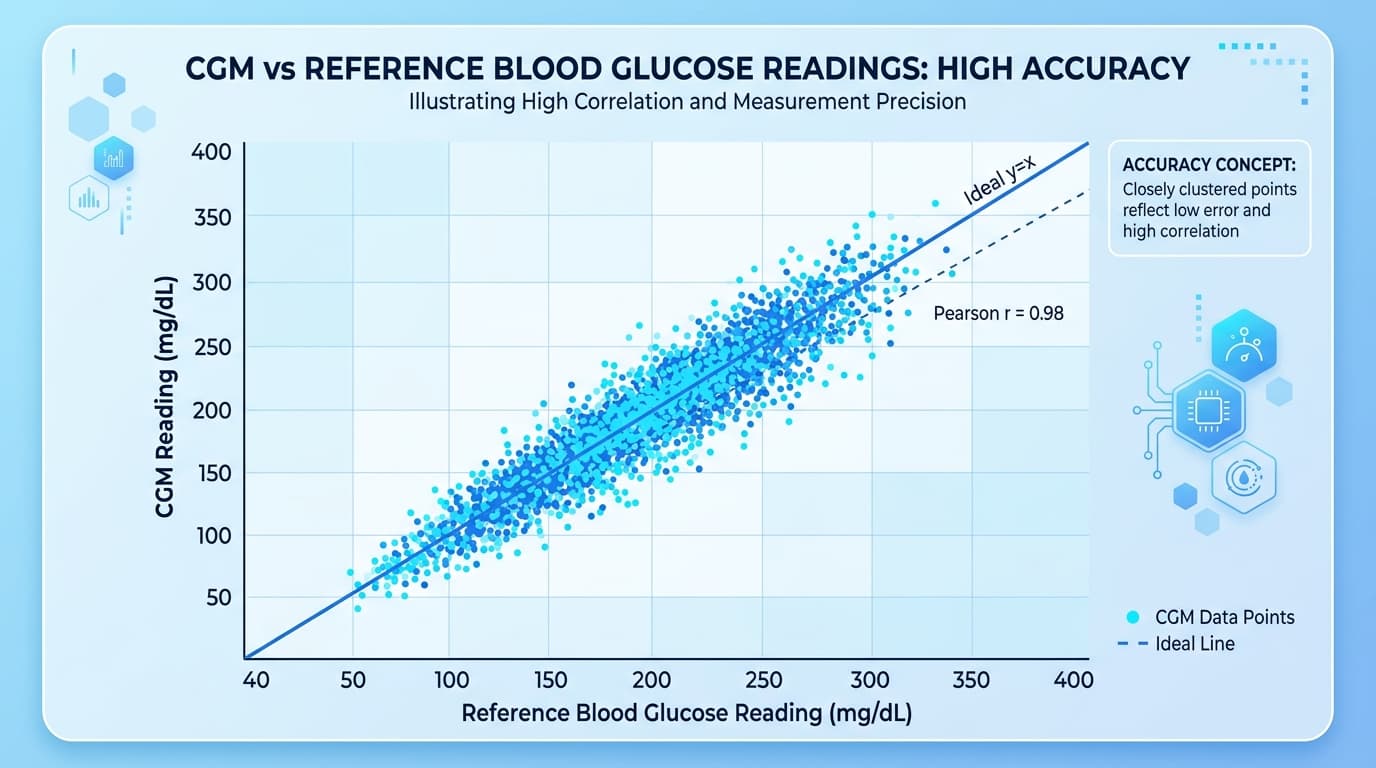
MARD calculations come from pivotal clinical trials where participants wear a CGM sensor while undergoing frequent reference blood glucose sampling — typically every 15 to 30 minutes over an 8 to 12 hour in-clinic session. For each paired measurement, the absolute relative difference (ARD) is calculated as |(CGM value - reference value) / reference value| x 100. The MARD is the arithmetic mean of all ARD values across all participants and all time points. A well-designed pivotal trial includes 50 to 100 participants and generates 5,000 to 15,000 paired data points. It is important to note that MARD is an aggregate metric — individual readings can deviate more or less than the average. A device with 8% MARD may have 5% of its readings deviating by more than 20%, which is why clinicians also evaluate consensus error grids and the percentage of readings falling within clinically acceptable zones.
Factors That Affect CGM Accuracy
Several physiological and environmental factors influence the accuracy of continuous glucose monitoring. The interstitial fluid lag is the most fundamental: because CGMs measure glucose in interstitial fluid rather than blood, readings lag behind actual blood glucose by 5 to 15 minutes. During rapid glucose changes (rising or falling faster than 2 mg/dL per minute), this lag causes the CGM to underestimate spikes and overestimate drops. Sensor compression — caused by lying on the sensor during sleep — can restrict blood flow to the tissue and produce false low readings, sometimes called "compression lows." Acetaminophen (Tylenol) historically caused false high readings on older CGMs, though current-generation devices like the Dexcom G7 have eliminated this interference. Dehydration, extreme temperatures, and high altitude can also affect accuracy. For most users under normal conditions, these factors produce clinically insignificant deviations.
MARD by Device: 2026 Rankings
The accuracy hierarchy of CGMs available in 2026 is clear. The FreeStyle Libre 3 Plus achieves a MARD of 7.9% in adults — the lowest of any commercial CGM. The Dexcom G7 follows at 8.2% overall MARD, with pediatric MARD of 8.1% in children ages 2 to 17. The Eversense E3 implantable CGM reports an 8.5% MARD over its 180-day sensor life. The Medtronic Guardian 4, used with the MiniMed 780G insulin pump system, has a MARD of 8.7%. Over-the-counter devices have slightly higher MARD values: the Dexcom Stelo reports approximately 9.0% and the Abbott Lingo approximately 9.1%. These differences are small in absolute terms but can matter for people making frequent insulin dosing decisions, where a 1% MARD improvement translates to tighter glucose control over thousands of readings per week.