
Time in Range(TIR)
Definition
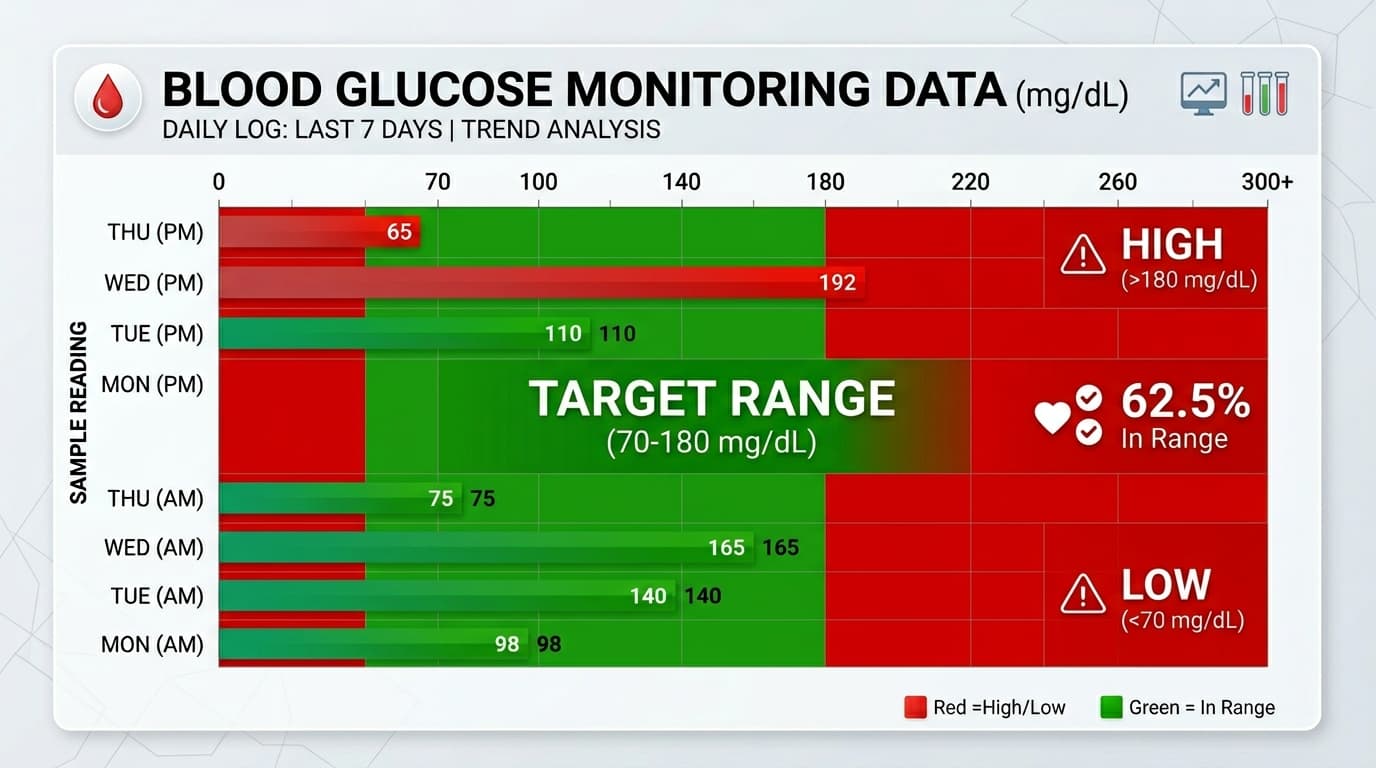
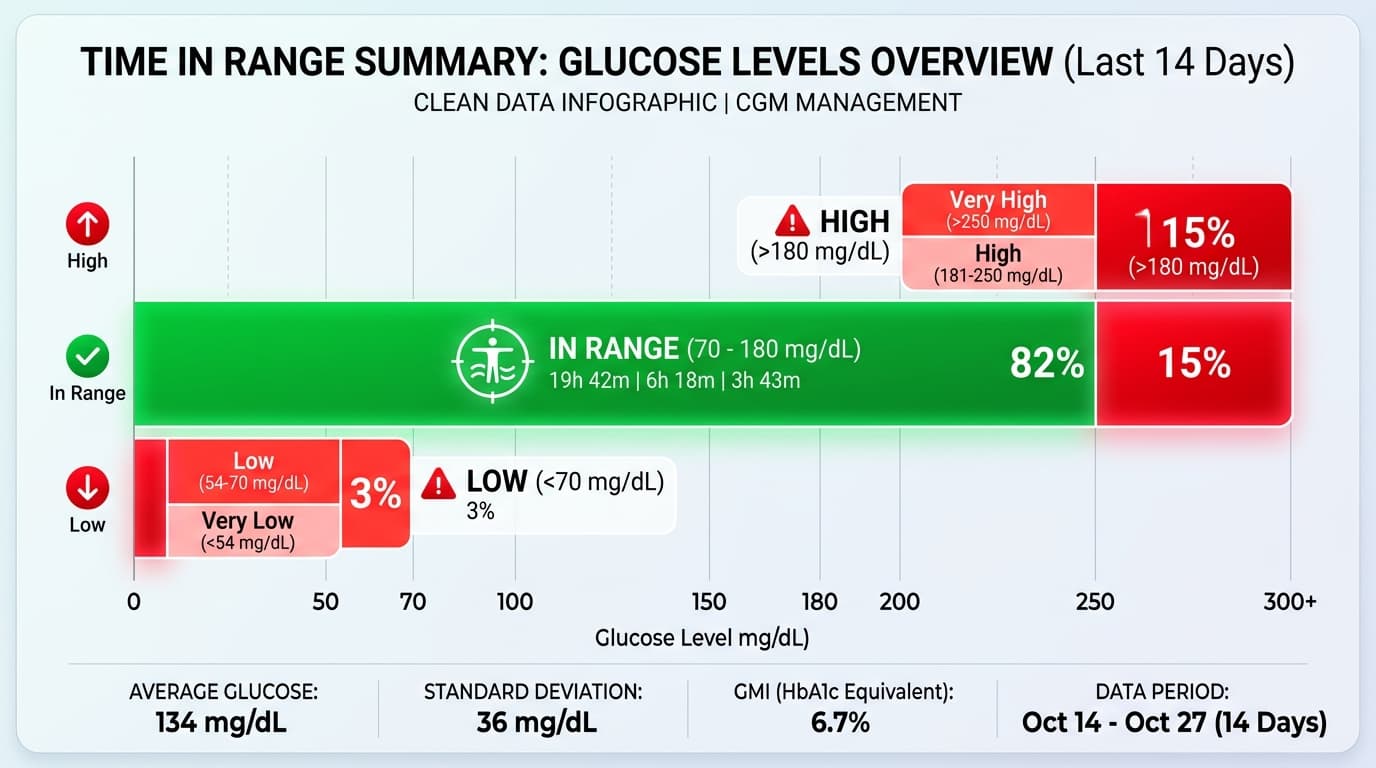
The percentage of time a person's glucose level remains within a defined target range, typically 70 to 180 mg/dL for most people with diabetes. International consensus guidelines recommend a TIR target of greater than 70% (approximately 16 hours and 48 minutes per day) for most adults with type 1 or type 2 diabetes. Each 5% increase in TIR corresponds to a clinically meaningful A1C reduction of approximately 0.5%, making TIR the preferred metric for assessing glucose control from CGM data.
Why “Time in Range” Matters for Glucose Monitoring
Understanding time in range is essential for anyone using or evaluating a continuous glucose monitor. This concept directly affects how CGM devices are designed, how glucose data is interpreted, and how clinical decisions about blood sugar management are made. CGM metrics transform thousands of raw glucose readings into actionable numbers that clinicians use to assess glucose control, adjust medications, and set treatment goals.
This term is particularly relevant to 3 CGM products in our database. Understanding TIR helps you compare devices more effectively and choose the right continuous glucose monitor for your specific needs.
Related Terms
Hemoglobin A1C is a blood test that measures the percentage of hemoglobin proteins coated with sugar, reflecting average blood glucose levels over the previous 2 to 3 months.
An estimated A1C value calculated from CGM mean glucose data, allowing users to track their A1C-equivalent in real time without requiring a laboratory blood draw.
The magnitude and frequency of blood glucose fluctuations over a defined period.
A standardized one-page glucose report recommended by the International Diabetes Center that summarizes 14 days of CGM data into a visual profile showing median glucose, interquartile range (25th to 75th percentile), and 10th to 90th percentile bands across a 24-hour period.
Abnormally high blood glucose, generally defined as levels above 180 mg/dL after meals or above 130 mg/dL fasting.
Dangerously low blood glucose, generally defined as levels below 70 mg/dL, with severe hypoglycemia occurring below 54 mg/dL.