
MARD(MARD)
Definition
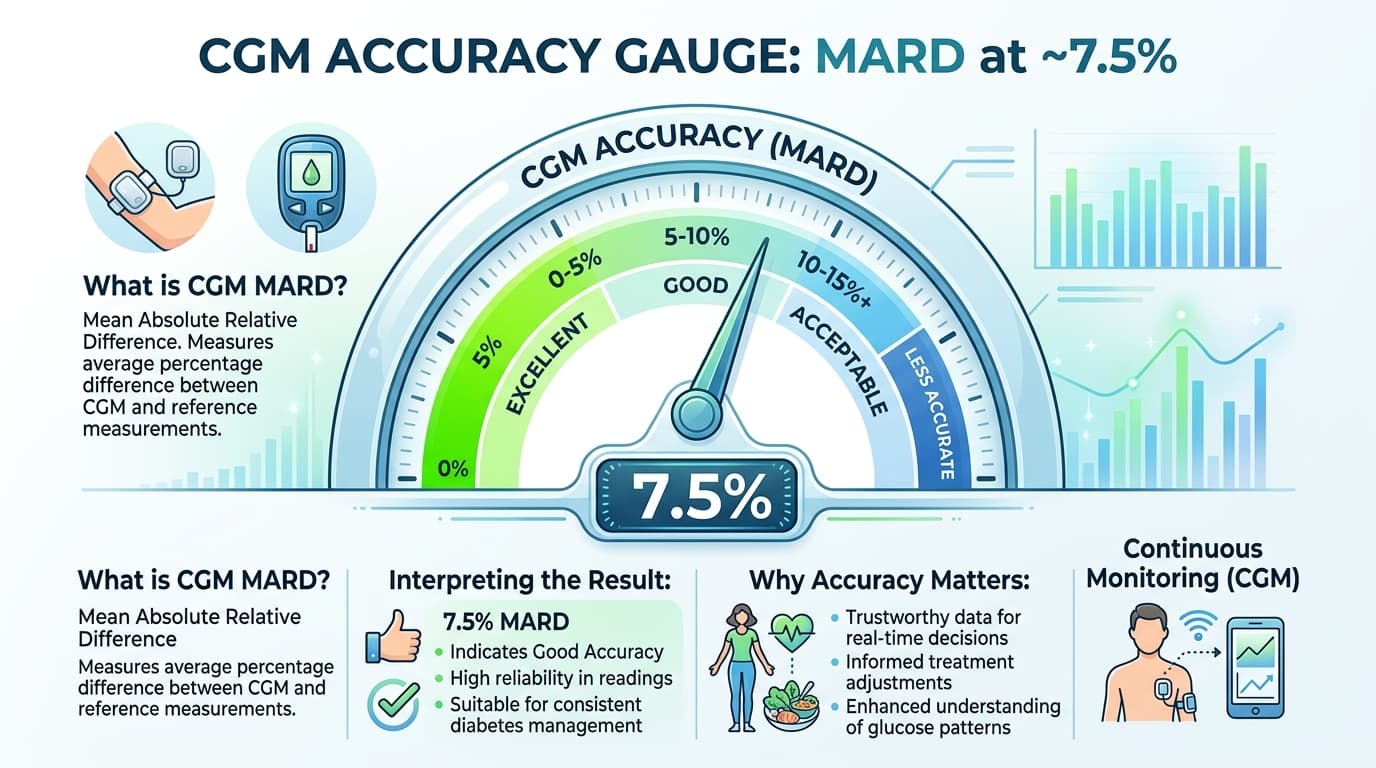
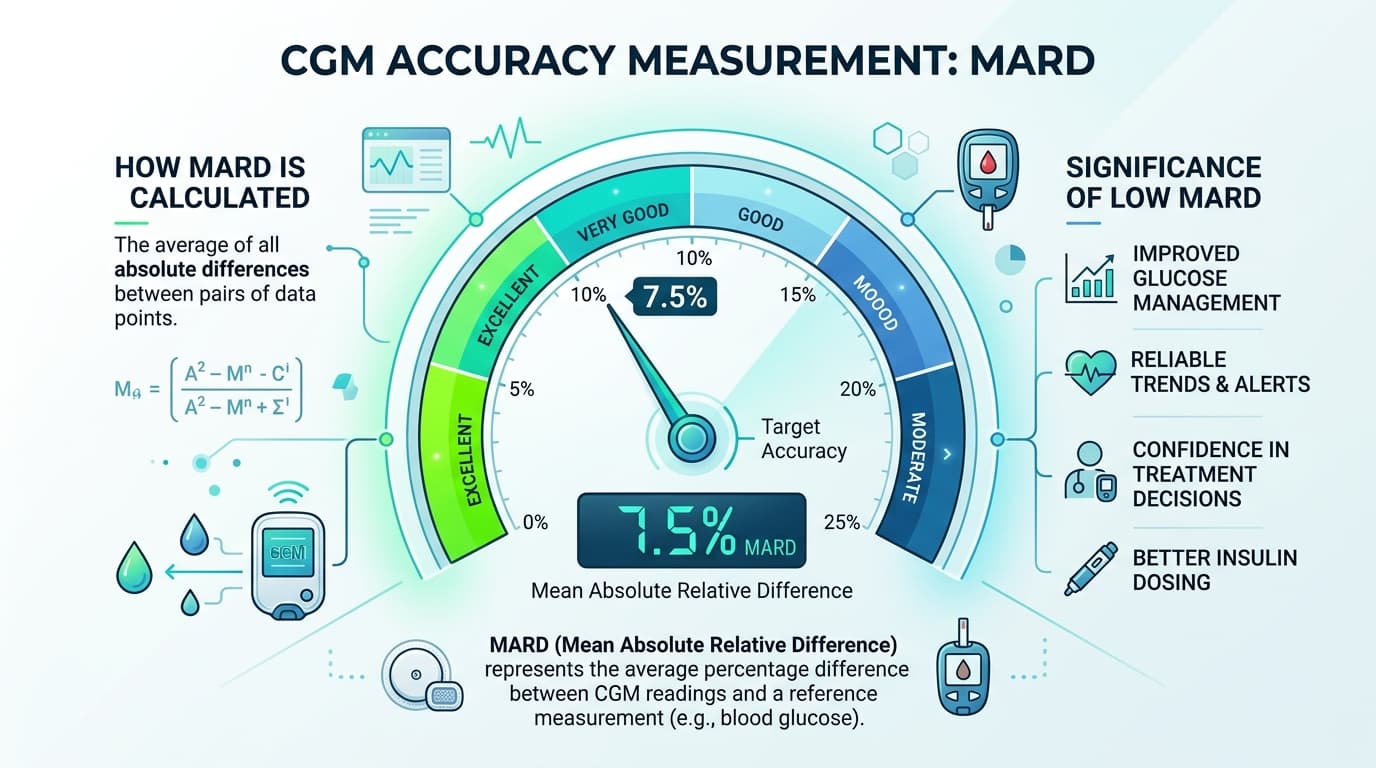
Mean Absolute Relative Difference, the gold standard metric used to evaluate CGM sensor accuracy. MARD is calculated by comparing CGM readings against simultaneous laboratory blood glucose measurements and expressing the average percentage difference. A lower MARD indicates higher accuracy — the best CGMs in 2026 achieve MARD values between 7% and 9%, with the Dexcom G7 at 8.2% and the FreeStyle Libre 3 at 7.9%. A MARD above 10% is generally considered less reliable for insulin dosing decisions.
Why “MARD” Matters for Glucose Monitoring
Understanding mard is essential for anyone using or evaluating a continuous glucose monitor. This concept directly affects how CGM devices are designed, how glucose data is interpreted, and how clinical decisions about blood sugar management are made. CGM metrics transform thousands of raw glucose readings into actionable numbers that clinicians use to assess glucose control, adjust medications, and set treatment goals.
This term is particularly relevant to 3 CGM products in our database. Understanding MARD helps you compare devices more effectively and choose the right continuous glucose monitor for your specific needs.
Related Terms
The process of verifying and adjusting CGM accuracy by comparing a sensor reading against a traditional fingerstick blood glucose measurement.
A wearable medical device that tracks glucose levels in interstitial fluid 24 hours a day through a tiny sensor inserted just under the skin.
The percentage of time a person's glucose level remains within a defined target range, typically 70 to 180 mg/dL for most people with diabetes.
A regulatory classification that determines whether a CGM can be used as the sole basis for treatment decisions.