
Interstitial Fluid(ISF)
Definition
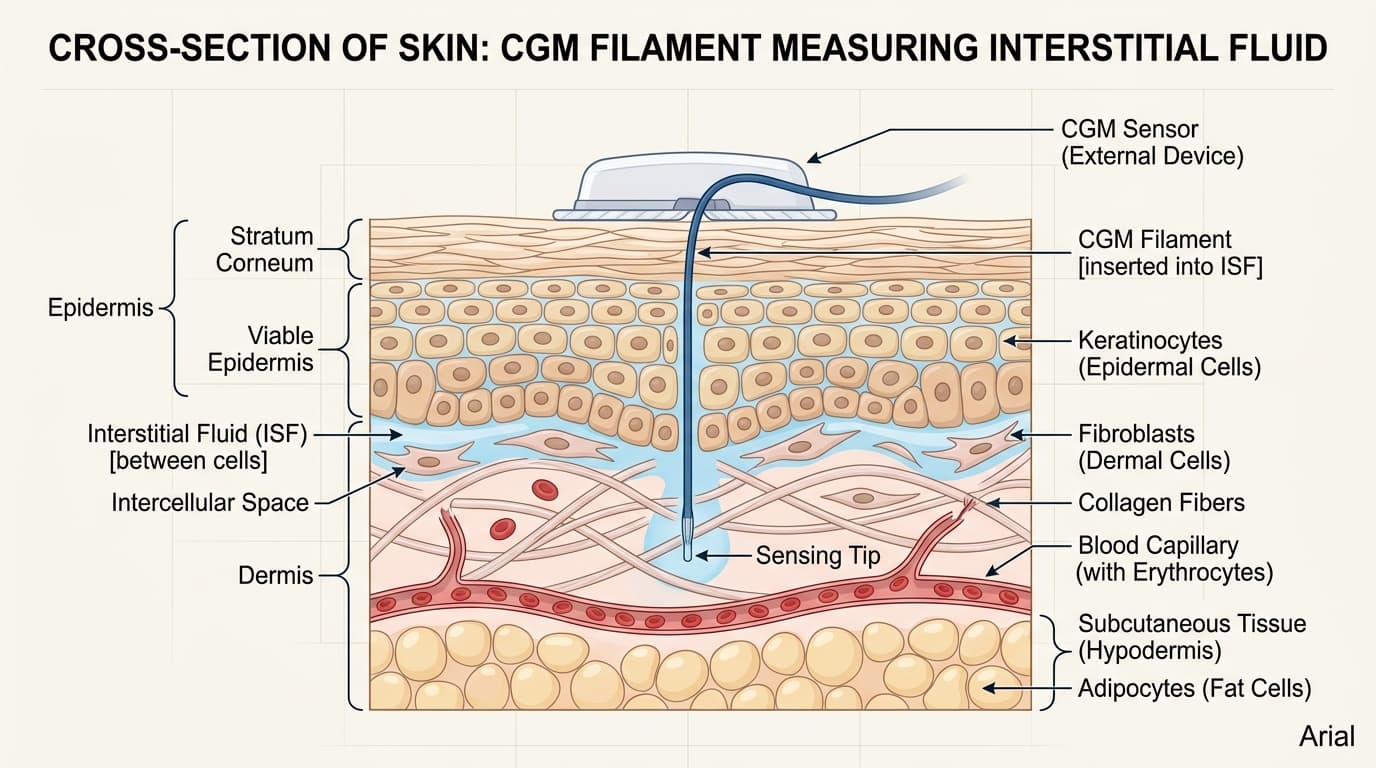
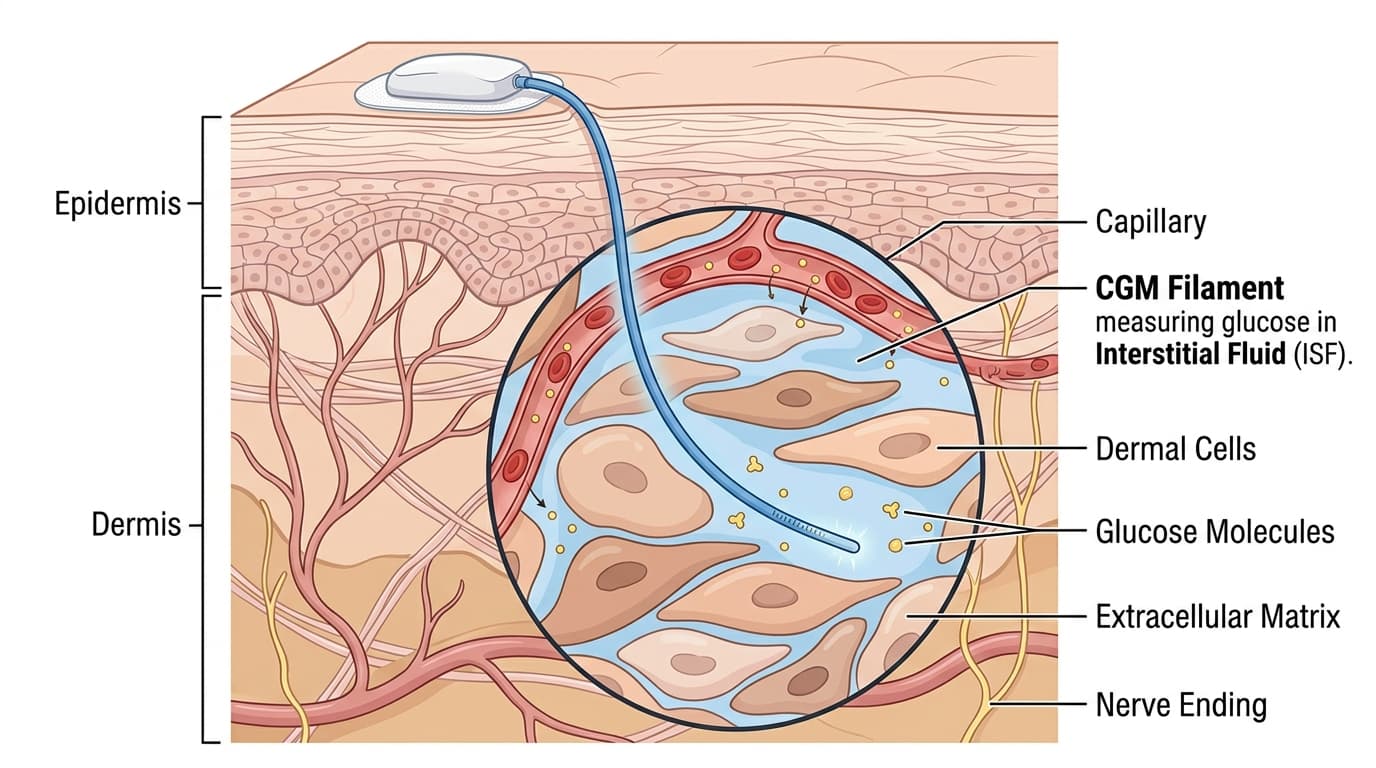
The fluid that surrounds cells in body tissue, where CGM sensors measure glucose concentration. Interstitial fluid glucose levels lag behind blood glucose by approximately 5 to 15 minutes because glucose must diffuse from capillaries into the surrounding tissue before the sensor detects it. This physiological lag is the primary reason CGM readings can differ from a fingerstick blood glucose test taken at the same moment.
Why “Interstitial Fluid” Matters for Glucose Monitoring
Understanding interstitial fluid is essential for anyone using or evaluating a continuous glucose monitor. This concept directly affects how CGM devices are designed, how glucose data is interpreted, and how clinical decisions about blood sugar management are made. The technical foundations of CGM technology determine the accuracy, reliability, and user experience of every device on the market — from the Dexcom G7 to over-the-counter options like the Abbott Lingo.
This term applies broadly across all continuous glucose monitors and is foundational knowledge for interpreting CGM data, whether you are managing diabetes or using a sensor for metabolic wellness.
Related Terms
A wearable medical device that tracks glucose levels in interstitial fluid 24 hours a day through a tiny sensor inserted just under the skin.
A CGM sensor technology that uses a glucose oxidase enzyme coating on a thin filament to generate an electrical current proportional to the glucose concentration in interstitial fluid.
The process of verifying and adjusting CGM accuracy by comparing a sensor reading against a traditional fingerstick blood glucose measurement.
Mean Absolute Relative Difference, the gold standard metric used to evaluate CGM sensor accuracy.