
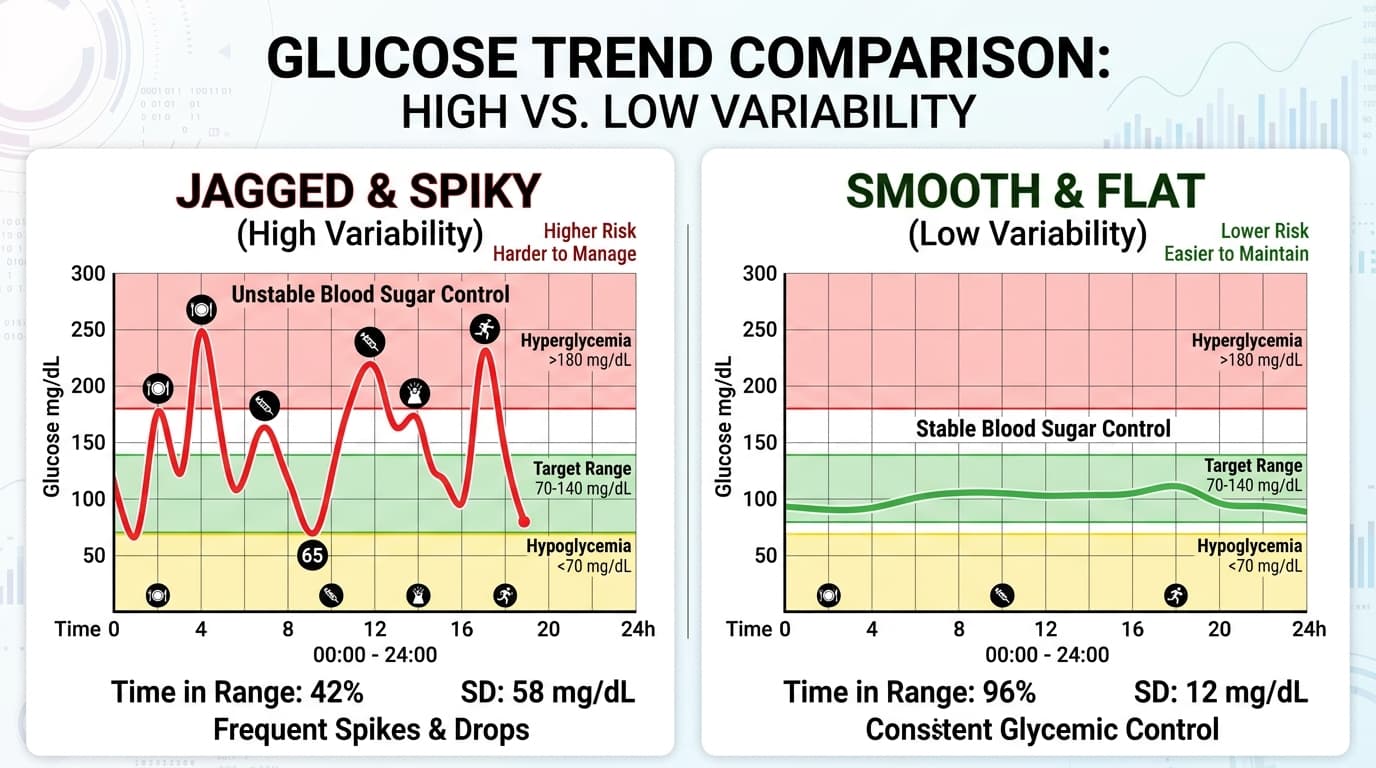
Glycemic Variability
Definition
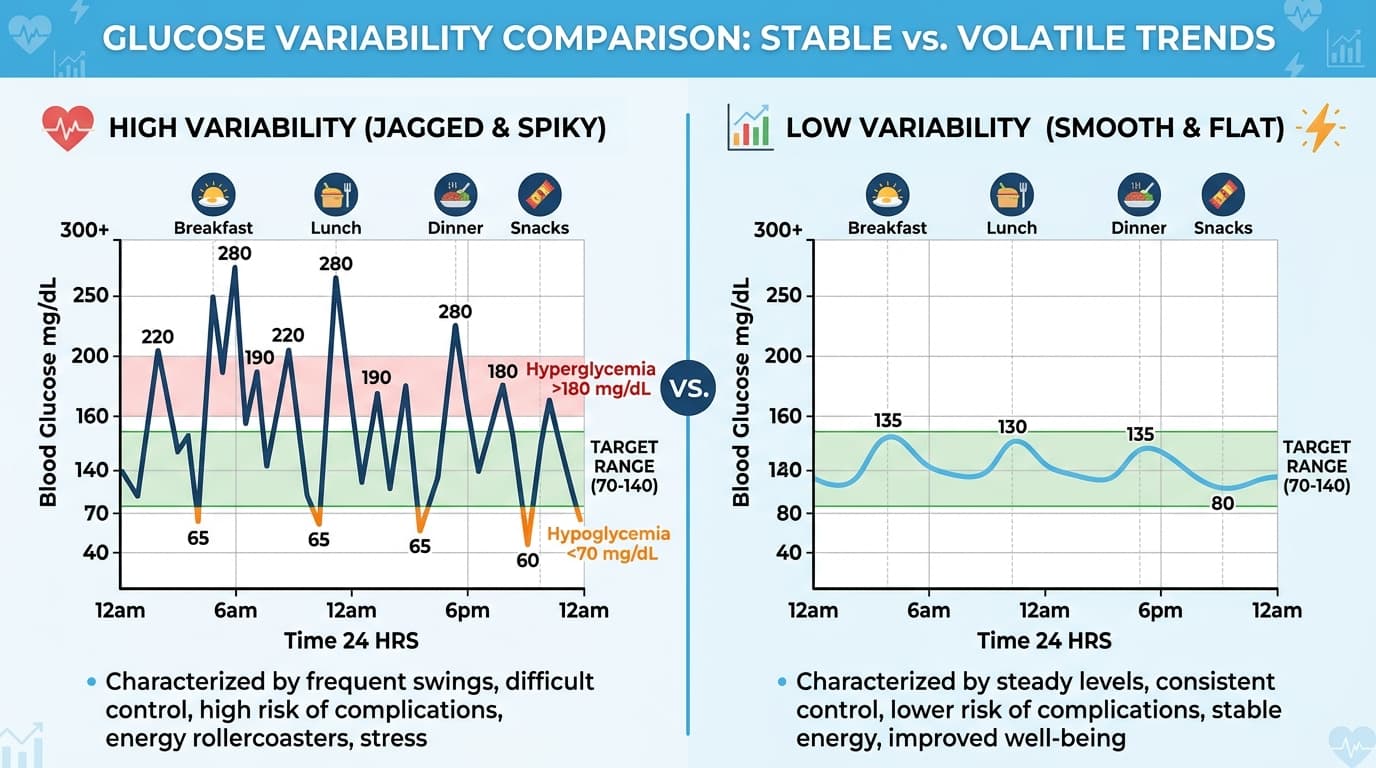
The magnitude and frequency of blood glucose fluctuations over a defined period. High glycemic variability — characterized by frequent spikes and drops — is associated with increased oxidative stress, cardiovascular risk, and diabetes complications independent of average glucose or A1C. A coefficient of variation (CV) below 36% is the recommended target for stable glucose control, and CGMs are the only practical tool that can measure glycemic variability continuously across days and weeks.
Why “Glycemic Variability” Matters for Glucose Monitoring
Understanding glycemic variability is essential for anyone using or evaluating a continuous glucose monitor. This concept directly affects how CGM devices are designed, how glucose data is interpreted, and how clinical decisions about blood sugar management are made. Medical terms related to glucose physiology help patients and clinicians communicate effectively about blood sugar patterns, treatment goals, and the clinical significance of CGM data.
This term applies broadly across all continuous glucose monitors and is foundational knowledge for interpreting CGM data, whether you are managing diabetes or using a sensor for metabolic wellness.
Related Terms
A standardized measure of glucose variability calculated as the standard deviation of glucose values divided by the mean glucose, multiplied by 100, expressed as a percentage.
The percentage of time a person's glucose level remains within a defined target range, typically 70 to 180 mg/dL for most people with diabetes.
Blood glucose levels measured after eating, typically peaking 60 to 90 minutes after a meal and returning to baseline within 2 to 3 hours in healthy individuals.
A standardized one-page glucose report recommended by the International Diabetes Center that summarizes 14 days of CGM data into a visual profile showing median glucose, interquartile range (25th to 75th percentile), and 10th to 90th percentile bands across a 24-hour period.