
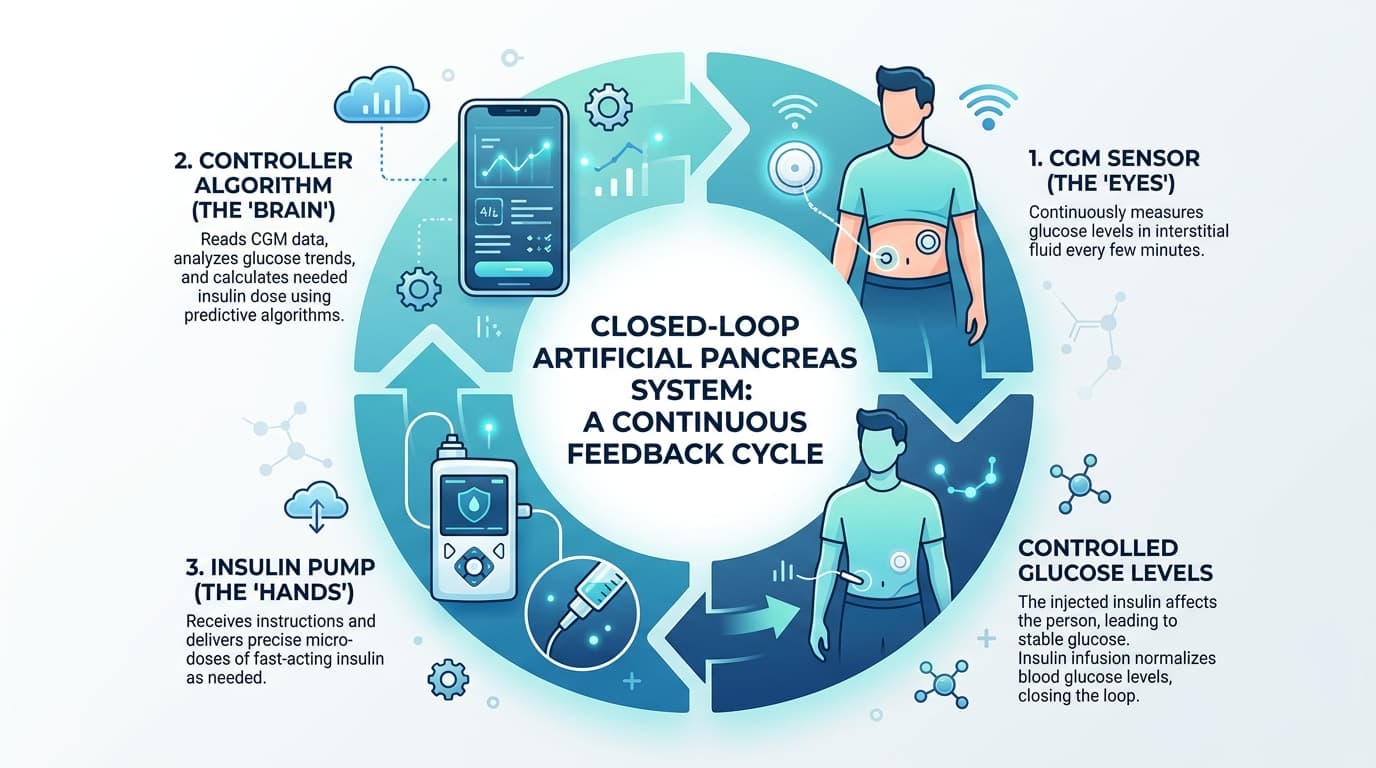
Closed-Loop System
Definition
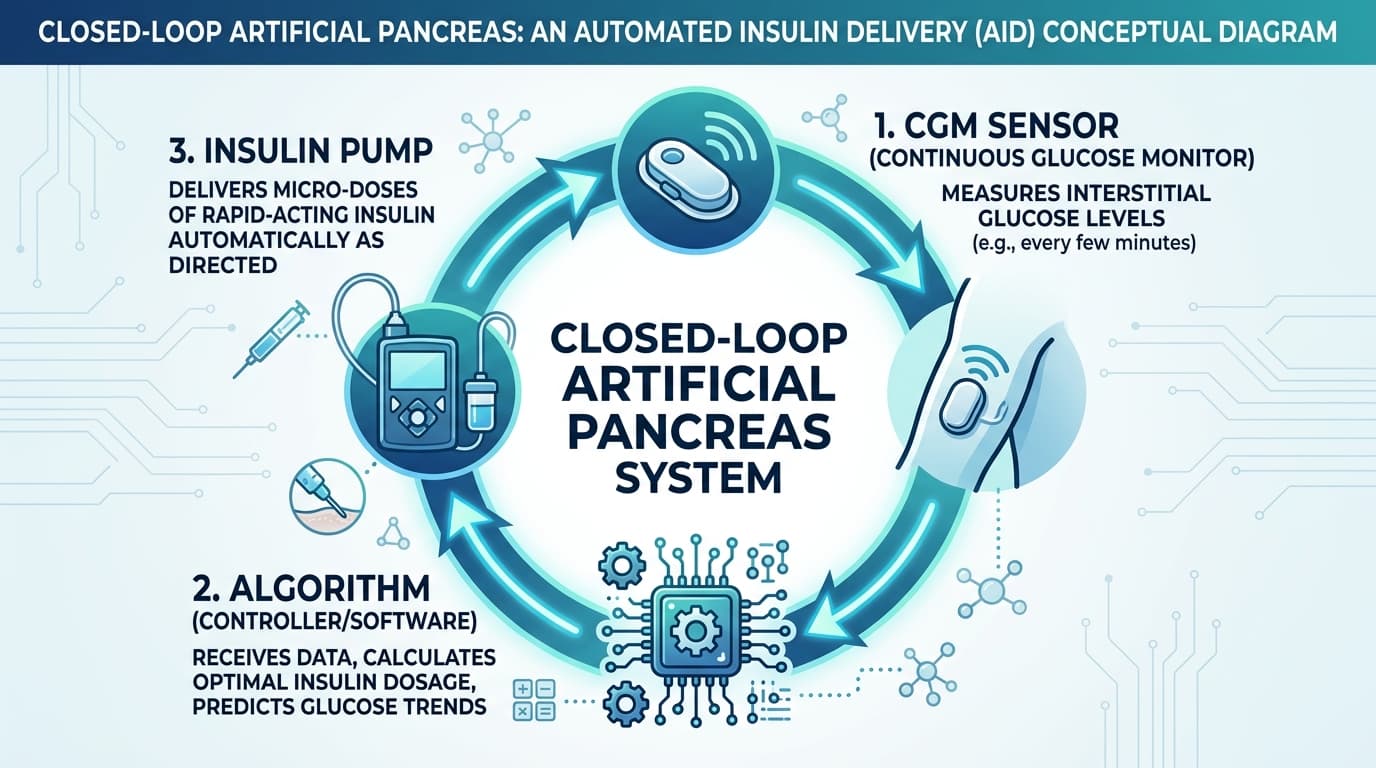
An automated insulin delivery (AID) system that combines a real-time CGM with an insulin pump and a control algorithm to automatically adjust basal insulin delivery based on predicted glucose trends. Closed-loop systems reduce the burden of manual insulin dosing and have been shown in clinical trials to increase time in range by 10 to 15 percentage points compared to manual pump therapy. Leading systems include the Medtronic 780G, Tandem t:slim X2 with Control-IQ, and Omnipod 5, all of which integrate with Dexcom G7 CGM data.
Why “Closed-Loop System” Matters for Glucose Monitoring
Understanding closed-loop system is essential for anyone using or evaluating a continuous glucose monitor. This concept directly affects how CGM devices are designed, how glucose data is interpreted, and how clinical decisions about blood sugar management are made. The technical foundations of CGM technology determine the accuracy, reliability, and user experience of every device on the market — from the Dexcom G7 to over-the-counter options like the Abbott Lingo.
This term is particularly relevant to 2 CGM products in our database. Understanding closed-loop system helps you compare devices more effectively and choose the right continuous glucose monitor for your specific needs.
Related Terms
A continuous glucose monitor that automatically and continuously transmits glucose readings to a display device — such as a smartphone, smartwatch, or insulin pump — without requiring the user to scan or interact with the sensor.
A wearable medical device that tracks glucose levels in interstitial fluid 24 hours a day through a tiny sensor inserted just under the skin.
The percentage of time a person's glucose level remains within a defined target range, typically 70 to 180 mg/dL for most people with diabetes.