

Medicare CGM Coverage: Eligibility, Costs, and Approved Devices
Medicare-Approved CGM Devices
Medicare Part B covers 4 continuous glucose monitors in 2026: the Dexcom G7 (10-day), Dexcom G7 15-Day, FreeStyle Libre 3 Plus, and Medtronic Guardian 4. These devices are classified as durable medical equipment (DME) under Medicare and are obtained through Medicare-contracted DME suppliers rather than retail pharmacies. The Eversense E3 and Eversense 365 implantable CGMs are not currently Medicare-approved. Over-the-counter CGMs (Dexcom Stelo, Abbott Lingo, Libre Rio) are ineligible for Medicare coverage because they are classified as consumer wellness products.
Eligibility Requirements
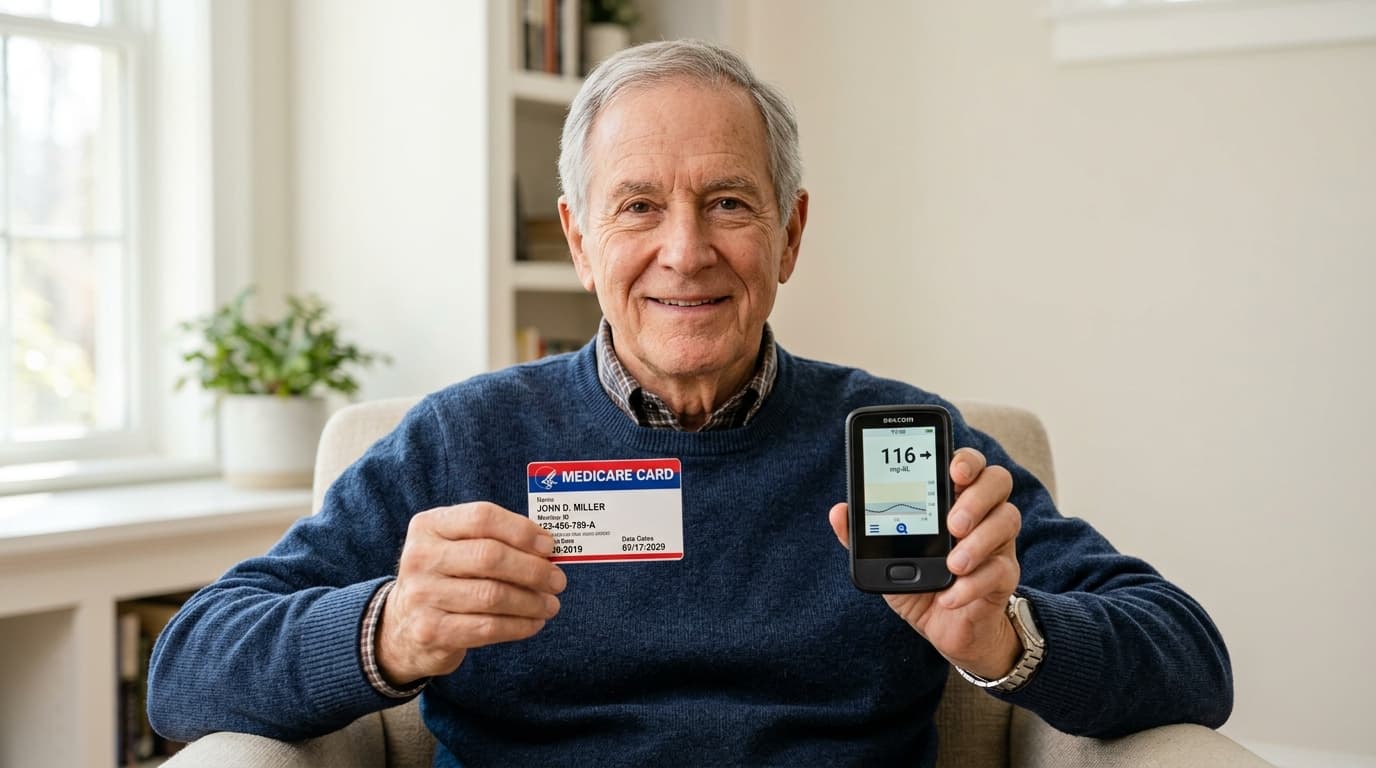
To qualify for Medicare CGM coverage, patients must meet all of the following criteria: a diagnosis of diabetes (type 1 or type 2), documented use of insulin therapy (basal, bolus, or both), a valid prescription from the treating physician specifying the CGM device and medical necessity, and enrollment in Medicare Part B. Patients must also agree to use the CGM as prescribed and may be required to demonstrate that they check blood glucose regularly. The ordering physician must document how the CGM data will be used to adjust the treatment plan. Medicare expanded CGM eligibility in 2023 to include all insulin-using patients, eliminating the previous requirement for 3+ daily insulin injections.
Patient Cost Under Medicare
Under original Medicare Part B, the patient is responsible for 20% of the Medicare-approved amount after meeting the annual Part B deductible ($240 in 2026). This translates to approximately $20 to $50 per month for most CGM sensors and supplies. Medicare Advantage plans may have different copay structures — some MA plans cover CGM supplies with $0 copay as a plan benefit. Patients with Medigap supplemental insurance often have their 20% coinsurance covered entirely, resulting in $0 out-of-pocket cost. Low-income Medicare beneficiaries enrolled in the Medicare Savings Program or Extra Help program may qualify for reduced or eliminated copays.
How to Get a CGM Through Medicare
The process for obtaining a CGM through Medicare involves 5 steps. First, discuss CGM with your treating physician and obtain a prescription specifying the device and medical necessity. Second, confirm that your physician will complete the Medicare CGM certificate of medical necessity (CMN) form. Third, select a Medicare-contracted DME supplier — your physician office may have a preferred supplier, or you can search the Medicare supplier directory at Medicare.gov. Fourth, the DME supplier submits the claim to Medicare for processing. Fifth, receive your CGM sensors and supplies by mail from the DME supplier, typically on a monthly or quarterly shipping schedule. The entire process from prescription to first delivery takes 2 to 4 weeks.
Medicare Advantage vs Original Medicare CGM Coverage
Original Medicare Part B covers 80% of the approved CGM cost after your annual deductible ($240 in 2026), leaving a 20% coinsurance of approximately $15-40/month. Medicare Advantage plans often cover the full 100% with $0 copay for CGM supplies, though this varies by plan. Medigap supplemental plans (Plans C, F, and G) cover the Part B coinsurance, effectively reducing your CGM cost to $0. To determine your exact coverage, contact your plan directly with HCPCS codes E2103 (CGM receiver) and A4239 (CGM sensor/transmitter).
Pricing at a Glance
| CGM Device | With Insurance | Without Insurance | Medicare |
|---|---|---|---|
| Dexcom G7 | $20–$40 per month | $250–$350 per month | ✓ Covered |
| Dexcom G7 15-Day | $20–$40 per month | $250–$350 per month | ✓ Covered |
| FreeStyle Libre 3 Plus | $15–$30 per month | $75–$150 per month | ✓ Covered |
| FreeStyle Libre 2 | $15–$30 per month | $75–$150 per month | ✓ Covered |
| Medtronic Guardian 4 | $30–$50 per month | $200–$300 per month | ✓ Covered |