
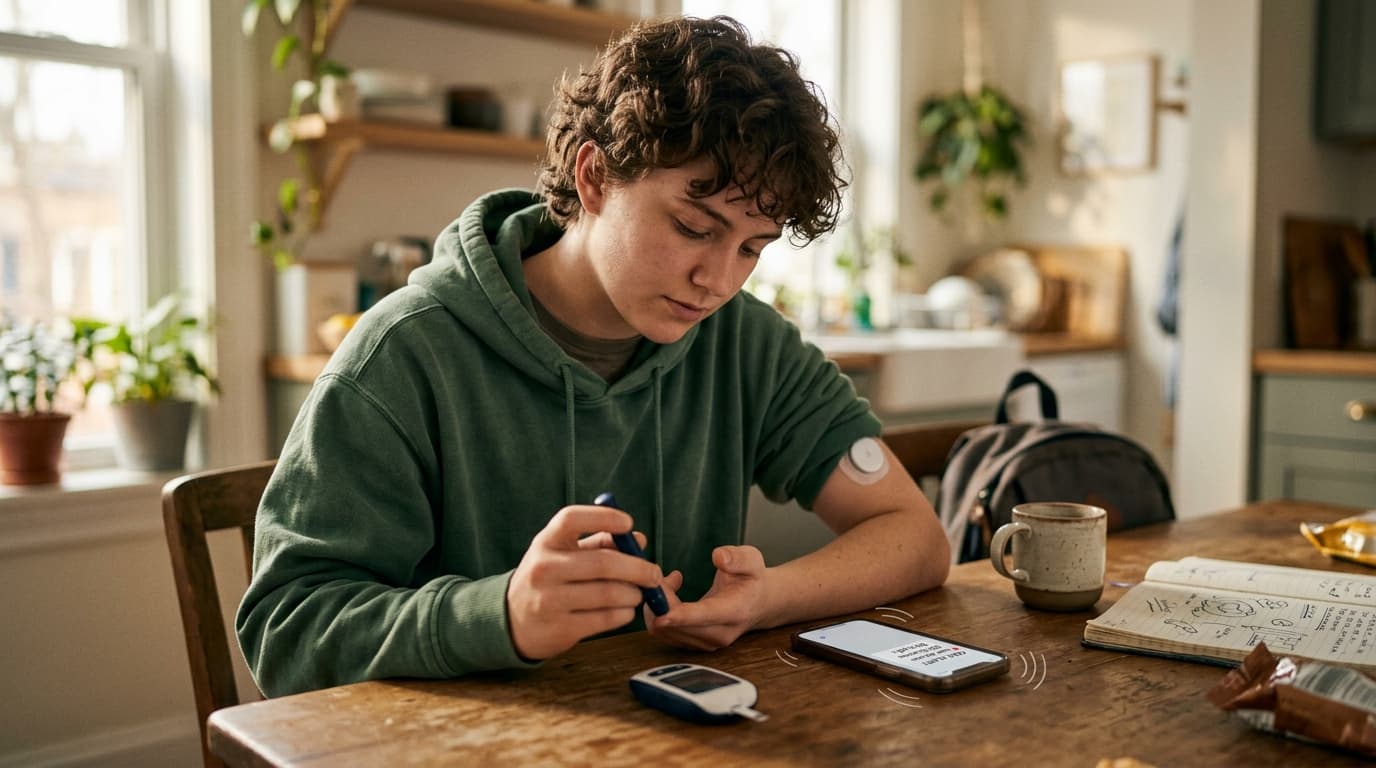
CGM for Type 1 Diabetes: Complete Guide
Type 1 diabetes is an autoimmune condition where the pancreas produces little to no insulin. People with T1D must manage their blood glucose 24/7 with exogenous insulin, making continuous glucose monitoring essential for avoiding life-threatening highs (hyperglycemia) and lows (hypoglycemia). CGMs have become the standard of care for T1D management, replacing the need for 8-12 daily fingerstick tests and enabling tighter glucose control with fewer dangerous episodes.
Prevalence
Approximately 1.9 million Americans live with type 1 diabetes, including about 244,000 children and adolescents under age 20.
How Continuous Glucose Monitoring Helps Type 1 Diabetes
For people with type 1 diabetes, a continuous glucose monitor is not optional — it is the standard of care. Because the pancreas produces no insulin, T1D patients must dose exogenous insulin for every meal, every correction, and every basal requirement throughout the day and night. Each dosing decision depends on knowing the current glucose level and where it is heading. A CGM provides this information every 1 to 5 minutes, compared to the 4 to 10 snapshots a fingerstick meter delivers. Real-time trend arrows show whether glucose is rising, falling, or stable, enabling proactive dosing adjustments. Predictive low glucose alerts warn users 20 minutes before a hypoglycemic event, and integration with closed-loop insulin pump systems automates basal insulin delivery to keep glucose in range overnight. The combination of CGM and an insulin pump increases time in range by an average of 2.5 hours per day compared to fingerstick-guided pump therapy.
Key Benefit
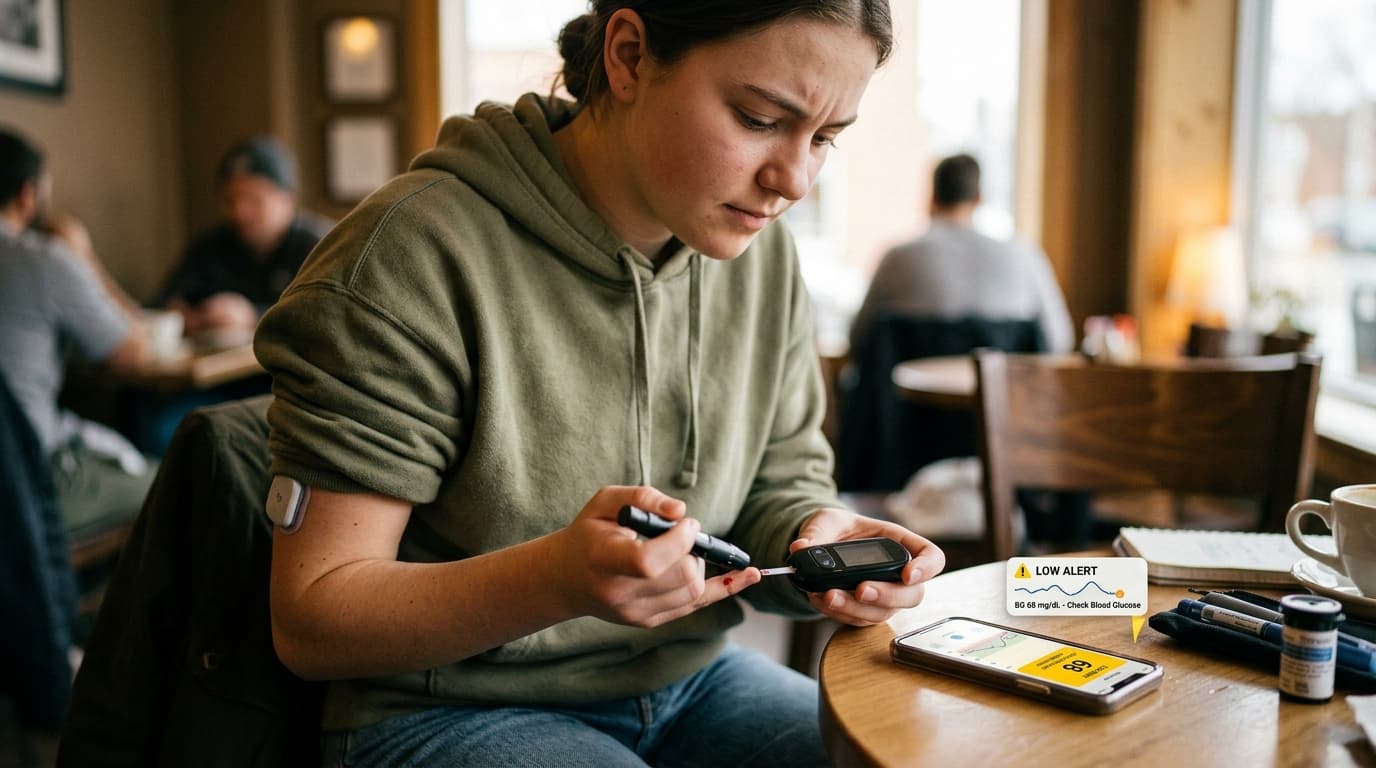
Prevents dangerous highs and lows with real-time alerts, reducing hypoglycemic events by up to 50% and increasing time in the safe glucose range by an average of 2.6 hours per day.
Recommended CGM Devices
The Dexcom G7 is the most widely recommended CGM for type 1 diabetes because of its 8.2% MARD accuracy, integration with both the Tandem Control-IQ and Omnipod 5 closed-loop systems, and its comprehensive alerting features including the urgent low soon predictive alarm. The FreeStyle Libre 3 Plus offers slightly better accuracy (7.9% MARD) at a lower price point and is an excellent choice for T1D patients who do not use an insulin pump. The Eversense E3 implantable sensor is ideal for patients who want to avoid frequent sensor changes, offering 180 days of wear per sensor insertion. All three devices are FDA-cleared for insulin dosing decisions without confirmatory fingersticks.
Insurance Coverage
Most private insurance plans and Medicare cover CGMs for type 1 diabetes with a prescription. Coverage typically requires documentation of insulin therapy. Out-of-pocket costs with insurance range from $0-75 per month depending on the plan.
Insurance coverage for CGM in type 1 diabetes is the strongest of any condition. Medicare covers CGMs for all T1D patients with a prescription and documented insulin use — copays range from $0 to $35 per month depending on the Part D plan. Commercial insurers cover CGMs under durable medical equipment (DME) benefits, with typical copays of $25 to $75 per month. Most plans require a prior authorization that includes documentation of T1D diagnosis, current insulin regimen, and a prescriber order. Medicaid coverage varies by state but is available in all 50 states for T1D patients under age 21 and in most states for adults.
Clinical Evidence
The landmark DIAMOND trial (2017) demonstrated that CGM use in T1D patients reduced A1C by 0.6% compared to fingerstick monitoring alone. The IMPACT trial showed CGM reduced time in hypoglycemia by 38%. A 2022 meta-analysis in Diabetes Care covering 25 randomized controlled trials found CGM users spent an average of 2.6 additional hours per day in the target glucose range (70-180 mg/dL) compared to self-monitoring with fingersticks. The American Diabetes Association recommends CGM for all people with T1D on intensive insulin therapy.
The evidence for CGM in type 1 diabetes is extensive. The DIAMOND trial (2017, JAMA) showed CGM reduced A1C by 0.6% over 24 weeks. The IMPACT trial (2016, The Lancet) demonstrated a 38% reduction in time in hypoglycemia. A 2022 meta-analysis in Diabetes Care covering 25 RCTs found CGM users spent 2.6 additional hours per day in range (70-180 mg/dL). The T1D Exchange Registry data shows that CGM users achieve a median A1C of 7.0% compared to 7.7% for non-CGM users. For closed-loop systems using CGM data, the iDCL trial (2019, NEJM) demonstrated time in range of 71% versus 59% with standard pump therapy.