
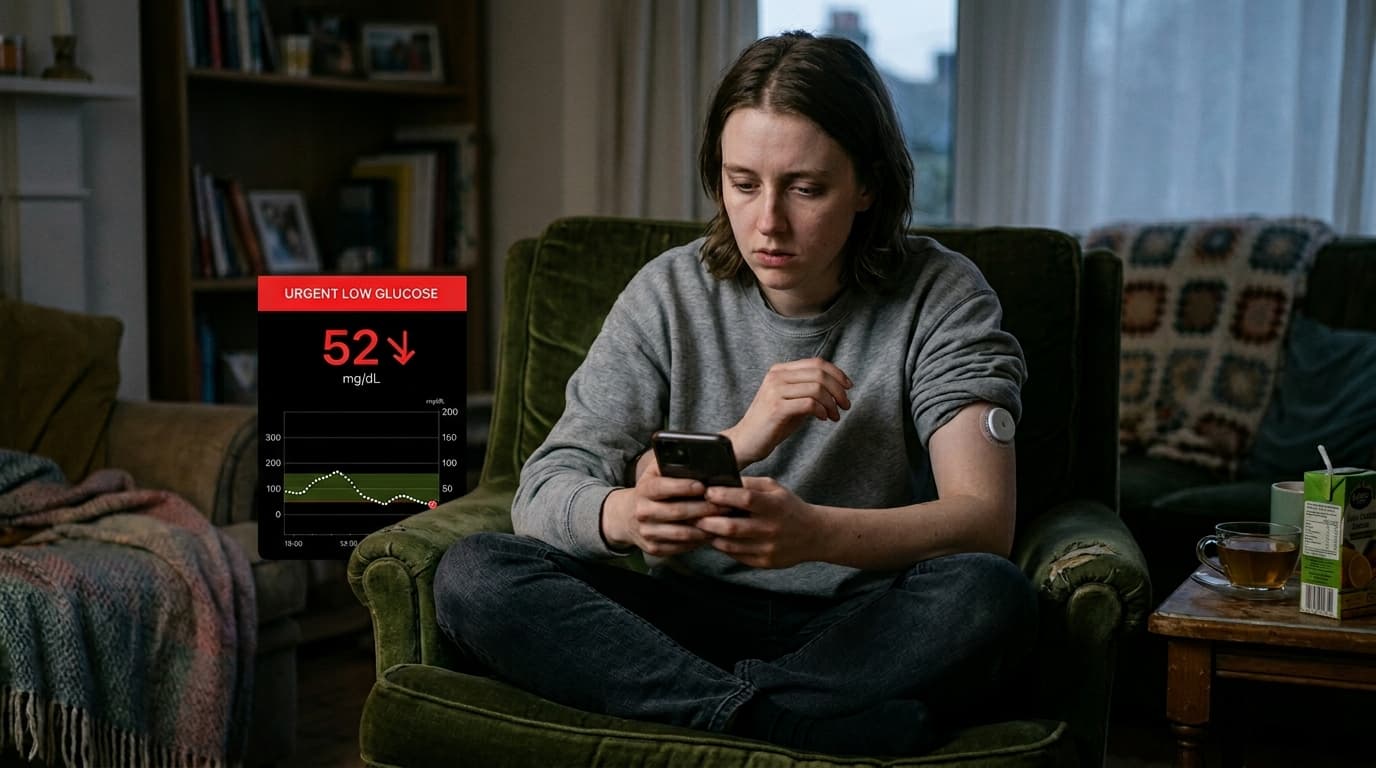
CGM for Hypoglycemia: Complete Guide
Hypoglycemia occurs when blood glucose drops below 70 mg/dL, causing symptoms ranging from shakiness and confusion to seizures and loss of consciousness. It is most common in people with type 1 or type 2 diabetes who take insulin or sulfonylureas. Severe hypoglycemia is a medical emergency and a leading cause of diabetes-related hospitalizations. CGMs with real-time alerts are the most effective tool for preventing hypoglycemic episodes, as they warn users before glucose reaches dangerous levels — something fingerstick testing cannot do.
Prevalence
Hypoglycemia is common in insulin-treated diabetes: approximately 2 severe episodes per year in T1D and 0.5-1 in insulin-treated T2D. An estimated 100,000 emergency department visits annually in the US are attributable to hypoglycemia.
How Continuous Glucose Monitoring Helps Hypoglycemia
Hypoglycemia — blood glucose below 70 mg/dL — is the most dangerous acute complication of insulin therapy and the leading cause of diabetes-related emergency department visits. Severe hypoglycemia (below 54 mg/dL) can cause seizures, loss of consciousness, and death. A continuous glucose monitor is the single most effective tool for preventing hypoglycemia because it provides real-time low glucose alerts before blood sugar reaches dangerous levels. The Dexcom G7 triggers an "urgent low soon" predictive alert when its algorithm forecasts glucose will reach 55 mg/dL within 20 minutes — giving the user time to consume fast-acting carbohydrates and prevent a crisis. For people with hypoglycemia unawareness (the inability to feel low glucose symptoms), CGM replaces the body's missing warning system with an electronic one. Overnight hypoglycemia, which occurs during sleep and is undetectable without continuous monitoring, accounts for up to 40% of severe episodes in insulin-treated patients.
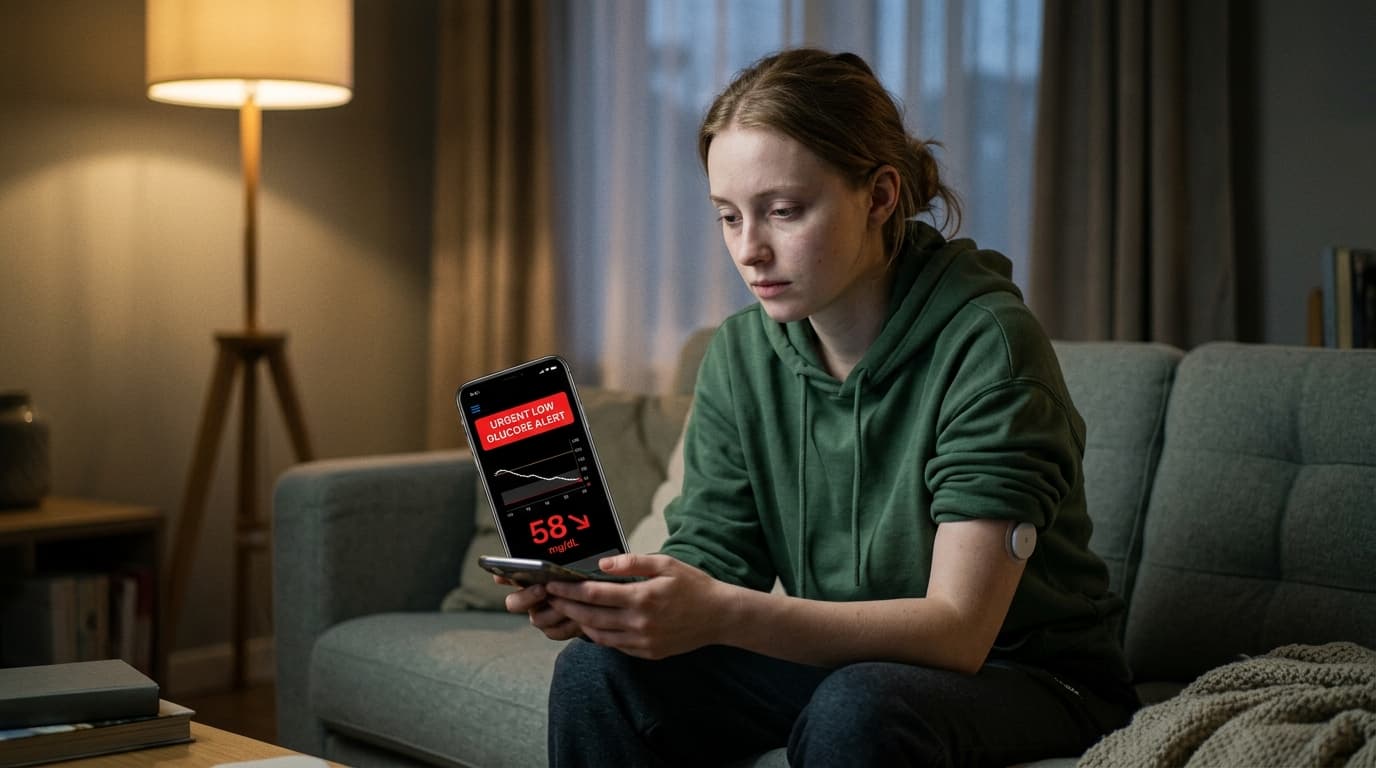
Key Benefit
Low glucose alerts warn users before blood sugar drops to dangerous levels, reducing severe hypoglycemic events by up to 72% and preventing emergency hospitalizations.
Recommended CGM Devices
The Dexcom G7 is the top recommendation for hypoglycemia prevention due to its urgent low soon predictive alarm, non-silenceable 55 mg/dL urgent low alarm, and integration with closed-loop pump systems that can automatically suspend insulin delivery when lows are predicted. The FreeStyle Libre 3 Plus offers real-time low glucose alerts and the fastest reading frequency (every 1 minute), providing the most granular trend data for detecting rapid drops. The Medtronic Guardian 4, used with the MiniMed 780G pump, includes suspend-before-low technology that stops insulin delivery when glucose is predicted to drop below 70 mg/dL. For all three devices, the data-sharing feature that sends alerts to caregivers is critical for people with hypoglycemia unawareness who may not be able to respond to their own alerts.
Insurance Coverage
CGMs are well-covered by insurance for patients with documented hypoglycemia, particularly those with hypoglycemia unawareness (inability to feel low glucose symptoms). Medicare and most private insurers consider recurrent hypoglycemia a primary indication for CGM coverage. Prior authorization may require documentation of hypoglycemic episodes from glucose logs or medical records.
Insurance coverage for CGMs in patients with documented hypoglycemia is among the strongest of any indication. Medicare and virtually all commercial plans cover CGMs when the prescription includes documentation of recurrent hypoglycemia or hypoglycemia unawareness. Prior authorization requirements typically include evidence of hypoglycemic episodes (from glucose logs, lab records, or ER visits) and documentation that the patient is on insulin or sulfonylurea therapy. For patients with severe hypoglycemia unawareness, many insurers fast-track CGM authorization as an urgent medical necessity.
Clinical Evidence
The IN CONTROL trial (2016) showed CGM reduced severe hypoglycemic events by 72% in T1D patients with hypoglycemia unawareness. The HypoDE study (2018, published in The Lancet) demonstrated that CGM reduced hypoglycemia (below 54 mg/dL) by 72% in T1D patients using multiple daily injections. A 2021 real-world analysis of 4,000+ CGM users found that predictive low glucose alerts (available on Dexcom G7 and Guardian 4) prevented 80% of impending hypoglycemic events when the user responded to the alert.
The IN CONTROL trial (2016) demonstrated that CGM reduced severe hypoglycemic events by 72% in T1D patients with hypoglycemia unawareness. The HypoDE study (2018, The Lancet) showed CGM reduced clinically significant hypoglycemia (below 54 mg/dL) by 72% in T1D patients using multiple daily injections. A 2021 real-world analysis of over 4,000 CGM users found that predictive low glucose alerts prevented 80% of impending hypoglycemic events when the user responded within 15 minutes. The ASPIRE In-Home study demonstrated that sensor-augmented pump therapy with automated suspend-on-low reduced nocturnal hypoglycemia by 31.8% compared to pump therapy without automation.