
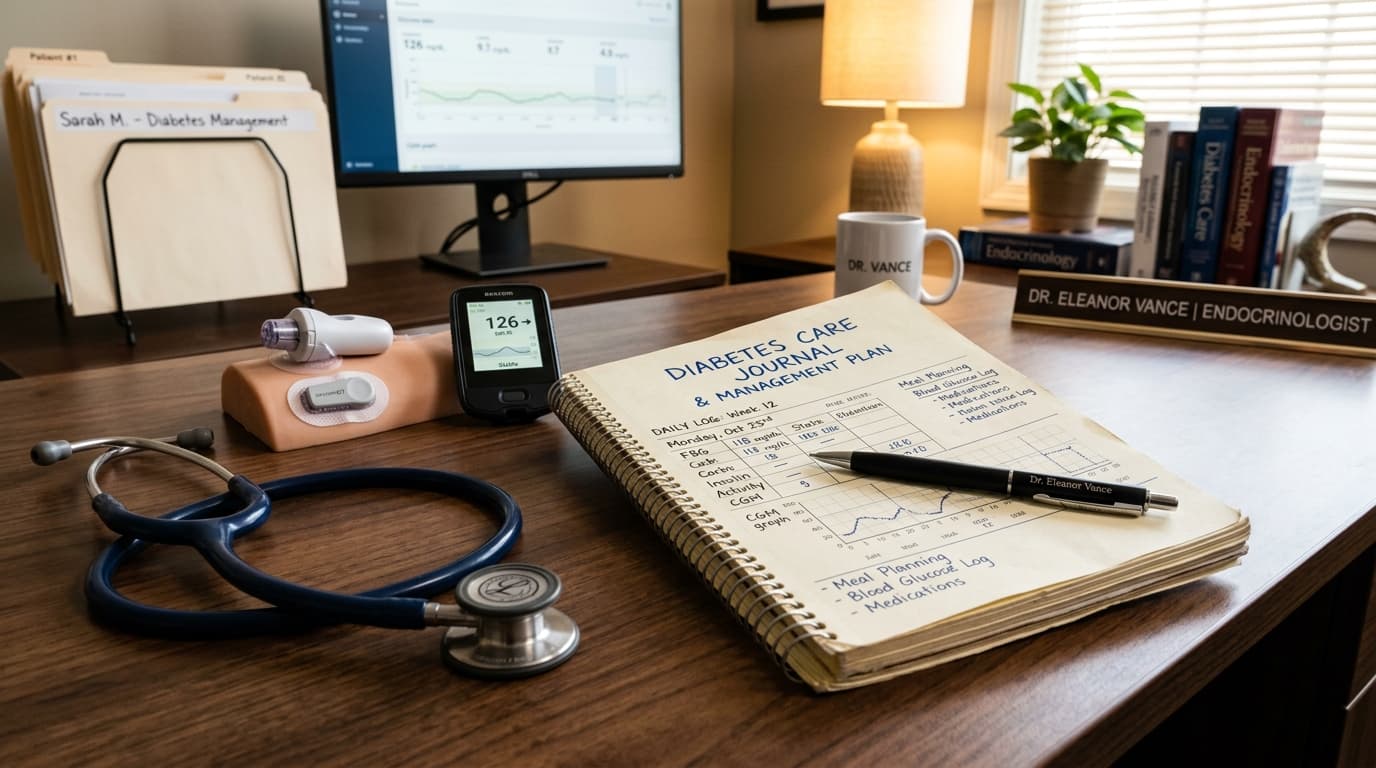
Who Should Use a CGM? 7 Conditions and Use Cases
Continuous glucose monitors were originally developed for people with type 1 diabetes on insulin therapy. Today, CGMs benefit 7 distinct populations — from insulin-dependent patients who rely on real-time alerts to survive, to prediabetic adults using over-the-counter sensors to prevent disease progression.
Who Benefits from Continuous Glucose Monitoring?
The clinical evidence for CGM use has expanded dramatically since the first consumer devices launched in the early 2000s. Over 37 million Americans have diabetes (type 1 and type 2 combined), and an additional 96 million adults have prediabetes — a condition where blood sugar levels are elevated but not yet high enough for a diabetes diagnosis. Together, these populations represent more than 130 million people who could benefit from the real-time glucose data a continuous glucose monitor provides.
Beyond diabetes, CGM technology has found clinical utility in gestational diabetes management, hypoglycemia prevention, reactive hypoglycemia diagnosis, and pediatric glucose monitoring. The American Diabetes Association (ADA), the Endocrine Society, and the American College of Obstetricians and Gynecologists (ACOG) have all published guidelines supporting CGM use in their respective patient populations. Insurance coverage has expanded accordingly: as of 2026, Medicare covers CGMs for all insulin-using diabetes patients, and most commercial plans cover CGMs for type 1 diabetes, intensive insulin-treated type 2 diabetes, and pregnancy-related diabetes.
The emergence of over-the-counter CGMs like the Dexcom Stelo and Abbott Lingo has also made glucose monitoring accessible to people without a diabetes diagnosis — including those with prediabetes, reactive hypoglycemia, and metabolic concerns who historically had no access to continuous glucose data without a prescription.

7 Conditions Where CGM Provides Clinical Benefit
Type 1 Diabetes
Approximately 1.
Type 1 diabetes is an autoimmune condition where the pancreas produces little to no insulin. People with T1D must manage their blood glucose 24/7 with exogenous insulin, making continuous glucose monitoring essential for avoiding life-threatening highs (hyperglycemia) and lows (hypoglycemia). CGMs have become the standard of care for T1D management, replacing the need for 8-12 daily fingerstick tests and enabling tighter glucose control with fewer dangerous episodes.
Key benefit: Prevents dangerous highs and lows with real-time alerts.
Type 2 Diabetes
Approximately 37.
Type 2 diabetes is a metabolic disorder characterized by insulin resistance and progressive beta-cell dysfunction. It accounts for 90-95% of all diabetes cases. CGMs help T2D patients understand how specific foods, medications, and activities affect their glucose levels in real time — insights that fingerstick testing at 2-4 points per day cannot provide. For patients on insulin therapy, CGMs also reduce the risk of hypoglycemia and improve dosing accuracy.
Key benefit: Identifies specific food triggers and reveals how medications affect glucose throughout the day.
Gestational Diabetes
Gestational diabetes affects 2-10% of pregnancies in the United States annually, translating to roughly 200,000-400,000 cases per year.
Gestational diabetes mellitus (GDM) develops during pregnancy when hormonal changes cause insulin resistance that the body cannot compensate for. Tight glucose control during pregnancy is critical — elevated maternal glucose increases the risk of macrosomia (large baby), preeclampsia, C-section delivery, and neonatal hypoglycemia. CGMs provide the continuous monitoring needed to maintain the narrow glucose targets recommended during pregnancy, which are stricter than standard diabetes targets.
Key benefit: Provides the tight glucose control needed during pregnancy to protect both mother and baby.
Prediabetes
An estimated 96 million American adults (38% of the adult population) have prediabetes.
Prediabetes is a metabolic state where blood glucose levels are higher than normal but not yet high enough for a type 2 diabetes diagnosis (A1C 5.7-6.4% or fasting glucose 100-125 mg/dL). Without intervention, 15-30% of people with prediabetes develop type 2 diabetes within 5 years. CGMs give prediabetic individuals the real-time feedback needed to identify insulin resistance patterns and make targeted lifestyle changes before the condition progresses. The emergence of over-the-counter CGMs like the Dexcom Stelo and Abbott Lingo has made CGM accessible to this population without a prescription.
Key benefit: Identifies insulin resistance and glucose patterns before they progress to diabetes.
Hypoglycemia
Hypoglycemia is common in insulin-treated diabetes: approximately 2 severe episodes per year in T1D and 0.
Hypoglycemia occurs when blood glucose drops below 70 mg/dL, causing symptoms ranging from shakiness and confusion to seizures and loss of consciousness. It is most common in people with type 1 or type 2 diabetes who take insulin or sulfonylureas. Severe hypoglycemia is a medical emergency and a leading cause of diabetes-related hospitalizations. CGMs with real-time alerts are the most effective tool for preventing hypoglycemic episodes, as they warn users before glucose reaches dangerous levels — something fingerstick testing cannot do.
Key benefit: Low glucose alerts warn users before blood sugar drops to dangerous levels.
Reactive Hypoglycemia
Reactive hypoglycemia is estimated to affect 1-9% of the general population, though exact prevalence is difficult to determine because many cases go undiagnosed.
Reactive hypoglycemia (postprandial hypoglycemia) is a condition where blood glucose drops below 70 mg/dL within 2-5 hours after eating, often triggered by high-carbohydrate meals that cause an initial glucose spike followed by an excessive insulin response. Unlike diabetic hypoglycemia, reactive hypoglycemia occurs in people without diabetes and is often underdiagnosed because standard fasting glucose tests miss the postmeal crashes. CGMs are the ideal diagnostic and management tool because they capture the full postprandial glucose curve that single-point blood tests cannot.
Key benefit: Identifies the specific foods and meal compositions that trigger postmeal glucose crashes.
Pediatric Diabetes
Approximately 352,000 youth under age 20 in the United States have diagnosed diabetes (approximately 304,000 with T1D and 48,000 with T2D).
Pediatric diabetes primarily refers to type 1 diabetes in children and adolescents, though type 2 diabetes is increasingly diagnosed in youth due to rising obesity rates. Managing diabetes in children presents unique challenges: erratic eating patterns, activity-level swings, growth hormone fluctuations, and the psychological burden of constant monitoring. CGMs have transformed pediatric diabetes care by reducing the number of painful fingersticks from 8-12 per day to near-zero, enabling remote monitoring by parents and caregivers, and improving glucose control during school hours when direct supervision is limited.
Key benefit: Reduces painful fingersticks from 8-12 per day to near-zero and enables remote monitoring by parents.
PCOS (Polycystic Ovary Syndrome)
Affects 6-12% of US women of reproductive age (approximately 5 million women).
Polycystic ovary syndrome is a hormonal disorder affecting women of reproductive age, characterized by irregular periods, excess androgen levels, and polycystic ovaries. Insulin resistance is a core driver of PCOS in the majority of cases, yet standard diagnostic tests — fasting glucose and A1C — often return normal results even when significant postmeal glucose dysfunction is present. CGMs reveal the hidden insulin resistance patterns that blood tests miss, enabling targeted dietary interventions that improve both metabolic and hormonal outcomes.
Key benefit: Reveals insulin resistance patterns that standard fasting tests miss.
Obesity and Weight Management
42.
Obesity is a chronic metabolic disease defined by a body mass index of 30 or higher, driven by a complex interplay of genetics, environment, hormones, and behavior. Insulin resistance and dysregulated glucose signaling contribute to increased hunger, fat storage, and difficulty losing weight. CGMs provide real-time feedback on how individual foods and meals affect glucose and satiety, giving users actionable data to make dietary choices that stabilize blood sugar, reduce cravings, and support sustained weight loss.
Key benefit: Provides real-time feedback on how specific foods affect individual glucose and hunger patterns.
Thyroid Disorders
Approximately 20 million Americans have a thyroid disorder, with up to 60% undiagnosed.
Thyroid disorders — including hypothyroidism, hyperthyroidism, and Hashimoto's thyroiditis — affect metabolic rate and glucose regulation through their influence on insulin sensitivity, hepatic glucose output, and intestinal glucose absorption. Hypothyroidism in particular increases insulin resistance by 30% compared to euthyroid individuals, even when thyroid hormone replacement brings TSH into the normal range. CGMs help thyroid patients detect glucose dysregulation that persists despite optimized thyroid medication, enabling dietary and lifestyle adjustments that standard blood tests cannot guide.
Key benefit: Detects glucose dysregulation caused by thyroid-mediated insulin resistance.
CGM for People Without a Diagnosis
Not every CGM user has a medical condition. Since the FDA cleared over-the-counter continuous glucose monitors in 2024, a growing segment of non-diabetic adults — estimated at over 1 million users in 2026 — wear CGMs purely for metabolic optimization, weight management, and athletic performance. A 2024 Stanford study found that 80% of self-described healthy adults experienced glucose spikes above 140 mg/dL after certain meals, patterns only visible with continuous monitoring. For 8 evidence-based wellness applications of CGM technology beyond clinical diagnosis, see the CGM for wellness guide.
Related Resources
- Best CGM Reviews 2026 — Data-driven rankings of every continuous glucose monitor on the market.
- How CGMs Work — Technology explained: sensor types, accuracy, calibration, and data transmission.
- CGM Insurance Coverage Guide — Coverage by condition, insurer, and Medicare/Medicaid eligibility.
- CGM for Wellness — Using a CGM without a diabetes diagnosis for metabolic health optimization.