
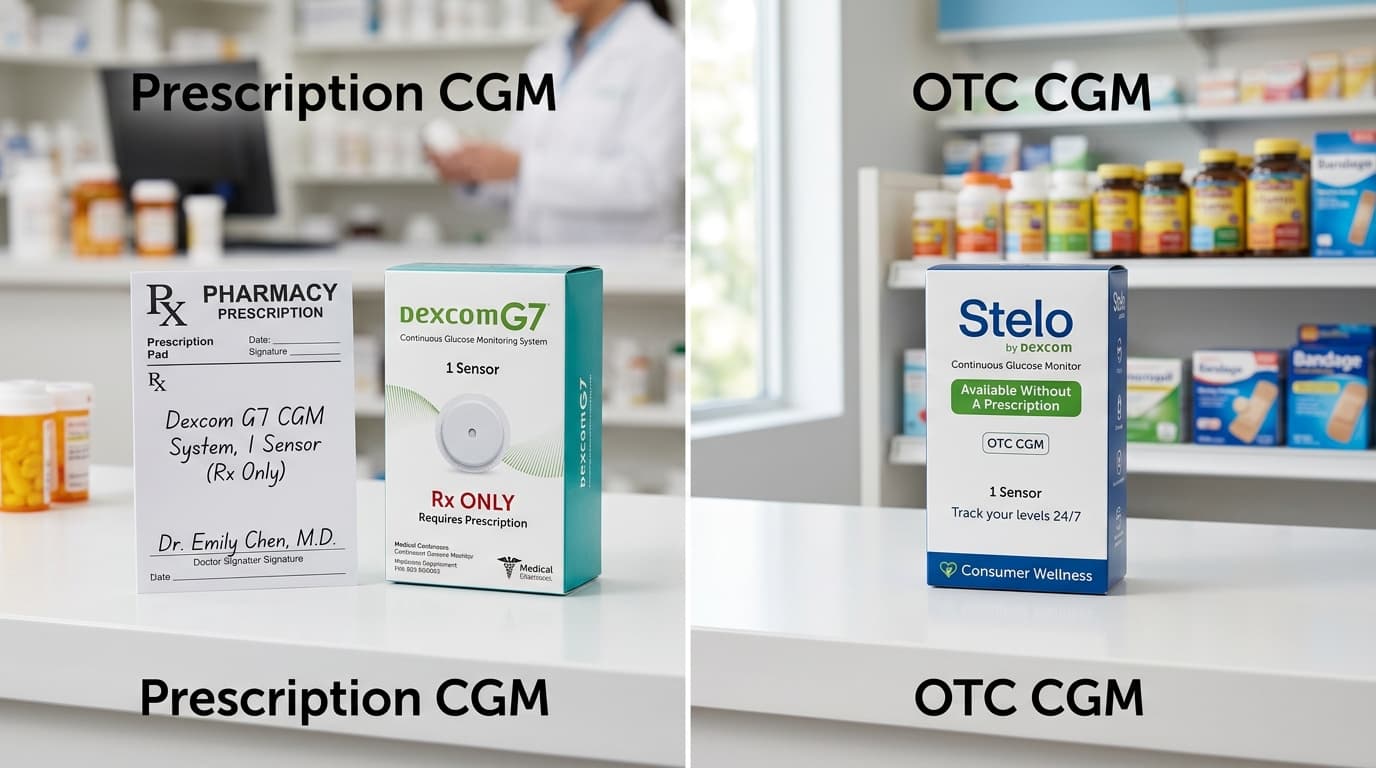
Prescription vs OTC CGMs: Which Type Do You Actually Need?
The CGM market has split into two distinct categories since 2024: prescription CGMs (Dexcom G7, Libre 3 Plus, Guardian 4, Eversense) designed for diabetes management, and over-the-counter CGMs (Dexcom Stelo, Abbott Lingo, Libre Rio) designed for wellness and prediabetes. Prescription CGMs offer customizable high/low alerts, predictive urgent low alerts, insulin pump integration, data sharing with healthcare providers, and insurance coverage — features essential for managing diabetes. OTC CGMs provide glucose trend data, meal response tracking, and metabolic insights without the need for a prescription, doctor visit, or insurance, but they lack the safety-critical alerts and pump connectivity that insulin-dependent patients need.
This is a category-level comparison that explains the fundamental differences between two approaches to glucose monitoring. Rather than comparing specific products, it evaluates the strengths and limitations of each monitoring category to help you determine which type of technology is appropriate for your situation.
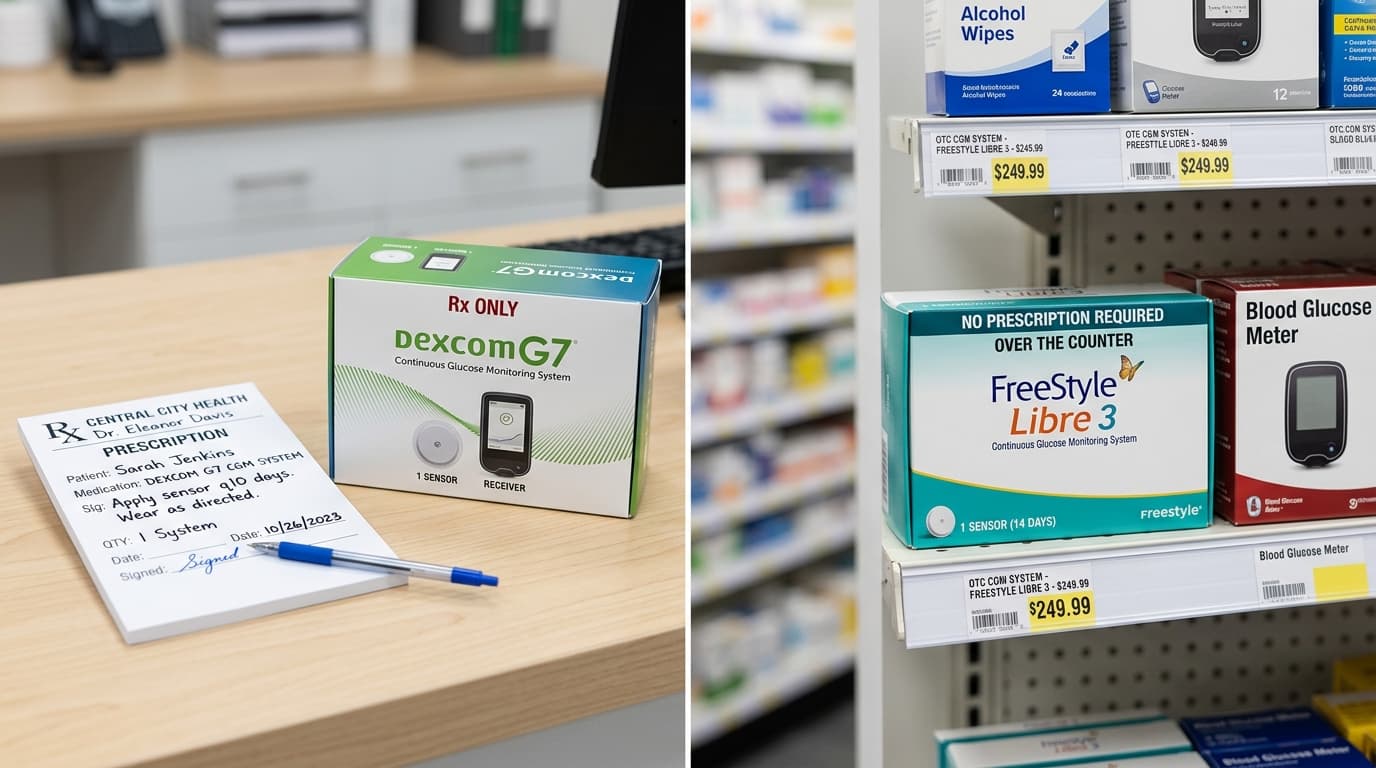
Verdict
Winner: depends on medical need
The winner depends entirely on whether you have a diagnosed condition requiring insulin or tight glucose management. Prescription CGMs are essential for type 1 diabetes, insulin-dependent type 2 diabetes, and any condition where hypoglycemia is a risk — the real-time alerts, predictive low warnings, and insulin pump integration are safety features, not optional extras. OTC CGMs are the right choice for wellness users, prediabetics, and non-insulin type 2 diabetes patients who want metabolic insights without the friction of prescriptions and insurance. Using a prescription CGM for wellness is overpaying for features you do not need; using an OTC CGM when you need real-time insulin-dosing alerts is medically risky. Talk to your healthcare provider if you are unsure which category applies to you.
Key Takeaways
- Prescription CGM and Over-the-Counter CGM serve fundamentally different approaches to glucose monitoring.
- The winner (depends on medical need) is the better choice for the majority of glucose monitoring needs.
- Your individual needs — diagnosis, insurance status, and monitoring frequency — should drive the final decision.
- Both options are viable choices. Read the full reviews linked below for complete specifications and detailed analysis.