
Eversense E3 vs Eversense 365: 6-Month vs 1-Year Implantable CGM
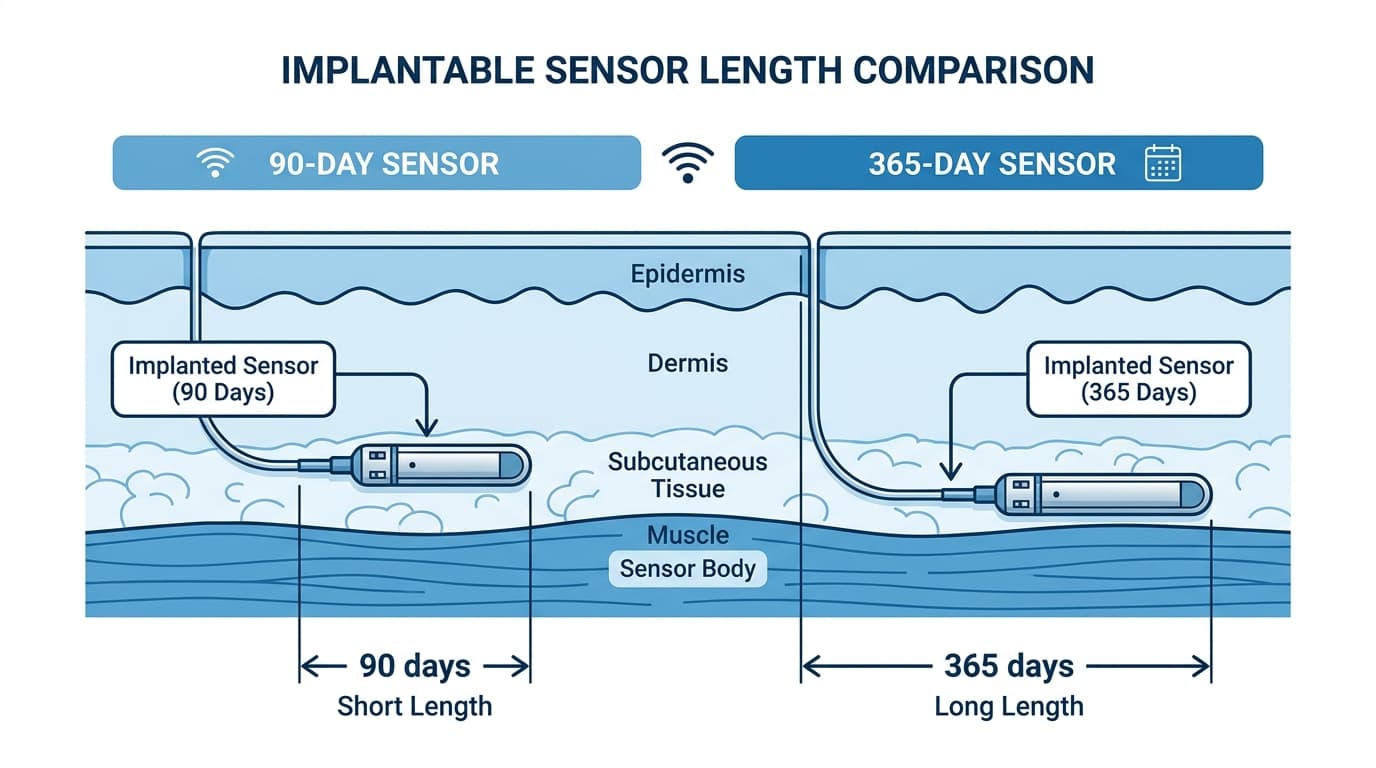
The Senseonics Eversense E3 and Eversense 365 are the only implantable CGMs on the market. Both use a fluorescence-based sensor inserted under the skin of the upper arm during a brief in-office procedure. The E3 lasts 6 months between insertions with a 9.1% MARD, while the Eversense 365 extends that to a full 365 days with a comparable MARD around 8.5%. Both devices use a removable smart transmitter worn over the implant site and provide real-time glucose data, customizable alerts, and on-body vibration alerts (unique to Eversense — no other CGM vibrates directly on the body). The 365 received FDA approval in 2024.
This head-to-head comparison evaluates 11 specification categories: MARD accuracy, sensor wear time, warmup time, calibration requirements, alert capability, insulin pump compatibility, prescription requirement, insured and uninsured pricing, Medicare coverage, and overall GlucoseIntel rating. Each spec is compared in the table below, with the superior value highlighted. Where the difference is negligible or depends on individual preference, neither value is highlighted.
Eversense E3 vs Eversense 365: Specification Comparison
| Spec | Eversense E3 | Eversense 365 |
|---|---|---|
| MARD (Accuracy) | 8.5% | 8.5% |
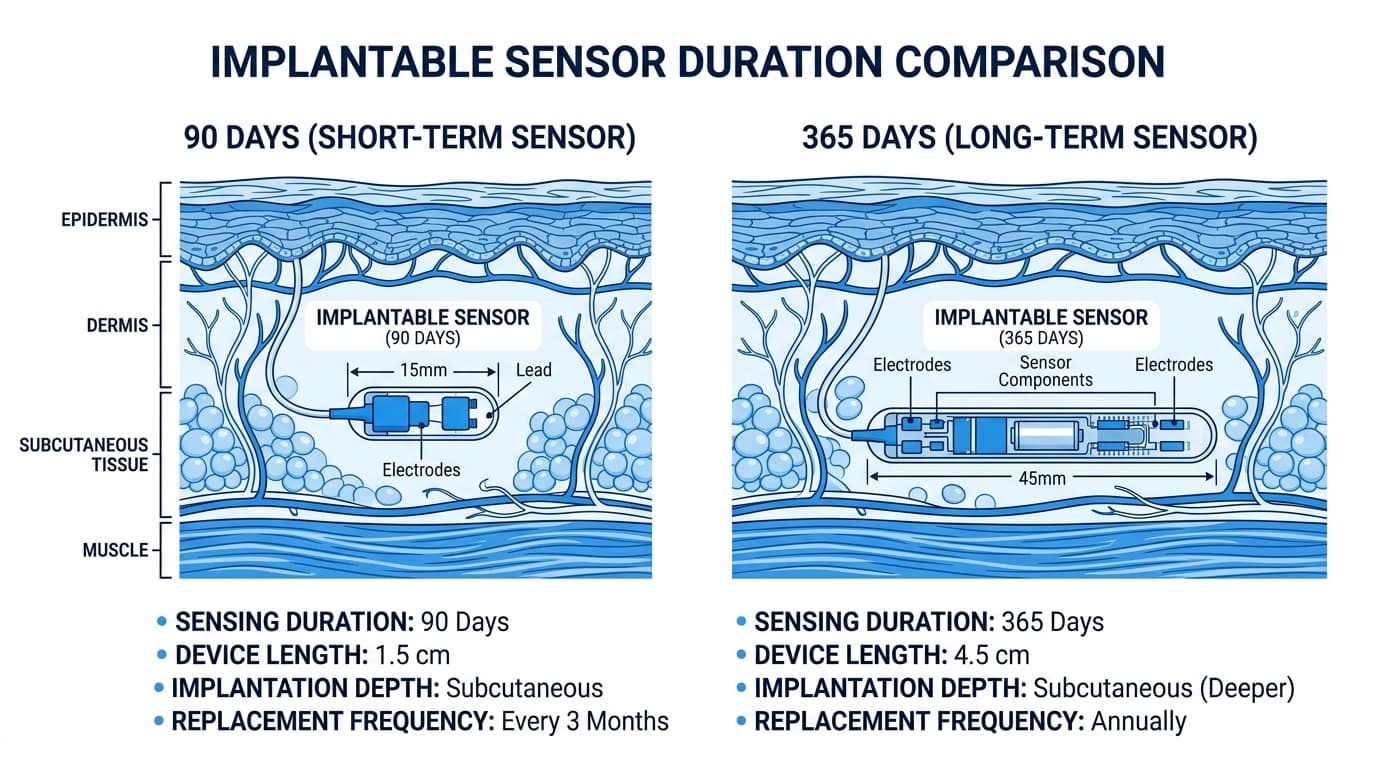
| Wear Time | 180 days | 365 days |
| Warmup Time | 1440 min | 1440 min |
| Calibration Required | Yes | Yes |
| Alerts & Alarms | Yes | Yes |
| Pump Compatible | No | No |
| Prescription Required | Yes | Yes |
| Price (Insured) | $200–$400 per month (amortized including implant procedure) | $150–$350 per month (amortized including implant procedure) |
| Price (Uninsured) | $1,000–$3,000 per 6-month sensor cycle | $2,000–$5,000 per annual sensor cycle |
| Medicare | No | No |
| Rating | 4.5 | 4.6 |
Feature-by-Feature Analysis
Accuracy (MARD)
Both devices share the same 8.5% MARD, meaning their accuracy is equivalent in clinical trials. Real-world accuracy may vary slightly based on sensor placement, hydration, and individual physiology.
Wear Time
The Eversense E3 lasts 180 days while the Eversense 365 lasts 365 days. The Eversense 365's longer wear time means fewer sensor changes per year (approximately 1 vs 3), less insertion discomfort, and potentially lower annual costs.
Cost
With insurance, the Eversense E3 costs $200–$400 per month (amortized including implant procedure) per month while the Eversense 365 costs $150–$350 per month (amortized including implant procedure). Without insurance, the Eversense E3 costs $1,000–$3,000 per 6-month sensor cycle and the Eversense 365 costs $2,000–$5,000 per annual sensor cycle. Neither device is currently Medicare-approved.
Alerts and Alarms
Both the Eversense E3 and Eversense 365 offer customizable high and low glucose alerts, including predictive urgent low alerts that warn before glucose drops below 55 mg/dL. Alert-capable CGMs are essential for type 1 diabetes patients and anyone at risk of nocturnal hypoglycemia. The quality and customizability of alerts — adjustable thresholds, snooze duration, vibration vs audible — varies between devices and should be evaluated based on your specific alerting needs.
Insulin Pump Compatibility
Neither device is compatible with insulin pump systems. Both are standalone CGMs designed for glucose monitoring only — they cannot drive automated insulin delivery. This is typical for OTC and wellness-focused CGMs that are not designed for insulin-dependent diabetes management.
Who Should Choose Each Device
Choose the Eversense E3 if: you prioritize this device's specific feature set, or prefer this product ecosystem.
Choose the Eversense 365 if: you prioritize longer wear time, or want the most affordable option.
Verdict
Winner: eversense-365
The Eversense 365 is the winner because it delivers the same core benefits as the E3 — implantable convenience, on-body vibration alerts, no weekly sensor changes — but with a 1-year duration instead of 6 months. This means half as many insertion/removal procedures per year (1 vs 2), lower annualized cost, and less disruption. The improved MARD of approximately 8.5% also edges out the E3's 9.1%. The only scenario where the E3 might be preferred is if a patient wants to trial the implantable format for a shorter commitment before committing to a full year, or if the Eversense 365 is not yet available through their provider.
Key Takeaways
- Senseonics Eversense E3 and Senseonics Eversense 365 serve different segments of the CGM market.
- The winner (eversense-365) offers the better combination of accuracy, features, and value for most users.
- Your individual needs — insurance coverage, pump compatibility, and whether you need alerts — should drive the final decision.
- Both options are viable choices. Read the full reviews linked below for complete specifications and detailed analysis.