
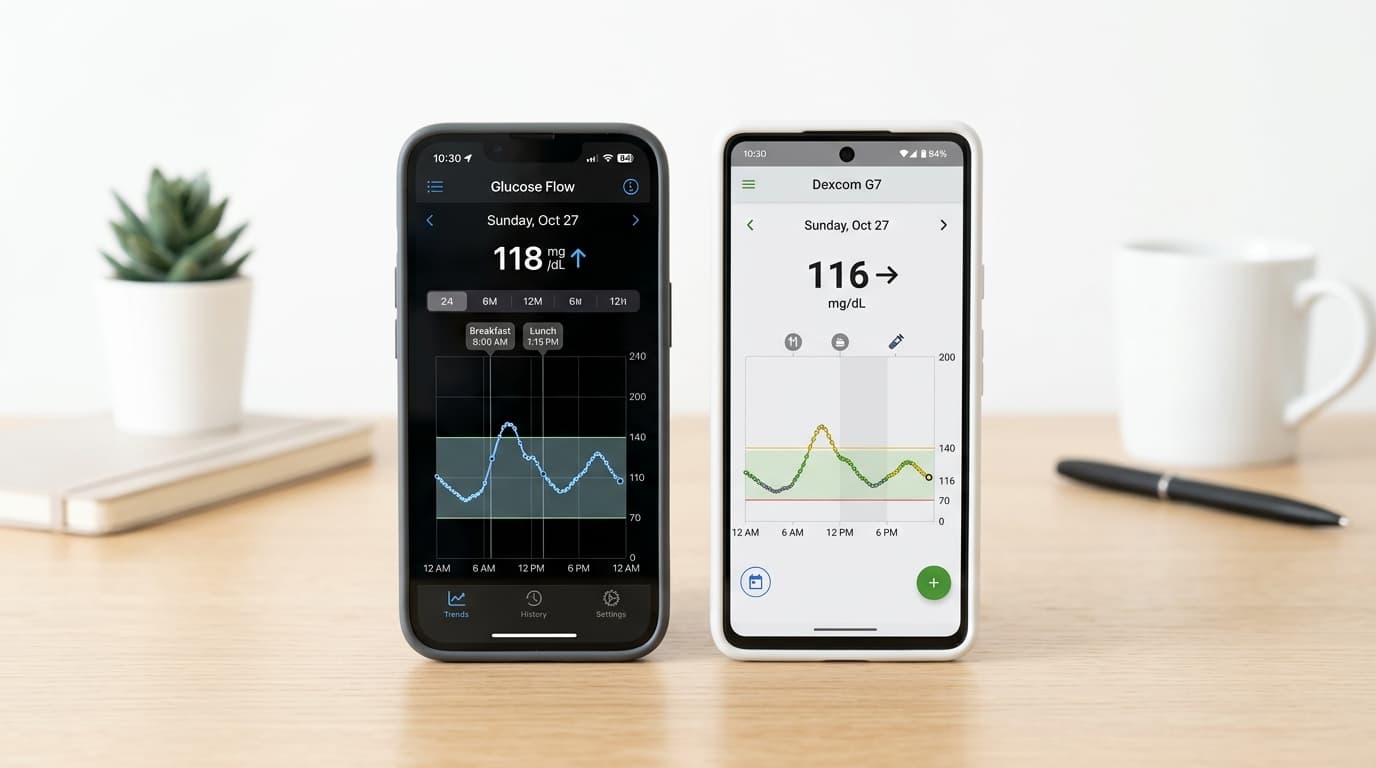
Dexcom G7 vs Stelo: Prescription CGM or Over-the-Counter?
The Dexcom G7 and Dexcom Stelo use the same underlying sensor technology from Dexcom, but they serve fundamentally different markets. The G7 is a prescription CGM designed for diabetes management with real-time alerts, insulin pump integration, and insurance coverage. The Stelo is an over-the-counter biosensor designed for wellness users, prediabetics, and non-insulin type 2 diabetes patients who want glucose insights without a prescription. The Stelo costs approximately $99/month out of pocket, while the G7 costs $300+ without insurance but is often covered with a diabetes diagnosis. The Stelo lacks the customizable high/low alerts and pump compatibility that make the G7 essential for insulin-dependent patients.
This head-to-head comparison evaluates 11 specification categories: MARD accuracy, sensor wear time, warmup time, calibration requirements, alert capability, insulin pump compatibility, prescription requirement, insured and uninsured pricing, Medicare coverage, and overall GlucoseIntel rating. Each spec is compared in the table below, with the superior value highlighted. Where the difference is negligible or depends on individual preference, neither value is highlighted.
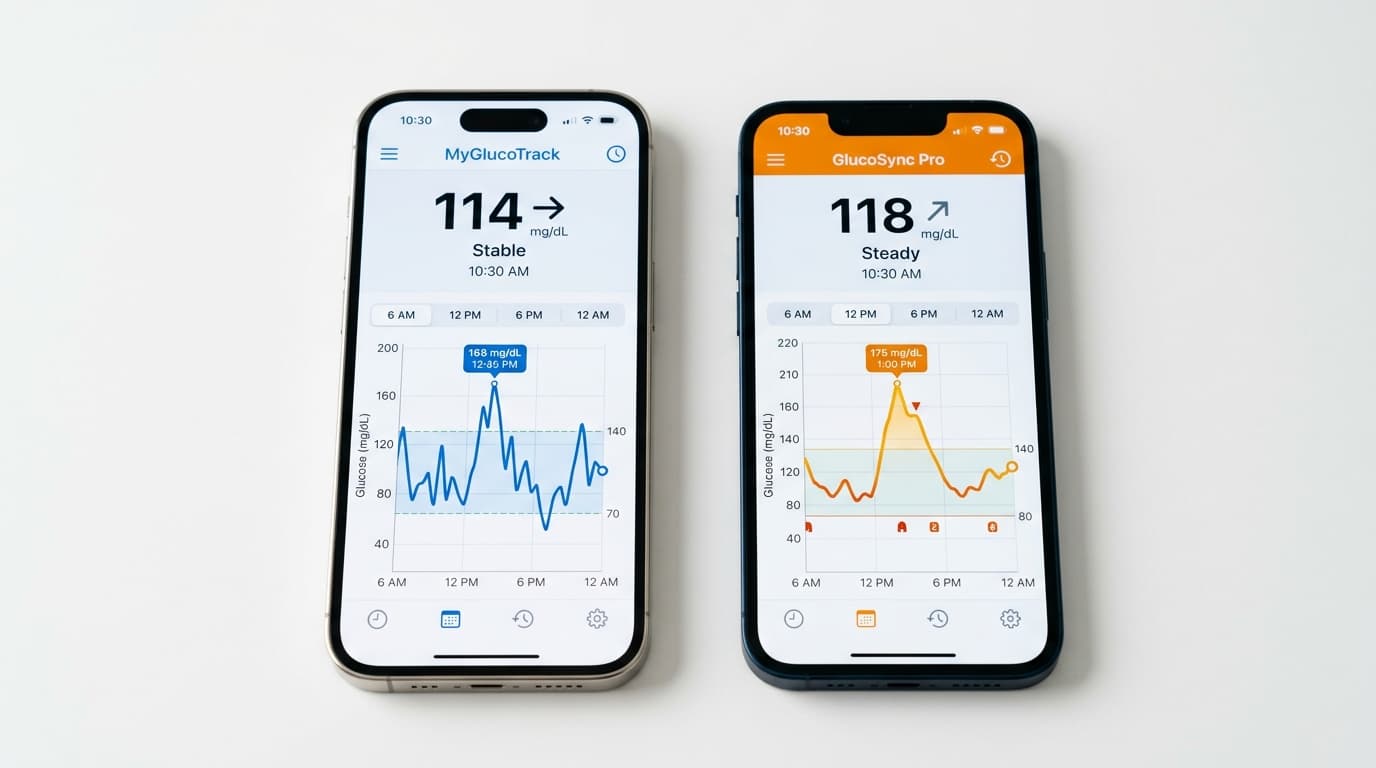
Dexcom G7 vs Dexcom Stelo: Specification Comparison
| Spec | Dexcom G7 | Dexcom Stelo |
|---|---|---|
| MARD (Accuracy) | 8.2% | 9% |
| Wear Time | 10 days | 15 days |
| Warmup Time | 30 min | 30 min |
| Calibration Required | No | No |
| Alerts & Alarms | Yes | No |
| Pump Compatible | Yes | No |
| Prescription Required | Yes | No |
| Price (Insured) | $20–$40 per month | N/A — OTC product not covered by insurance |
| Price (Uninsured) | $250–$350 per month | $49–$99 per month |
| Medicare | Yes | No |
| Rating | 4.8 | 4.3 |
Feature-by-Feature Analysis
Accuracy (MARD)
The Dexcom G7 has a 8.2% MARD compared to 9% for the Dexcom Stelo, making the Dexcom G7 more accurate by 0.8 percentage points. In practical terms, this means the Dexcom G7 will produce glucose readings closer to a simultaneous blood glucose lab value more consistently throughout the day. The accuracy difference is most noticeable during rapid glucose changes after meals and during exercise.
Wear Time
The Dexcom G7 lasts 10 days while the Dexcom Stelo lasts 15 days. The Dexcom Stelo's longer wear time means fewer sensor changes per year (approximately 25 vs 37), less insertion discomfort, and potentially lower annual costs.
Cost
With insurance, the Dexcom G7 costs $20–$40 per month per month while the Dexcom Stelo costs N/A — OTC product not covered by insurance. Without insurance, the Dexcom G7 costs $250–$350 per month and the Dexcom Stelo costs $49–$99 per month. Only the Dexcom G7 is Medicare-approved.
Alerts and Alarms
The Dexcom G7 includes customizable glucose alerts for high, low, and urgent low glucose events. The Dexcom Stelo does not offer real-time alerts, which means it cannot warn you of dangerous glucose levels overnight or during activities. This is the most clinically significant difference between these devices — alert capability directly impacts safety for anyone at risk of hypoglycemia.
Insulin Pump Compatibility
The Dexcom G7 integrates with insulin pumps (Omnipod 5, Tandem t:slim X2, Tandem Mobi) for closed-loop automated insulin delivery. The Dexcom Stelo is not compatible with any insulin pump system. For type 1 diabetes patients using or planning to use an insulin pump, this makes the Dexcom G7 the only viable option between these two devices.
Who Should Choose Each Device
Choose the Dexcom G7 if: you prioritize higher accuracy, need insulin pump integration with Omnipod 5, or are on Medicare.
Choose the Dexcom Stelo if: you prioritize longer wear time, or want the most affordable option.
Verdict
Winner: depends on needs
The winner depends entirely on medical need. The Dexcom G7 is the clear choice for anyone with type 1 diabetes, insulin-dependent type 2 diabetes, or any condition requiring real-time glucose alerts and insulin pump integration — it is a medical device with life-safety features. The Dexcom Stelo is the better choice for wellness users, prediabetics, and people with non-insulin type 2 diabetes who want metabolic insights without the hassle of a prescription or the cost of insurance copays. Buying a G7 for wellness use is overpaying for unnecessary features; using a Stelo for insulin-dependent diabetes is medically inappropriate.
Key Takeaways
- Dexcom G7 and Dexcom Stelo serve different segments of the CGM market.
- The winner (depends on needs) offers the better combination of accuracy, features, and value for most users.
- Your individual needs — insurance coverage, pump compatibility, and whether you need alerts — should drive the final decision.
- Both options are viable choices. Read the full reviews linked below for complete specifications and detailed analysis.