
CGM vs Fingerstick Monitoring: Why Continuous Data Changes Everything
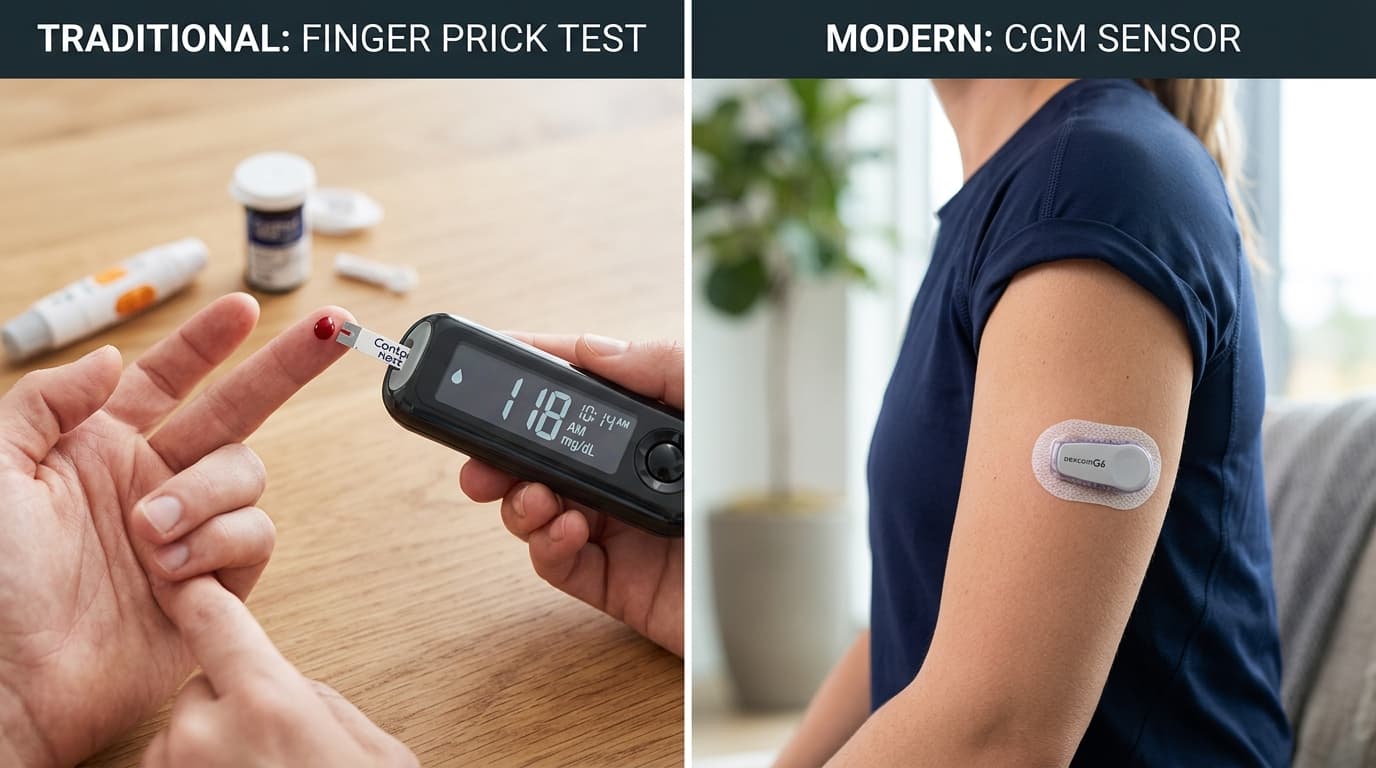
This is the foundational comparison in glucose monitoring: continuous glucose monitors (CGMs) that measure glucose every 1-5 minutes (288-1,440 readings per day) versus traditional fingerstick blood glucose meters that provide a single point-in-time reading per test (typically 2-8 tests per day). CGMs use a subcutaneous sensor to measure interstitial fluid glucose, while fingerstick meters measure capillary blood glucose directly. CGMs cost $75-400+ per month; test strips for fingerstick meters cost $0.20-1.50 per strip ($15-100+ per month depending on testing frequency). CGMs provide trend arrows, alerts, time-in-range data, and historical graphs; fingerstick meters provide a single number.
This is a category-level comparison that explains the fundamental differences between two approaches to glucose monitoring. Rather than comparing specific products, it evaluates the strengths and limitations of each monitoring category to help you determine which type of technology is appropriate for your situation.
Verdict
Winner: CGM
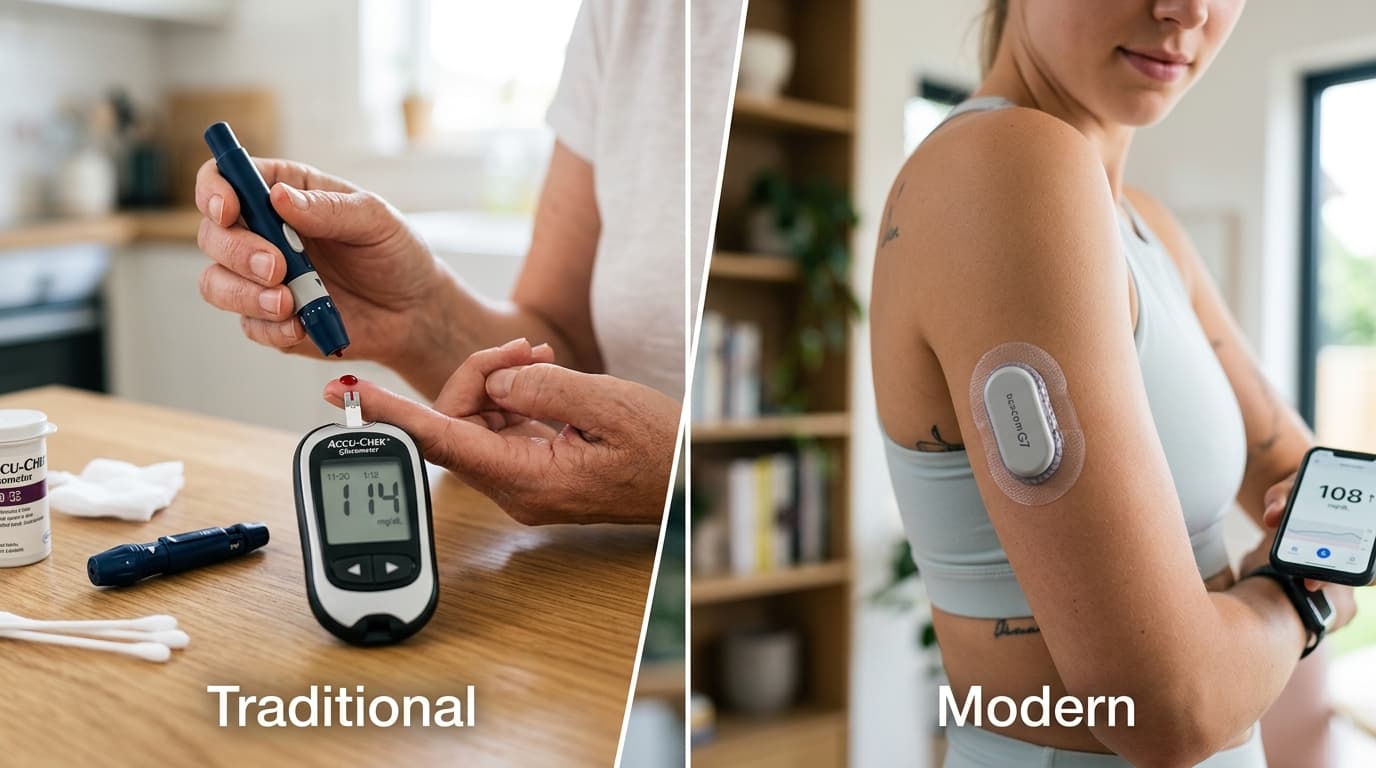
CGMs are the clear winner for glucose monitoring because continuous data fundamentally changes clinical outcomes. A fingerstick meter captures 4-8 snapshots per day and misses overnight lows, postmeal spikes, and the full shape of glucose responses. A CGM captures 288+ readings per day and reveals the complete picture — including dangerous overnight hypoglycemia that fingersticks cannot detect (affecting up to 50% of T1D patients). Clinical trials consistently show CGM users achieve 0.3-0.6% lower A1C, 2-3+ more hours per day in the target range, and 38-72% fewer hypoglycemic events compared to fingerstick users. The only advantages of fingerstick meters are lower upfront cost and the fact that they measure blood glucose directly (5-15 minute lag for CGM interstitial readings).
Key Takeaways
- Continuous Glucose Monitor and Fingerstick Blood Glucose Meter serve fundamentally different approaches to glucose monitoring.
- The winner (CGM) is the better choice for the majority of glucose monitoring needs.
- Your individual needs — diagnosis, insurance status, and monitoring frequency — should drive the final decision.
- Both options are viable choices. Read the full reviews linked below for complete specifications and detailed analysis.