
Eversense 365 Review: Accuracy, Cost, and Wear Time
The Eversense 365 is a 365-day real-time cgm continuous glucose monitor with a 8.5% MARD accuracy rating and a GlucoseIntel score of 4.6/5.0. The Eversense 365 is the world's first 1-year implantable CGM, FDA-cleared in July 2024 for adults 18 and older. Built on the proven Eversense fluorescence platform, it extends sensor life from 6 months to a full year — requiring just 1 implant procedure annually. It retains all E3 features including on-body vibration alerts and removable transmitter, while significantly reducing the per-day cost of implantable glucose monitoring.
As a prescription CGM, the Eversense 365 is FDA-cleared for diabetes management and requires a doctor's order. Insurance coverage is widely available for qualifying patients, bringing the monthly cost to $150–$350 per month (amortized including implant procedure). Without insurance, the out-of-pocket cost is $2,000–$5,000 per annual sensor cycle. The Eversense 365 is not currently approved for Medicare coverage.
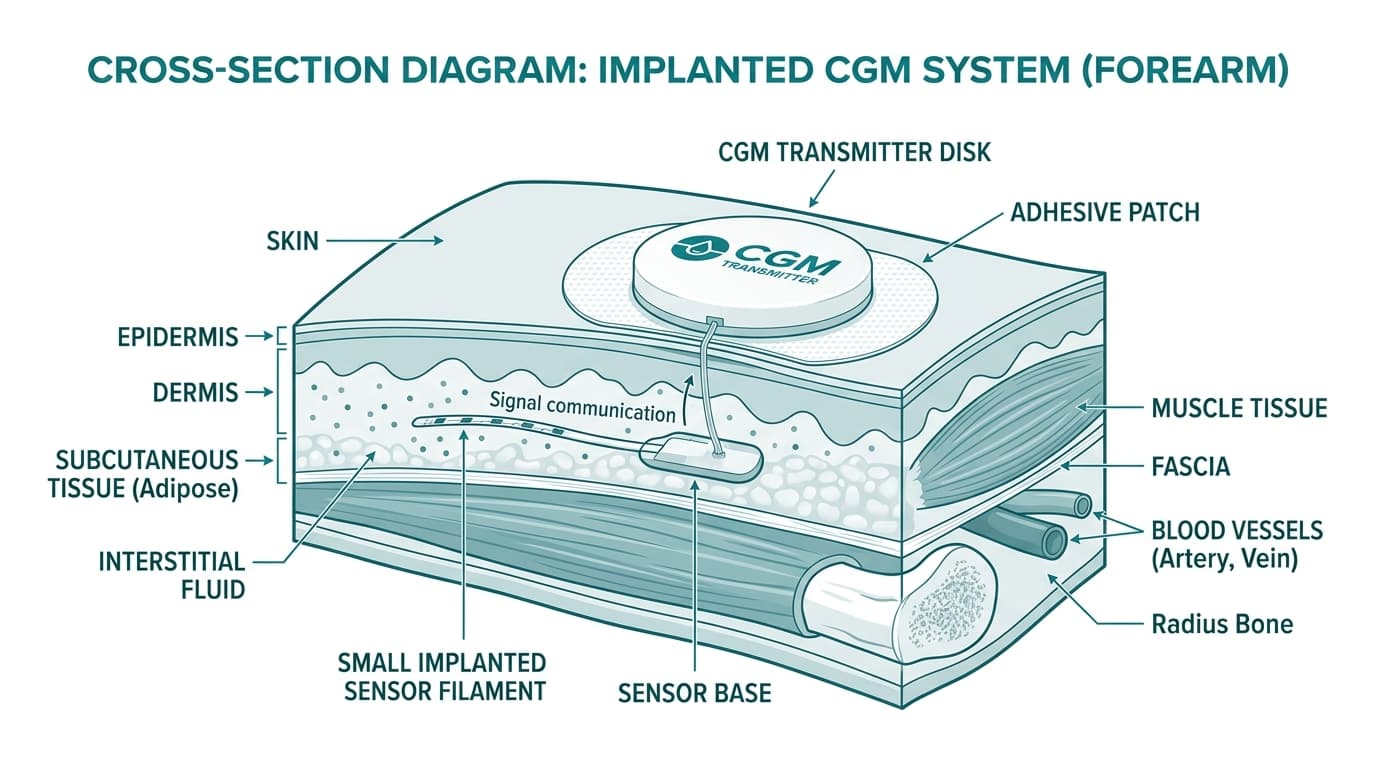
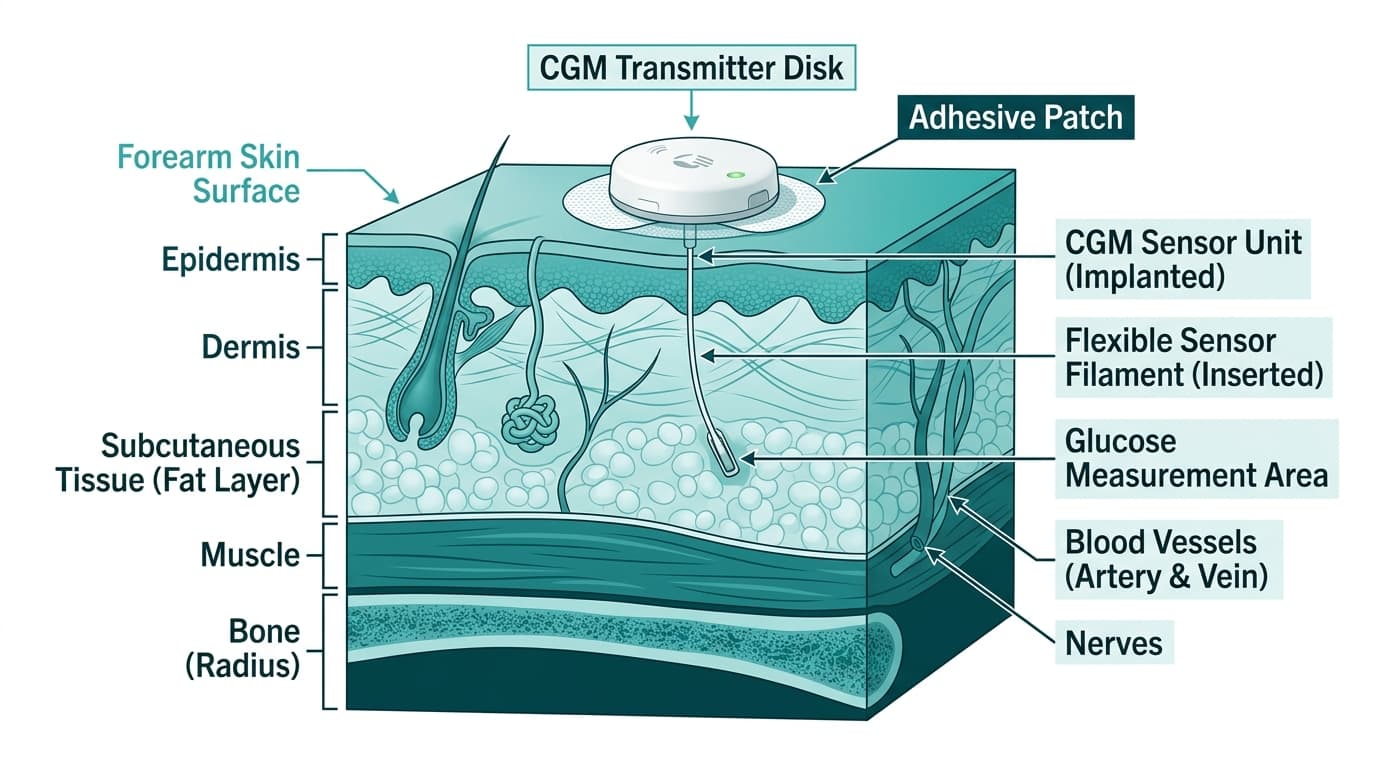
Released in 2025 by Senseonics Holdings, Inc. (Germantown, Maryland), the Eversense 365 uses fluorescence-based (implantable) technology to measure glucose in interstitial fluid. The sensor requires calibration with fingerstick blood glucose tests for optimal accuracy. The warmup period after sensor insertion is 1440 minutes, longer than most competing devices.
Eversense 365
by Senseonics
Key Specifications
| Product | MARD | Wear Time | Type | Rx? | With Insurance | Without Insurance | Medicare | Rating |
|---|---|---|---|---|---|---|---|---|
| Eversense 365 | 8.5% | 365 days | Real time CGM | Yes | $150–$350 per month (amortized including implant procedure) | $2,000–$5,000 per annual sensor cycle | — | 4.6 |
Sensor Type
Fluorescence-based (implantable)
Water Resistance
IP68 — sensor is fully implanted; transmitter is removable
Age Approval
18 years and older
Transmitter Life
Up to 1 year (rechargeable daily)
How Accurate Is the Eversense 365?
The Eversense 365 has a Mean Absolute Relative Difference (MARD) of 8.5%, which measures the average percentage error between CGM readings and simultaneous laboratory blood glucose measurements. A lower MARD indicates higher accuracy. For context, the most accurate consumer CGM in 2026 is the FreeStyle Libre 3 Plus at 7.9% MARD, while the industry range spans from 7.9% to approximately 9.2% among FDA-cleared devices.
A 8.5% MARD places the Eversense 365 in the middle of the accuracy spectrum for current-generation CGMs. This accuracy level is suitable for glucose trend monitoring, meal response tracking, and general diabetes management. Readings may occasionally differ from a simultaneous fingerstick by 10-15 mg/dL, which is clinically acceptable for most monitoring purposes but warrants attention when making insulin correction doses.
Accuracy is highest during stable glucose periods and lowest during rapid rates of change — such as the first 60 to 90 minutes after a high-carbohydrate meal or during intense physical exercise. The physiological lag between interstitial fluid glucose (where the sensor measures) and blood glucose (what a fingerstick shows) is typically 5 to 15 minutes. Learn more about how MARD is calculated and what it means for your daily monitoring on our MARD glossary page.
What Does the Eversense 365 Cost?
With insurance, the Eversense 365 costs $150–$350 per month (amortized including implant procedure). Without insurance, the price is $2,000–$5,000 per annual sensor cycle. The Eversense 365 is not currently covered by Medicare.
The annual cost of the Eversense 365 depends on sensor replacement frequency. With a 365-day sensor life, users need approximately 1 sensors per year. The longer sensor life reduces annual replacement costs compared to 7-day and 10-day sensors, which require 52 and 37 sensors per year respectively.
For a complete breakdown of CGM costs across all devices, including manufacturer discount programs and patient assistance options, see our comprehensive CGM cost guide.
Sensor Wear Time: 365 Days
The Eversense 365 sensor lasts 365 days before requiring replacement. This is the longest sensor life of any CGM on the market by a significant margin, requiring only 1 sensor insertion per year compared to 24+ for 15-day sensors and 52 for 7-day sensors.
The 24-hour warmup period after implantation is significantly longer than adhesive-patch CGMs, which warm up in 30 to 120 minutes. This extended warmup is inherent to the implantation process as the sensor stabilizes in subcutaneous tissue.
App and Data Sharing
The Eversense 365 pairs with a dedicated smartphone app that displays real-time glucose values, trend arrows, and historical data. The device supports data sharing with caregivers, family members, and healthcare providers, allowing remote monitoring of glucose levels and alerts. Customizable high and low glucose alerts notify users when blood sugar moves outside their target range, and trend-based notifications provide advance warning of rising or falling glucose.
Pros and Cons
Pros
- 365-day (1-year) sensor life — the longest-lasting glucose monitor ever made
- Only 1 sensor implant procedure per year
- Eliminates all adhesive-related skin issues for a full year
- On-body vibration alerts for highs and lows
- Lower annual amortized cost per day than the E3 due to extended wear
- Fluorescence technology resists common medication interferences
- Removable transmitter allows unrestricted water activities
Cons
- Requires in-office surgical insertion and removal
- Twice-daily fingerstick calibration still required
- 24-hour warmup period after implantation
- Not yet Medicare approved
- No insulin pump integration available
- Adults only (18+)
- Limited provider network for implant procedures
- Daily transmitter charging required
Who Should Use the Eversense 365?
The Eversense 365 is recommended for patients with type 1 or type 2 diabetes who need an accurate, affordable prescription CGM with real-time glucose data. It is particularly well-suited for patients who prioritize reliable accuracy at a lower cost and longer wear time to minimize sensor changes.
How Does the Eversense 365 Compare?
See how the Eversense 365 stacks up against competing continuous glucose monitors in our head-to-head comparison guides. Each comparison evaluates accuracy, wear time, cost, features, and which device is better for specific use cases.
Eversense 365
by Senseonics