
Normal Blood Sugar Levels by Age, Time of Day, and Test Type
Normal blood sugar ranges from 70-99 mg/dL fasting in adults, but thresholds vary by age group, time since eating, and testing method. Complete reference tables for children, adults, elderly, and pregnant women.
Normal Blood Sugar Ranges for Adults
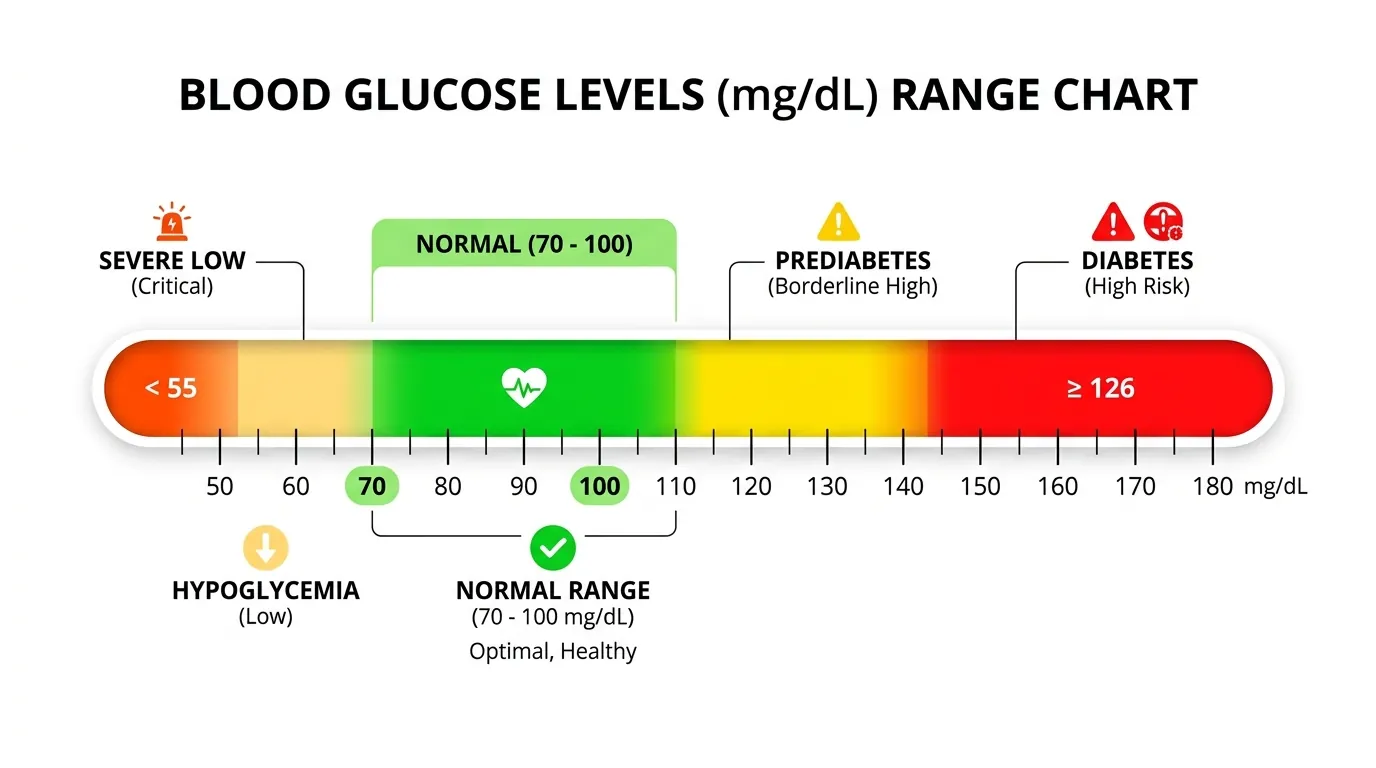
Normal fasting blood sugar for adults aged 18 to 64 ranges from 70 to 99 mg/dL, according to the American Diabetes Association (ADA) 2024 Standards of Care. This fasting range applies to venous blood drawn after at least 8 hours without food or caloric beverages. Two hours after eating, blood sugar should return below 140 mg/dL in a healthy adult. Between meals, glucose typically remains between 70 and 120 mg/dL. Overnight, blood sugar dips to its lowest point — usually 65 to 90 mg/dL — between 2 AM and 4 AM before rising gradually due to the dawn phenomenon. A 2018 study published in PLOS Biology by researchers at Stanford University placed continuous glucose monitors on 57 non-diabetic adults and found that participants spent 96% of the day between 70 and 140 mg/dL, with a mean glucose of 99 mg/dL. The same study revealed that 24% of meals produced postmeal peaks above 140 mg/dL even in metabolically healthy individuals — a finding that redefines what "normal" looks like when measured continuously rather than at a single fasting time point.
Pediatric Blood Sugar Ranges: Infants Through Adolescents
Blood sugar ranges for children differ from adult values, particularly in younger age groups. Newborns (0-28 days) have a normal glucose range of 40 to 80 mg/dL in the first 24 hours of life, rising to 50 to 90 mg/dL by day 2. Infants aged 1 month to 1 year maintain fasting glucose of 60 to 100 mg/dL. Children aged 1 to 5 years have a fasting range of 70 to 100 mg/dL but may show wider postmeal excursions (up to 160 mg/dL) due to faster gastric emptying and higher carbohydrate intake relative to body weight. School-age children (6-12 years) and adolescents (13-17 years) have fasting ranges identical to adults (70-99 mg/dL), but the ADA recommends a broader Time in Range target of 70 to 180 mg/dL for children with type 1 diabetes, with a TIR goal of at least 70% and time below 70 mg/dL of less than 4%. Pediatric CGM data from the T1D Exchange registry shows that children aged 6-12 achieve an average TIR of 52%, while adolescents aged 13-17 average 47% — both below the recommended 70% threshold. Continuous glucose monitoring is now recommended by the ADA for all children with type 1 diabetes regardless of age.
Blood Sugar Ranges for Adults Over 65
The ADA recommends relaxed glucose targets for adults over 65, particularly those with multiple chronic conditions, cognitive impairment, or limited life expectancy. The standard fasting range remains 70-99 mg/dL for diagnosis, but management targets shift: a fasting goal of 80 to 130 mg/dL and a postmeal target below 180 mg/dL are considered appropriate for older adults. A1C targets are also relaxed to less than 8.0% (average glucose 183 mg/dL) for those with significant comorbidities, compared to less than 7.0% for younger, healthier adults. The primary concern in elderly patients is hypoglycemia, which carries disproportionate risks in this population — falls from low blood sugar are the second leading cause of diabetes-related emergency department visits in adults over 75. A 2022 study in Diabetes Care found that adults over 65 using CGMs experienced 58% fewer hypoglycemic events below 54 mg/dL compared to fingerstick-only monitoring. CGM technology is particularly valuable in elderly patients because it provides predictive low glucose alerts that can prevent hypoglycemia-related falls and confusion before symptoms appear.
Blood Sugar Targets During Pregnancy
Pregnant women require tighter blood sugar control than any other population. The ADA recommends a fasting glucose target of 60 to 95 mg/dL, a 1-hour postmeal target below 140 mg/dL, and a 2-hour postmeal target below 120 mg/dL for women with gestational diabetes or pre-existing diabetes. These targets are lower than standard adult ranges because fetal exposure to glucose above 120 mg/dL increases the risk of macrosomia (birth weight above 4,000 grams), neonatal hypoglycemia, and preeclampsia. The HAPO study (Hyperglycemia and Adverse Pregnancy Outcomes, 2008) involving 23,316 women across 9 countries demonstrated a continuous, linear relationship between maternal glucose and adverse outcomes — there is no safe threshold below which elevated glucose carries zero risk. CGMs are increasingly used during pregnancy, and a 2022 meta-analysis in The Lancet found that CGM use during pregnancy reduced A1C by 0.3%, increased time in the tighter pregnancy range (63-140 mg/dL) by 7 percentage points, and reduced large-for-gestational-age births by 37% compared to fingerstick-only monitoring.
Blood Sugar Ranges by Test Type
The "normal" blood sugar range depends on which test is used because each method measures a different aspect of glucose metabolism. A fasting plasma glucose test measures the concentration of glucose in venous blood after 8+ hours of fasting — normal is below 100 mg/dL, prediabetes is 100-125 mg/dL, and diabetes is 126 mg/dL or higher on two separate tests. An oral glucose tolerance test (OGTT) measures glucose 2 hours after drinking a 75-gram glucose solution — normal is below 140, prediabetes is 140-199, and diabetes is 200 or higher. An A1C test measures the percentage of hemoglobin proteins in red blood cells that have glucose attached — normal is below 5.7%, prediabetes is 5.7-6.4%, and diabetes is 6.5% or higher. Fingerstick meters measure capillary blood glucose, which runs 10-15% lower than venous plasma glucose, meaning a fingerstick reading of 90 mg/dL corresponds roughly to a lab plasma value of 100-104 mg/dL. CGMs measure glucose in interstitial fluid, which lags behind blood glucose by 5-15 minutes and may read 10-20 mg/dL lower during rapid glucose rises. Understanding these measurement differences prevents false alarm when comparing readings across test types.
How Time of Day Affects Normal Blood Sugar
Blood sugar follows a circadian rhythm driven by hormones, meal timing, and physical activity. Fasting morning glucose (6-8 AM) in non-diabetic adults averages 85-95 mg/dL, often slightly higher than the overnight nadir of 70-85 mg/dL due to the dawn phenomenon — a cortisol and growth hormone surge between 3 AM and 8 AM that stimulates liver glucose release. After breakfast, glucose peaks at 120-160 mg/dL within 30-60 minutes and returns to baseline within 2-3 hours. Lunch and dinner produce similar but often slightly smaller peaks because insulin sensitivity follows its own circadian rhythm — it is highest in the morning and decreases by 20-30% in the evening. A 2019 study by Jarrett et al. in the Journal of Clinical Endocrinology and Metabolism confirmed that identical meals eaten at 8 AM versus 8 PM produced postmeal glucose peaks that were 17% higher at dinner, even in non-diabetic participants. This evening insulin resistance explains why late-night eating produces larger glucose spikes and why time-restricted eating (confining meals to a 10-12 hour window ending before 8 PM) has shown metabolic benefits in clinical trials. CGM users can visualize these time-of-day patterns on their daily glucose overlay reports, making circadian glucose behavior visible for the first time.