
Low Blood Sugar (Hypoglycemia): Symptoms, Causes, and Emergency Response
Hypoglycemia is classified as Level 1 (<70 mg/dL), Level 2 (<54 mg/dL), and Level 3 (severe, needs assistance). The 15-15 rule, CGM predictive alerts, causes, and emergency protocols.
What Is Low Blood Sugar (Hypoglycemia)?
Hypoglycemia is a blood sugar level below 70 mg/dL — the threshold at which counter-regulatory hormones begin to activate and symptoms may appear. The International Hypoglycaemia Study Group, endorsed by the ADA and the European Association for the Study of Diabetes (EASD), classifies hypoglycemia into three severity levels. Level 1 hypoglycemia is a glucose reading below 70 mg/dL but at or above 54 mg/dL — this is a glucose alert value that signals the need for carbohydrate intake to prevent further decline. Level 2 hypoglycemia is a glucose reading below 54 mg/dL — this level indicates clinically significant hypoglycemia that requires immediate treatment with fast-acting carbohydrates. Level 3 hypoglycemia is defined by the need for third-party assistance due to severe impairment of cognitive function, regardless of the specific glucose value — this may include confusion, seizures, or loss of consciousness and may require glucagon injection or emergency medical services. Hypoglycemia causes approximately 100,000 emergency department visits per year in the United States and is the leading acute complication of insulin therapy. CGM predictive low glucose alerts have reduced severe hypoglycemia events by 72% in clinical trials (Heinemann et al., Lancet, 2018).
Symptoms of Hypoglycemia by Severity Level
Hypoglycemia symptoms follow a predictable progression as blood sugar falls. At 65 to 70 mg/dL, the autonomic nervous system activates, producing adrenergic symptoms: trembling or shaking hands, rapid heartbeat (100+ beats per minute), sweating (especially on the palms, forehead, and upper lip), anxiety, and hunger. These early warning symptoms are designed to prompt carbohydrate intake before glucose drops further. At 50 to 65 mg/dL, neuroglycopenic symptoms appear as the brain becomes glucose-deprived: difficulty concentrating, confusion, slurred speech, blurred vision, dizziness, and impaired coordination. At this stage, the person may not recognize that they are hypoglycemic — a dangerous state called hypoglycemia unawareness, which affects 20 to 25% of people with type 1 diabetes and 10% of insulin-treated type 2 diabetes patients. Below 40 mg/dL, severe neuroglycopenia can cause seizures, loss of consciousness, and — in rare cases — brain damage or death if untreated. Nocturnal hypoglycemia is particularly dangerous because sleep suppresses the awareness of autonomic symptoms; CGMs address this by sounding an alarm when glucose drops below a configured threshold, even during deep sleep. The Dexcom G7 and FreeStyle Libre 3 both include urgent low glucose alarms at 55 mg/dL that cannot be disabled.
Causes of Low Blood Sugar
Hypoglycemia has 7 primary causes, nearly all related to an imbalance between glucose supply and insulin or insulin-like activity. Exogenous insulin is the most common cause — injecting too much rapid-acting insulin before a meal, miscalculating carbohydrate intake, or stacking insulin doses causes blood sugar to drop below 70 mg/dL within 1 to 3 hours. Sulfonylurea medications (glipizide, glimepiride, glyburide) stimulate the pancreas to secrete insulin regardless of blood sugar level, causing hypoglycemia in 10 to 20% of users. Exercise increases muscle glucose uptake by 2 to 5 times through insulin-independent GLUT4 translocation; a 30-minute moderate-intensity workout can lower blood sugar by 20 to 60 mg/dL, with the effect continuing for up to 24 hours as muscles replenish glycogen stores. Alcohol inhibits hepatic gluconeogenesis, blocking the liver's ability to produce new glucose for 6 to 12 hours after consumption — this makes alcohol-associated hypoglycemia delayed and difficult to predict. Skipped or delayed meals remove the expected carbohydrate input that basal insulin doses are calibrated against. Excessive heat (hot baths, saunas) accelerates insulin absorption from injection sites. Kidney disease reduces insulin clearance, extending the duration of action of each insulin dose. CGM technology transforms hypoglycemia prevention by providing 10 to 30 minutes of advance warning through predictive low glucose alerts.
The 15-15 Rule: Emergency Treatment Protocol
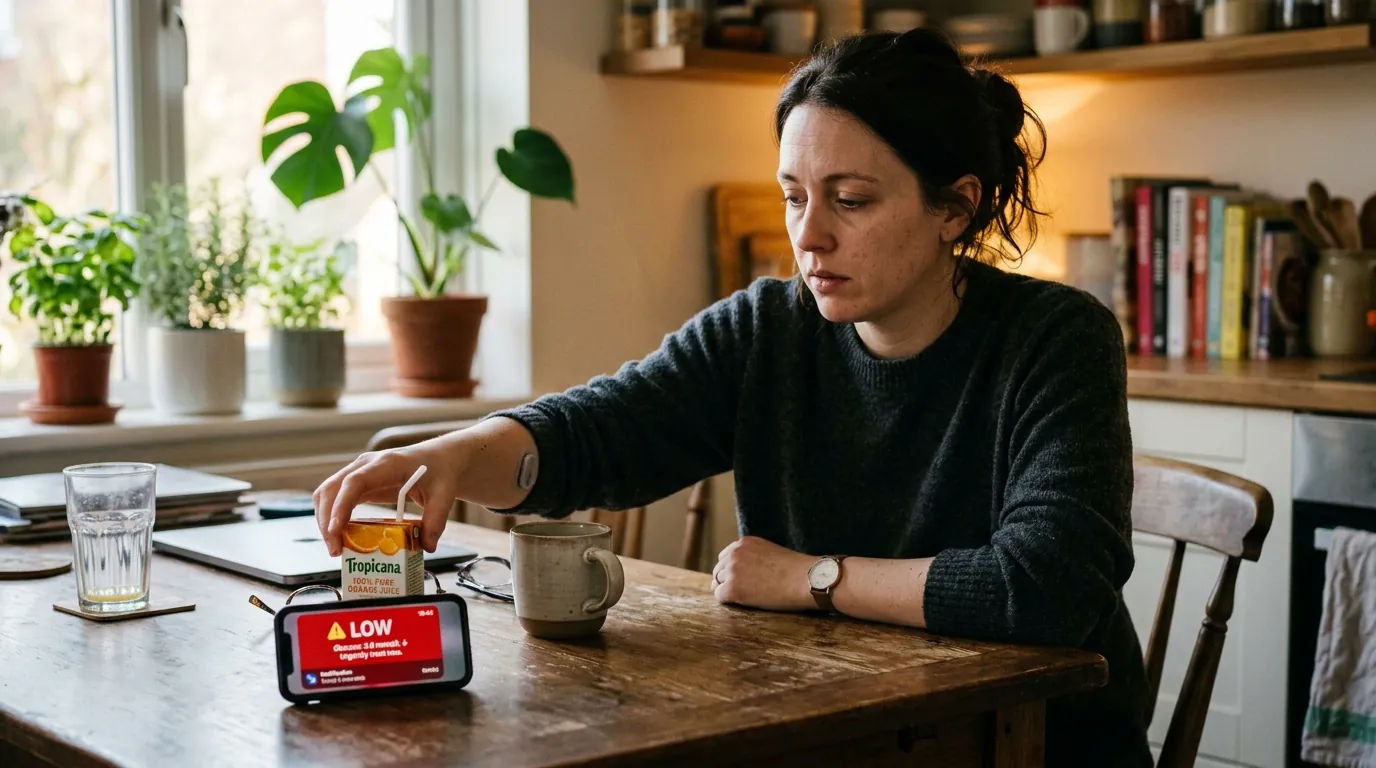
The 15-15 rule is the ADA-recommended treatment protocol for Level 1 and Level 2 hypoglycemia. The rule is simple: consume 15 grams of fast-acting carbohydrates, wait 15 minutes, then recheck blood sugar. If glucose remains below 70 mg/dL, repeat with another 15 grams of carbohydrates. Fast-acting carbohydrate sources that provide approximately 15 grams include: 4 glucose tablets (the preferred option because the dose is precise and consistent), 4 ounces (half a cup) of regular fruit juice, 5 to 6 hard candies, 1 tablespoon of honey, or 4 ounces of regular soda. Foods containing fat or protein (chocolate, peanut butter crackers) should not be used as the primary treatment because fat slows gastric emptying and delays the glucose rise by 15 to 30 minutes. Overtreating hypoglycemia is a common problem — consuming 30 to 60 grams of carbohydrates in a panic causes a rebound hyperglycemia of 200 to 300 mg/dL within 1 to 2 hours, creating a glucose roller coaster that is difficult to stabilize. CGM trend data helps prevent overtreatment by showing the rate of glucose rise after carbohydrate intake in real time. For Level 3 hypoglycemia (severe, with impaired consciousness), injectable glucagon (1 mg intramuscular or 3 mg intranasal via Baqsimi) is required because the person cannot safely swallow. Every household with an insulin-using family member should have glucagon accessible and ensure that at least 2 people know how to administer it.
How CGM Predictive Alerts Prevent Hypoglycemia
CGM predictive low glucose alerts represent the most significant advance in hypoglycemia prevention since the discovery of glucagon. Unlike threshold alerts (which alarm when glucose has already reached 70 or 55 mg/dL), predictive alerts use the rate of glucose decline to forecast whether glucose will reach a dangerous level in the next 10 to 30 minutes and warn the user before it happens. The Dexcom G7 Urgent Low Soon alert activates when the algorithm predicts glucose will reach 55 mg/dL within 20 minutes. The Medtronic Guardian 4 uses the SmartGuard algorithm to predict lows 30 minutes in advance. A 2018 meta-analysis by Heinemann et al. in The Lancet covering 12 randomized controlled trials found that CGM with predictive alerts reduced time below 54 mg/dL by 72% and reduced severe hypoglycemia events requiring third-party assistance by 50% compared to fingerstick-only monitoring. For insulin pump users on closed-loop systems, the prevention is even more proactive — when the algorithm predicts low glucose, it automatically suspends basal insulin delivery until glucose recovers, preventing hypoglycemia without requiring any action from the user. The Medtronic 780G suspend-before-low feature reduced Level 2 hypoglycemia to less than 0.5% of total sensor time in the pivotal trial. These technologies are the primary reason the ADA now recommends CGM for all people with type 1 diabetes and all insulin-treated type 2 diabetes patients.