
High Blood Sugar (Hyperglycemia): Warning Signs and When to Seek Help
Hyperglycemia is blood sugar above 180 mg/dL. Mild (180-250), moderate (250-400), severe (400+). DKA and HHS risks, symptoms, correction protocols, and how CGM tracks time above range.
What Is High Blood Sugar (Hyperglycemia)?
Hyperglycemia is a blood sugar level above 180 mg/dL — the upper boundary of the standard Time in Range window established by the 2019 International Consensus. This definition applies to people with diabetes; in non-diabetic adults, glucose rarely exceeds 140 mg/dL under normal conditions, and any reading above 200 mg/dL with classic symptoms (excessive thirst, frequent urination, unexplained weight loss) is diagnostic for diabetes without additional confirmatory testing. Hyperglycemia is classified by severity: mild hyperglycemia (180-250 mg/dL) causes few immediate symptoms but contributes to long-term complications when chronic, moderate hyperglycemia (250-400 mg/dL) produces noticeable symptoms and increases the risk of diabetic ketoacidosis (DKA) and hyperosmolar hyperglycemic state (HHS), and severe hyperglycemia (above 400 mg/dL) is a medical emergency requiring immediate treatment. The ADA 2024 Standards of Care recommend that people with diabetes spend less than 25% of the day above 180 mg/dL (Time Above Range, TAR) and less than 5% above 250 mg/dL. CGMs quantify these targets precisely through the Ambulatory Glucose Profile report, converting the abstract concept of hyperglycemia into a measurable, actionable metric.
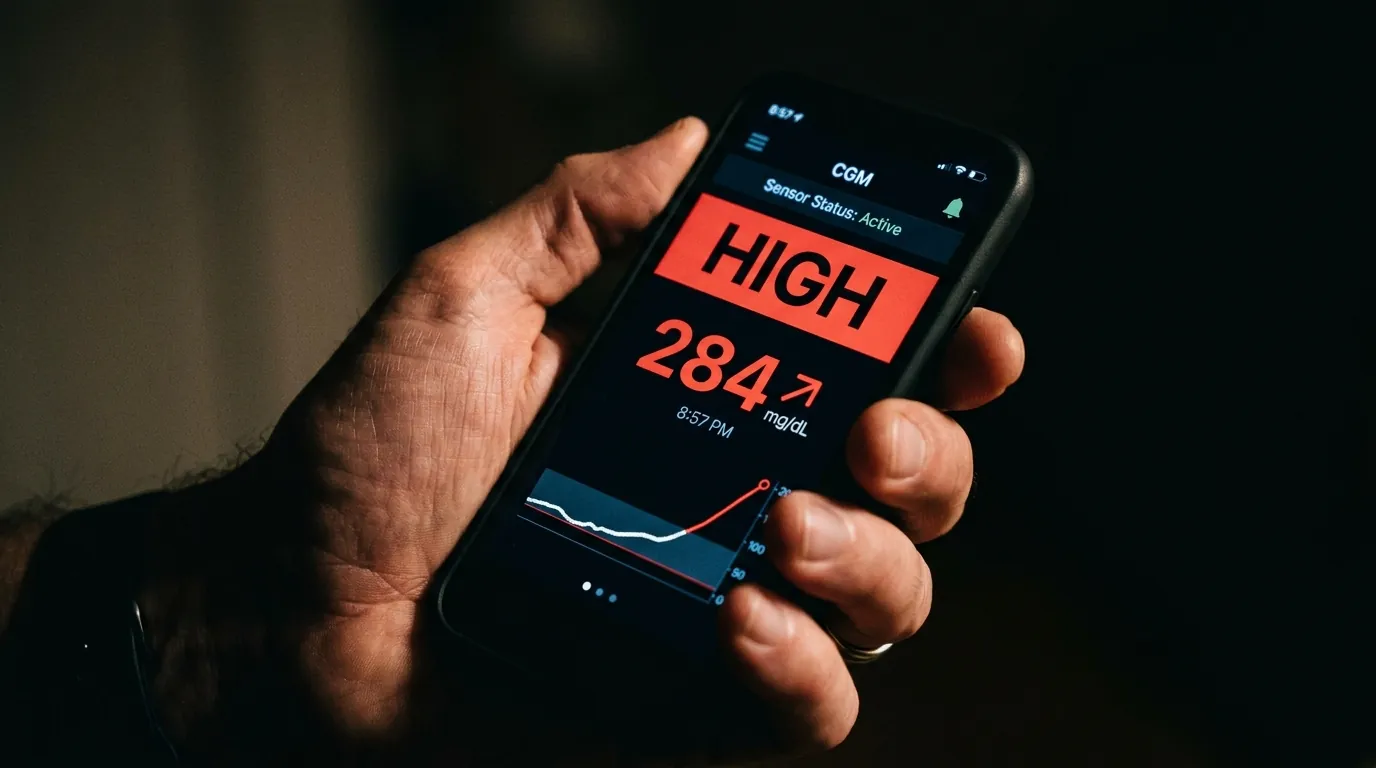
Symptoms of Hyperglycemia by Severity
Hyperglycemia symptoms develop gradually and are often mistaken for other conditions. At 180 to 250 mg/dL, the renal threshold for glucose is exceeded, and the kidneys begin filtering glucose into the urine — a process called glycosuria. This triggers osmotic diuresis: the glucose in the urine pulls water with it, causing frequent urination (polyuria), which leads to dehydration and excessive thirst (polydipsia). At this level, many people feel mild fatigue and may experience blurred vision due to osmotic changes in the lens of the eye. At 250 to 400 mg/dL, symptoms intensify: severe fatigue, headache, difficulty concentrating, dry mouth, nausea, and fruity-smelling breath (in type 1 diabetes, indicating ketone production). Unexplained weight loss occurs at chronically elevated levels because the body cannot access glucose for energy and begins breaking down fat and muscle. At blood sugar above 400 mg/dL, the risk of life-threatening complications — DKA and HHS — becomes significant. Symptoms include vomiting, abdominal pain, rapid deep breathing (Kussmaul respiration), confusion, and eventual loss of consciousness. The insidious aspect of hyperglycemia is that chronic exposure to levels of 180 to 250 mg/dL can become the "new normal," and the person no longer perceives symptoms — a condition analogous to hypoglycemia unawareness that CGM data can objectively identify.
Diabetic Ketoacidosis (DKA) and Hyperosmolar Hyperglycemic State (HHS)
Diabetic ketoacidosis (DKA) is a life-threatening complication that occurs when insulin levels are insufficient to allow glucose into cells, forcing the body to burn fat for energy. Fat metabolism produces ketone bodies (acetoacetate, beta-hydroxybutyrate, acetone), which accumulate in the blood and cause metabolic acidosis — a dangerous drop in blood pH below 7.30. DKA typically occurs at blood sugar levels of 250 to 600 mg/dL and is most common in type 1 diabetes, though it can occur in type 2 during severe illness or medication non-adherence. DKA causes approximately 200,000 hospitalizations per year in the United States and has a mortality rate of 0.2 to 2% even with treatment. Hyperosmolar hyperglycemic state (HHS) is the counterpart in type 2 diabetes — blood sugar rises above 600 mg/dL (often 800 to 1,200 mg/dL) without significant ketone production but with severe dehydration and hyperosmolality. HHS has a higher mortality rate of 5 to 20% and is the leading cause of diabetes-related death in adults over 65. CGMs provide an early warning system for DKA and HHS by alerting users when glucose exceeds 250 mg/dL — the threshold at which ketone testing is recommended. Multi-analyte CGMs capable of measuring glucose and ketones simultaneously are in development at Dexcom and Abbott, which would enable automated DKA risk assessment from a single wearable sensor.
When to Seek Emergency Medical Attention
Emergency medical services (911 in the United States) should be contacted immediately in five specific scenarios. First, blood sugar above 400 mg/dL that does not respond to correction insulin within 2 hours — this indicates severe insulin resistance or pump failure. Second, blood ketone levels above 3.0 mmol/L or urine ketones showing "large" — this indicates impending or active DKA regardless of the blood sugar level. Third, vomiting that prevents oral fluid intake for more than 4 hours — this makes DKA inevitable because dehydration accelerates hyperglycemia and ketone production in a feedback loop that cannot be broken without IV fluids. Fourth, confusion, altered consciousness, or inability to stay awake — these indicate severe cerebral glucose toxicity or dehydration. Fifth, blood sugar above 600 mg/dL at any time — this is consistent with HHS and requires IV fluid resuscitation. While awaiting emergency services, the person should be given water (if conscious and able to swallow) and their most recent blood sugar reading, insulin dose history, and current medications should be documented for the paramedics. CGM data downloaded to a smartphone provides an invaluable timeline of the glucose crisis that helps emergency physicians determine the duration and trajectory of hyperglycemia.
Managing Hyperglycemia: Correction Strategies and CGM Monitoring
Mild to moderate hyperglycemia (180-400 mg/dL) in people on insulin is managed with correction doses — additional rapid-acting insulin calculated using the individual's insulin sensitivity factor (ISF). The ISF represents how many mg/dL one unit of rapid-acting insulin will lower blood sugar; typical values range from 20 to 50 mg/dL per unit for adults with type 2 diabetes and 30 to 100 mg/dL per unit for type 1 diabetes. For a person with an ISF of 40 and a current glucose of 280 mg/dL targeting 120 mg/dL, the correction dose is (280 - 120) / 40 = 4 units of rapid-acting insulin. CGM data is critical for safe correction dosing because the trend arrow indicates whether glucose is rising, stable, or falling. A correction dose appropriate for stable glucose at 280 mg/dL would cause hypoglycemia if glucose is already falling at 2 mg/dL per minute. Closed-loop insulin pump systems automate correction dosing: the Medtronic 780G delivers auto-corrections every 5 minutes when glucose exceeds the target, while the Tandem Control-IQ delivers automatic correction boluses every hour when glucose is predicted to exceed 180 mg/dL. For non-insulin users, moderate-intensity exercise (a 15-minute brisk walk) can lower blood sugar by 20 to 40 mg/dL within 30 minutes, and hydration (16 to 32 ounces of water) helps lower glucose by reducing hemoconcentration and improving renal glucose clearance.