
Fasting Blood Sugar: What 70-100 mg/dL Means for Your Health
Fasting blood sugar of 70-99 mg/dL is normal, 100-125 mg/dL indicates prediabetes, and 126+ mg/dL signals diabetes. What affects fasting glucose and how CGMs reveal overnight patterns.
What Is Fasting Blood Sugar?
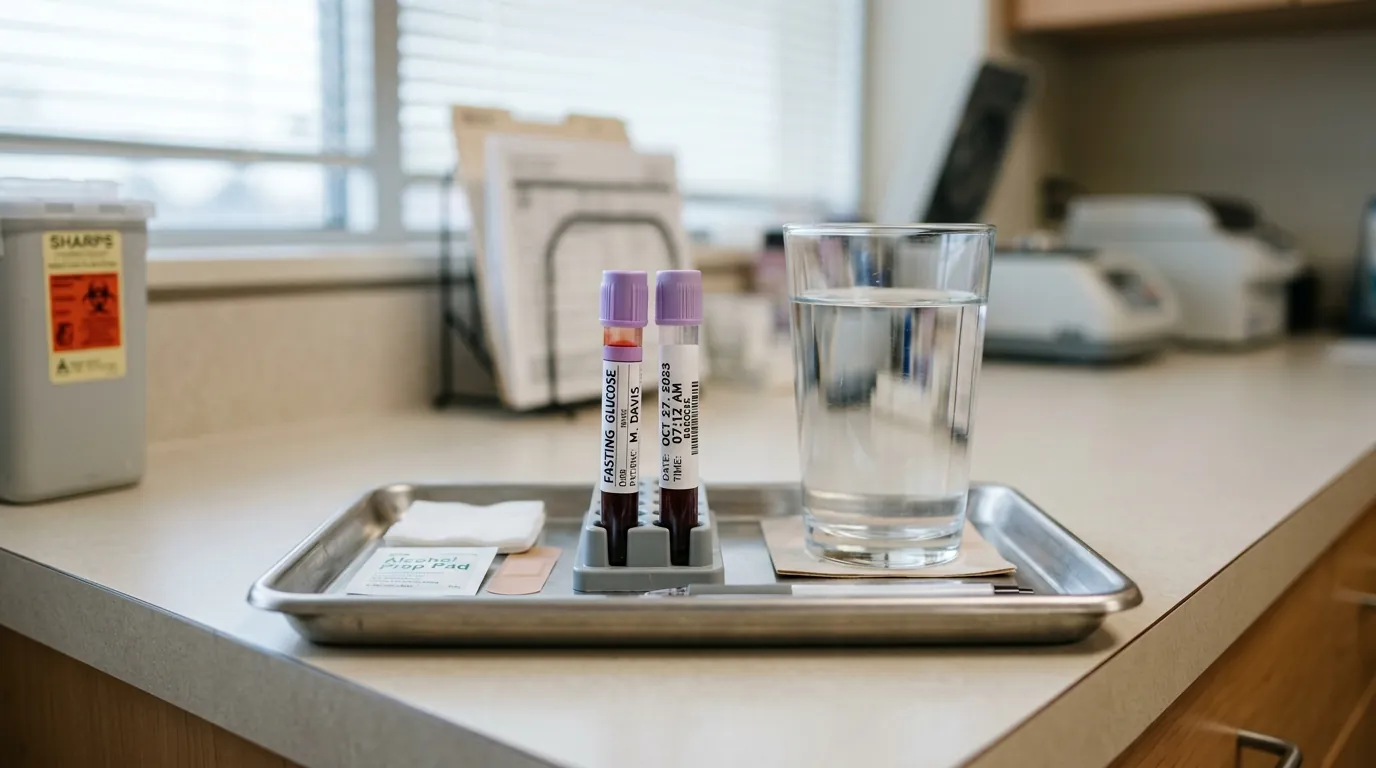
Fasting blood sugar (fasting plasma glucose, or FPG) is the concentration of glucose in your blood after a minimum of 8 hours without consuming food or caloric beverages. Water is permitted. The test is typically performed first thing in the morning before breakfast and represents the baseline glucose level that your body maintains overnight through liver glycogen release and gluconeogenesis. A normal fasting blood sugar is 70 to 99 mg/dL. A reading of 100 to 125 mg/dL meets the American Diabetes Association diagnostic criteria for prediabetes (also called impaired fasting glucose). A reading of 126 mg/dL or higher on two separate occasions confirms a diabetes diagnosis. These thresholds were established based on epidemiological data showing that the risk of diabetic retinopathy rises sharply above a fasting glucose of 126 mg/dL — the 2003 Expert Committee on the Diagnosis and Classification of Diabetes Mellitus selected this cutoff because it marks the inflection point on the complications risk curve. Approximately 96 million American adults (38% of the adult population) have prediabetes-range fasting glucose, and 80% of them are unaware of it, according to the CDC 2022 National Diabetes Statistics Report.
What Affects Fasting Blood Sugar Levels
Seven primary factors influence fasting blood sugar independently of diabetes status. Hepatic glucose output is the dominant driver — the liver continuously releases glucose from stored glycogen and through gluconeogenesis to maintain brain function during the overnight fast. Cortisol, which follows a circadian rhythm peaking between 6 AM and 8 AM, stimulates the liver to release 2 to 3 mg of glucose per kilogram of body weight per minute during the early morning hours, contributing to the dawn phenomenon. Sleep quality has a direct impact: a controlled study at the University of Chicago (Spiegel et al., 1999, The Lancet) showed that restricting sleep to 4 hours for 6 nights raised fasting glucose from 90 mg/dL to 105 mg/dL and reduced glucose disposal rate by 40% — effectively inducing a prediabetic state in young, healthy adults. Alcohol consumption the previous evening can paradoxically lower fasting glucose by 15 to 30 mg/dL by inhibiting hepatic gluconeogenesis. Evening meal composition matters: a high-glycemic dinner raises fasting glucose the next morning by 5 to 15 mg/dL compared to a low-glycemic dinner, due to sustained insulin resistance from the late glucose surge. Chronic stress elevates baseline cortisol, raising fasting glucose by 10 to 20 mg/dL. Body composition is the most significant long-term factor — each 10-pound increase in visceral fat raises fasting glucose by approximately 3 to 5 mg/dL through increased hepatic insulin resistance.
How CGMs Reveal Overnight Glucose Patterns
A single morning fasting glucose test provides one number — a snapshot of where glucose was at the moment of the blood draw. A continuous glucose monitor provides the complete overnight story: the gradual decline after dinner, the overnight nadir, the timing and magnitude of the dawn phenomenon rise, and any nocturnal hypoglycemia episodes that would be completely invisible to a morning fingerstick. CGM data from the International Diabetes Center shows that adults with prediabetes-range fasting glucose (100-125 mg/dL) have normal overnight glucose patterns in 60% of cases — their elevated fasting reading is entirely due to a pronounced dawn phenomenon that spikes glucose in the final 1-2 hours before waking. This distinction matters clinically because treating dawn phenomenon-driven fasting hyperglycemia requires different strategies (evening metformin, bedtime protein snack, morning exercise) than treating genuine overnight insulin resistance. A 2021 study in Diabetes Technology and Therapeutics analyzed 12,000 CGM traces from adults with prediabetes and found that 34% had overnight glucose dips below 60 mg/dL that self-corrected before morning — reactive nocturnal hypoglycemia that triggers a counter-regulatory hormone surge and contributes to elevated fasting glucose. This Somogyi effect is impossible to detect without continuous overnight monitoring.
Fasting Blood Sugar and Prediabetes
Impaired fasting glucose (IFG) — defined as fasting glucose of 100 to 125 mg/dL — is the most common pathway to a prediabetes diagnosis in the United States. The Diabetes Prevention Program (DPP) trial, the largest diabetes prevention study ever conducted (3,234 participants over 3 years, published in the New England Journal of Medicine in 2002), demonstrated that lifestyle intervention reduced the progression from prediabetes to type 2 diabetes by 58% compared to placebo. The key interventions were 150 minutes per week of moderate exercise and 7% body weight loss. Metformin reduced progression by 31%. These results have been confirmed in follow-up studies spanning 15 years. For people in the fasting glucose range of 100-110 mg/dL, the annual conversion rate to diabetes is approximately 4-5%. For those in the 111-125 mg/dL range, the annual conversion rate rises to 8-12%. CGM use in prediabetes is an emerging clinical application — over-the-counter devices like the Dexcom Stelo and Abbott Lingo are specifically marketed to prediabetic users who want to identify which foods, activities, and behaviors drive their glucose above 140 mg/dL postmeal. Early CGM data from the January AI platform suggests that prediabetic users who modified their diet based on CGM feedback reduced their average fasting glucose by 8 to 12 mg/dL over 8 weeks.
How to Improve Fasting Blood Sugar
Reducing fasting blood sugar requires addressing the overnight factors that elevate it — primarily hepatic glucose output, dawn phenomenon, and insulin resistance. Five evidence-based strategies produce measurable results within 2 to 8 weeks. First, a 10-minute post-dinner walk reduces next-morning fasting glucose by 12% (study: DiPietro et al., Diabetes Care, 2013) by depleting liver glycogen before sleep. Second, a bedtime snack combining 15-20 grams of protein with 10-15 grams of fat and minimal carbohydrates stabilizes overnight glucose by slowing the dawn phenomenon surge — the protein triggers a small glucagon response that partially offsets the cortisol-driven glucose spike. Third, consistent sleep of 7-8 hours maintains insulin sensitivity; each additional hour of sleep below 7 hours increases fasting glucose by approximately 5 mg/dL. Fourth, 150 minutes per week of moderate-intensity exercise (brisk walking at 3.5 mph) improves hepatic insulin sensitivity within 2 weeks, reducing fasting glucose by 10 to 20 mg/dL in people with prediabetes. Fifth, visceral fat reduction — achievable through caloric deficit and resistance training — is the most potent long-term strategy: the DPP trial showed that each kilogram of weight loss reduced fasting glucose by approximately 2 mg/dL. A CGM provides the feedback loop that makes these interventions measurable — users can see the direct impact of a post-dinner walk or an extra hour of sleep on the next morning glucose reading.