
Dawn Phenomenon: Why Blood Sugar Rises Before Breakfast
The dawn phenomenon raises blood sugar by 20-60 mg/dL between 3-8 AM due to cortisol, growth hormone, and glucagon surges. Affects 50% of diabetics. CGM detection and management strategies.
What Is the Dawn Phenomenon?
The dawn phenomenon is a natural physiological process in which blood sugar rises between 3 AM and 8 AM due to the circadian release of counter-regulatory hormones. Cortisol, growth hormone, and glucagon all increase during the pre-dawn hours as the body prepares for waking activity, signaling the liver to convert stored glycogen into glucose and release it into the bloodstream. In non-diabetic adults, this glucose release is matched by a corresponding increase in insulin secretion, keeping blood sugar within the normal range. In people with diabetes or insulin resistance, the insulin response is insufficient to counteract the hormone-driven glucose release, resulting in elevated fasting blood sugar readings of 20 to 60 mg/dL above the overnight nadir. The term was first described by Schmidt et al. in a 1981 paper in Diabetes Care, based on continuous glucose sampling in hospitalized patients with type 1 diabetes. The dawn phenomenon affects approximately 50% of people with type 1 diabetes and 55% of people with type 2 diabetes, making it one of the most common causes of elevated fasting glucose — and one of the most difficult to detect without continuous overnight monitoring.
The Hormonal Mechanism Behind the Dawn Rise
Four counter-regulatory hormones drive the dawn phenomenon, each with a distinct role. Cortisol is the primary driver — it follows a circadian rhythm with the nadir at approximately midnight and the peak between 6 AM and 8 AM. Cortisol stimulates hepatic gluconeogenesis (the production of new glucose from amino acids and lactate) and simultaneously reduces peripheral insulin sensitivity in muscle and fat tissue by 20 to 30%. Growth hormone surges during the second half of sleep (between 2 AM and 5 AM) and directly inhibits insulin signaling in muscle cells, reducing glucose uptake by 15 to 25%. Glucagon, secreted by the pancreatic alpha cells, increases between 4 AM and 7 AM and signals the liver to break down glycogen into glucose. Epinephrine (adrenaline) contributes a smaller but measurable effect by inhibiting insulin secretion and stimulating liver glucose output. The combined effect of these four hormones produces a pre-dawn glucose output from the liver of approximately 6 to 8 mg/kg/hour — roughly double the overnight baseline rate. In a person with type 2 diabetes and hepatic insulin resistance, this translates to a glucose rise of 30 to 60 mg/dL between the overnight nadir (typically 2-3 AM) and the pre-breakfast reading (6-8 AM).
Dawn Phenomenon vs Somogyi Effect
The Somogyi effect (rebound hyperglycemia) is often confused with the dawn phenomenon, but the two conditions have fundamentally different mechanisms, different clinical implications, and different treatment approaches. The dawn phenomenon is a hormone-driven glucose rise that occurs without any preceding hypoglycemia — CGM data shows a steady, gradual upward slope beginning at 3-4 AM from a stable overnight baseline of 80 to 110 mg/dL. The Somogyi effect, by contrast, begins with a glucose drop below 60 to 65 mg/dL during the night (typically 1-3 AM), which triggers a counter-regulatory hormone surge that overshoots and drives glucose up to 180 to 250 mg/dL by morning. The morning fasting glucose may look identical for both conditions (130-160 mg/dL), but the treatment is opposite: dawn phenomenon is managed by reducing overnight hepatic glucose output (with evening metformin or basal insulin adjustments), while the Somogyi effect is managed by reducing the overnight insulin dose or adding a bedtime snack to prevent the initial hypoglycemia. A continuous glucose monitor is the only practical way to distinguish between the two, because the overnight glucose trace reveals whether a preceding low exists. A 2018 analysis at the Barbara Davis Center for Diabetes found that 75% of patients referred for "refractory dawn phenomenon" actually had Somogyi effect when CGM data was reviewed.
How CGM Detects and Quantifies the Dawn Phenomenon
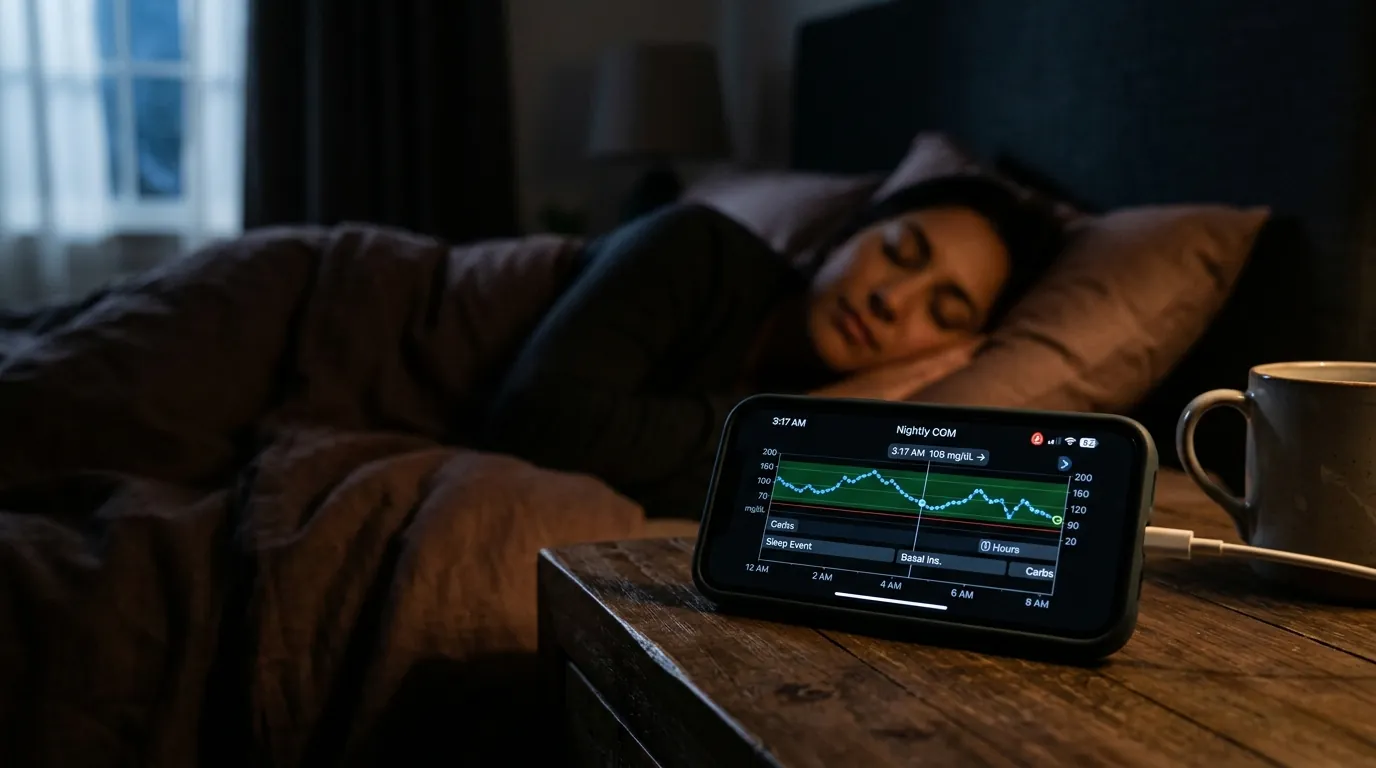
A continuous glucose monitor is the gold standard tool for identifying the dawn phenomenon because it captures the complete overnight glucose profile at 1 to 5 minute intervals. Without CGM, detecting the dawn phenomenon requires hospitalization with hourly blood draws between midnight and 8 AM — a cumbersome, expensive procedure that is rarely performed in clinical practice. CGM data makes detection simple: the clinician or patient examines the overlay of 7 to 14 overnight glucose traces on an Ambulatory Glucose Profile (AGP) report and looks for a consistent upward inflection beginning between 3 AM and 5 AM. The magnitude of the dawn rise is calculated as the difference between the overnight nadir and the pre-breakfast glucose. A dawn rise of less than 20 mg/dL is considered physiologically normal. A rise of 20 to 40 mg/dL is mild and may not require intervention. A rise exceeding 40 mg/dL is clinically significant and warrants pharmacological or behavioral management. CGM systems with customizable high-glucose alerts can be programmed to alarm if fasting glucose exceeds a specific threshold (e.g., 130 mg/dL) by a specific time (e.g., 6 AM), providing an early warning that the dawn phenomenon is escalating.
Management Strategies for the Dawn Phenomenon
Five evidence-based strategies reduce the dawn phenomenon glucose rise by 15 to 40 mg/dL when applied consistently. First, taking the diabetes medication metformin in the evening (extended-release formulation at bedtime) suppresses overnight hepatic glucose output and reduces the fasting glucose rise by 20 to 30 mg/dL — a strategy supported by a 2010 study in Diabetes Care (Kazda et al.) involving 230 patients with type 2 diabetes. Second, adjusting basal insulin timing and dose — for insulin users, shifting the basal injection from bedtime to 10 PM or using an insulin pump with a pre-dawn basal rate increase of 20-30% between 3 AM and 7 AM can flatten the dawn rise. Third, a high-protein, low-carbohydrate bedtime snack (e.g., 2 tablespoons of peanut butter) provides a slow-release energy source that partially offsets the cortisol-driven glucose spike. Fourth, moderate morning exercise (a 15-minute walk immediately upon waking) accelerates muscle glucose uptake and burns through the dawn glucose within 20 to 30 minutes, effectively resetting fasting glucose to the target range. Fifth, improving sleep quality — sleeping 7 to 8 hours in a dark, cool room (65-68 degrees Fahrenheit) — normalizes the cortisol circadian rhythm and reduces the dawn surge by 10 to 15 mg/dL. CGM provides the feedback loop for all of these strategies, allowing the user to compare overnight traces before and after each intervention.