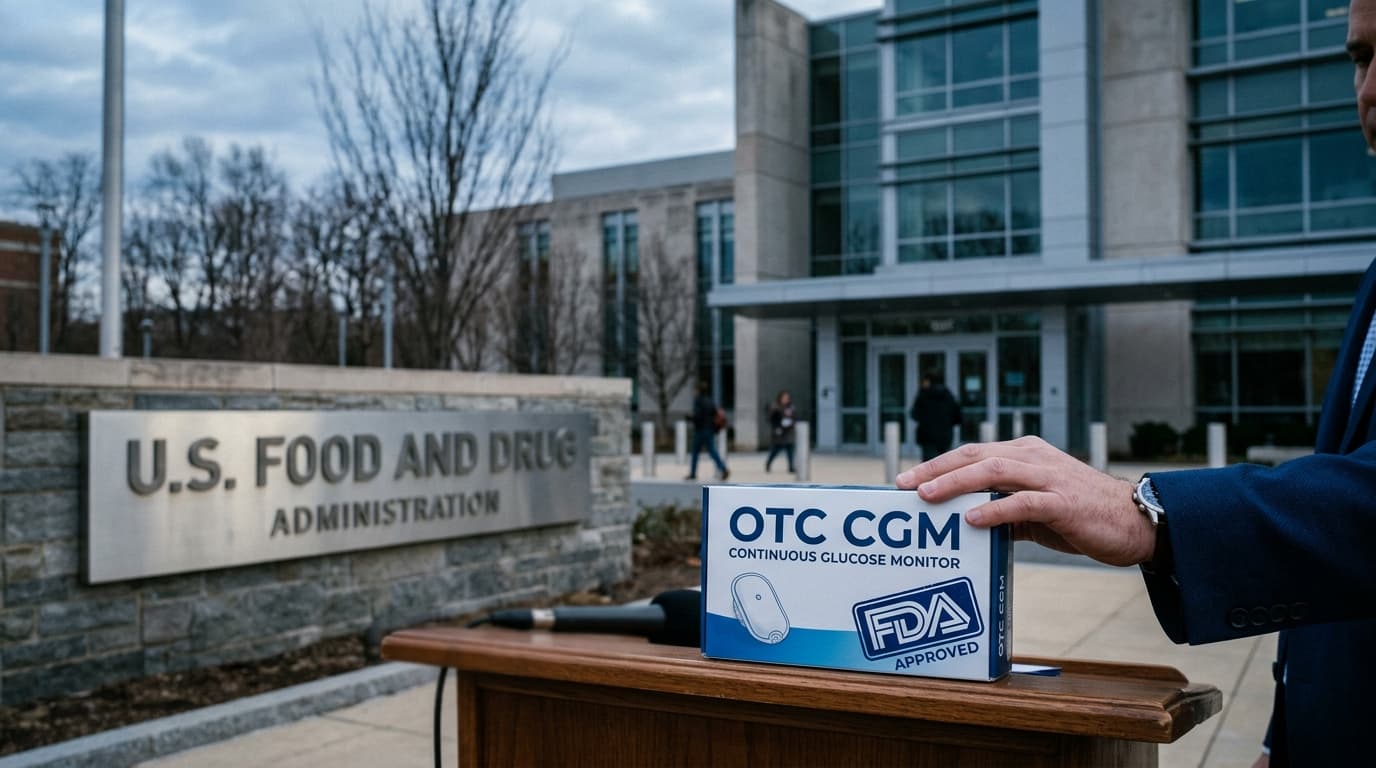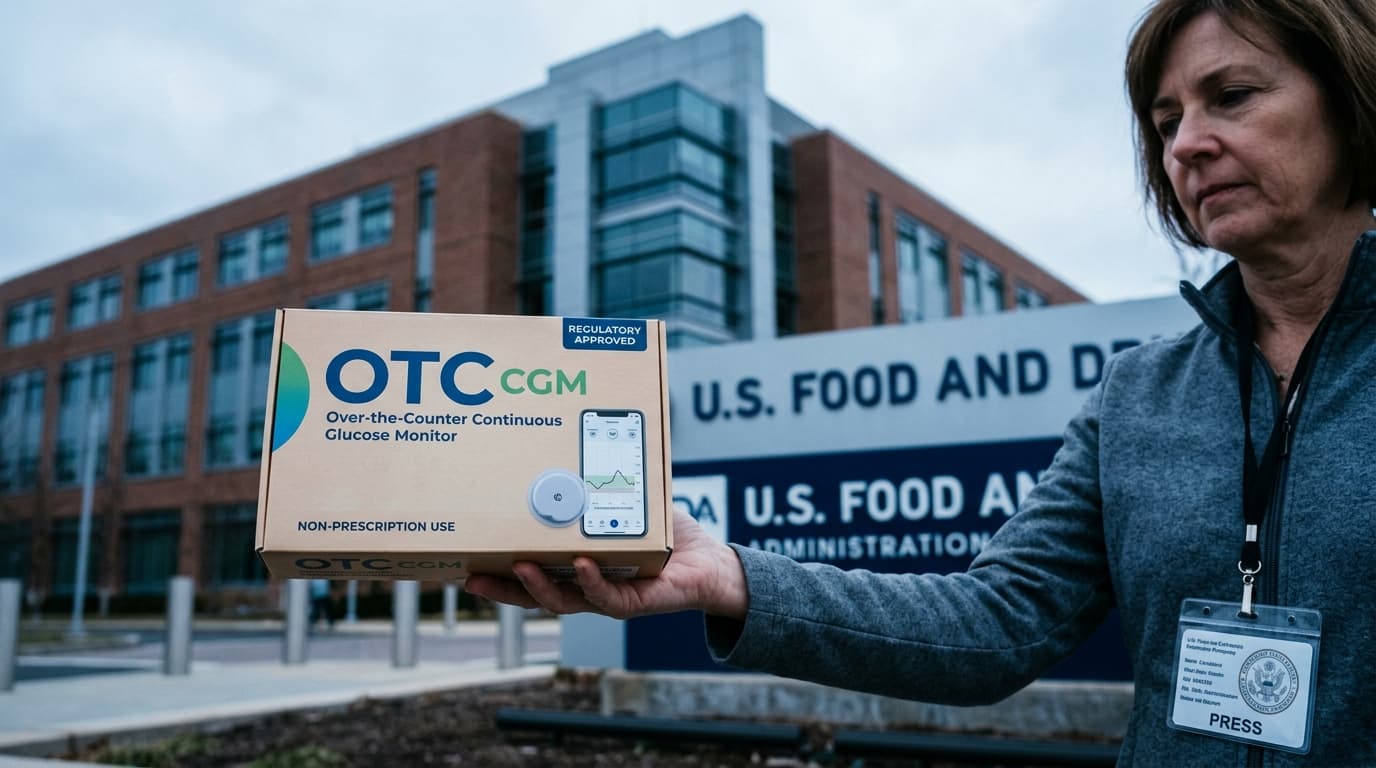
In March 2024 the FDA established a brand-new regulatory pathway for over-the-counter continuous glucose monitors, fundamentally changing who can access real-time blood sugar data. For the first time in the history of glucose monitoring, healthy adults and people with prediabetes can walk into a pharmacy—or order online—and purchase a CGM sensor without a prescription.
The Two Devices That Launched the OTC Era
Dexcom Stelo received FDA clearance on March 5, 2024, making it the first over-the-counter continuous glucose monitor available in the United States. The Stelo sensor lasts 15 days, streams glucose readings to a smartphone app every 5 minutes, and carries a retail price of roughly $99 per month (two sensors). It is designed for adults 18 and older who do not use insulin.
Abbott Lingo followed shortly after with its own OTC clearance. Lingo pairs a 14-day Libre-based sensor with an app built around metabolic coaching rather than medical management. The app translates raw glucose data into a proprietary "Lingo Score" and provides nutrition and exercise nudges. Abbott priced Lingo at approximately $49 per two-week sensor, undercutting Stelo by a significant margin.
What Changed at the FDA
Before 2024 every CGM on the market was classified as a Class II medical device requiring a prescription. The FDA's new De Novo pathway for OTC CGMs created a separate classification—specifically for devices intended to measure glucose trends in non-insulin-using adults. This classification imposes different labeling rules: OTC CGMs cannot display glucose rate-of-change arrows the same way prescription devices do, and they must include consumer-friendly warnings about limitations.
Why This Matters for 96 Million Americans
According to the CDC, 96 million American adults have prediabetes, and 80 percent of them do not know it. An A1C test captures a 3-month average but misses the post-meal glucose spikes that often signal early insulin resistance. A continuous glucose monitor reveals those hidden spikes in real time, giving users the data they need to make immediate dietary and exercise changes.
The over-the-counter availability removes two major barriers: the cost of a doctor visit to obtain a prescription and the stigma some people feel about seeking a "diabetes device." With OTC CGMs, glucose monitoring shifts from disease management to proactive wellness—a market analysts estimate could exceed $5 billion by 2030.
Pricing and Insurance Implications
Because Stelo and Lingo are classified as wellness devices rather than therapeutic devices, health insurance and Medicare generally do not cover them. Consumers pay entirely out of pocket. However, both devices are eligible for purchase with HSA and FSA funds, which softens the cost for workers enrolled in high-deductible health plans.
The Road Ahead
Industry analysts expect Medtronic and several startup CGM manufacturers to pursue OTC clearances in 2025 and 2026. Greater competition will drive sensor prices lower and push app ecosystems toward richer features—personalized nutrition coaching, integration with fitness trackers, and predictive glucose alerts powered by machine learning. The OTC CGM category is still in its infancy, but the FDA's 2024 decision marks a turning point: glucose data is no longer locked behind a prescription pad.