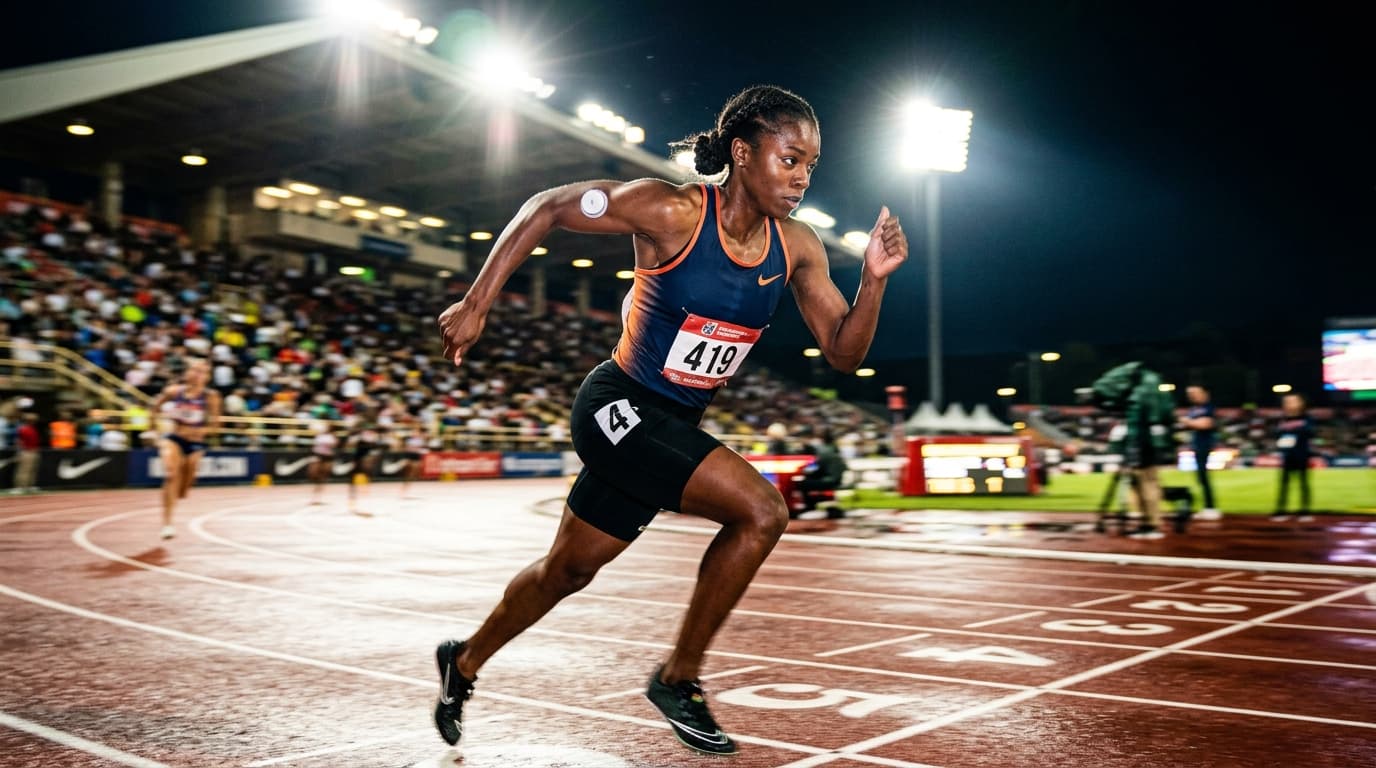
Professional athletes operate at the boundary of human performance, and the margin between winning and losing often comes down to fueling. A growing number of endurance athletes, cycling teams, and professional sports organizations now use continuous glucose monitors to track blood sugar in real time during training and competition. The goal is simple: keep glucose in an optimal range so the body never runs out of fuel.
Why Glucose Matters for Athletic Performance
During high-intensity exercise, skeletal muscle can burn through 1-2 grams of glucose per minute. When blood glucose drops below approximately 70 mg/dL during prolonged effort, athletes experience what endurance sports call "bonking"—a sudden, catastrophic loss of energy caused by glycogen depletion. Traditional sports nutrition relies on timed carbohydrate intake (30-90 grams per hour depending on intensity), but individual absorption rates vary dramatically.
A continuous glucose monitor eliminates the guesswork. By watching glucose trends in real time, an athlete or their support team can adjust carbohydrate intake on the fly—taking a gel 10 minutes earlier than planned if glucose is trending down, or skipping a feeding if levels are stable at 120 mg/dL.
Supersapiens and the Abbott Partnership
Supersapiens was the first company to market a CGM system specifically for athletes. Founded in 2019, the company partnered with Abbott to use FreeStyle Libre sensors paired with a sports-focused app that displays glucose data as a "Glucose Performance Zone" between 80 and 140 mg/dL. The app integrates with cycling computers (Garmin, Wahoo) so riders can see glucose on their handlebars alongside power output and heart rate.
Multiple WorldTour cycling teams—including INEOS Grenadiers and Jumbo-Visma—used Supersapiens during the 2022 and 2023 seasons. Team nutritionists reported that real-time glucose data allowed them to individualize race-day nutrition plans down to specific kilometer markers on a stage route.
Real-World Examples
Ironman triathlon competitors represent one of the most data-intensive use cases. A full Ironman involves 8-17 hours of continuous exercise across swimming, cycling, and running, requiring 300-500 grams of total carbohydrate intake. CGM data from training sessions helps athletes identify which carbohydrate sources (gels, drinks, solid foods) produce the smoothest glucose curves with the least gastrointestinal distress.
In team sports, NBA and NFL organizations have explored CGMs during training camps to monitor how players respond to different pre-game meals. A 2023 report from the NBA Players Association noted that 12 teams had experimented with CGM programs, primarily focused on sleep and recovery nutrition. Players who maintained overnight glucose between 80-100 mg/dL reported better subjective sleep scores.
Recovery Monitoring
Post-exercise glucose management is as important as in-session fueling. After a hard workout, muscles enter a 2-hour glycogen resynthesis window during which glucose uptake is dramatically elevated. A CGM allows athletes to confirm that their recovery nutrition is actually restoring glycogen—visible as a sustained post-meal glucose elevation of 140-160 mg/dL that gradually returns to baseline.
Athletes also use overnight CGM data to detect signs of overtraining. Chronically elevated fasting glucose (above 100 mg/dL) and disrupted overnight glucose patterns can indicate elevated cortisol and insufficient recovery—signals that traditional wellness metrics like resting heart rate might miss.
Limitations for Athletes
CGM sensors measure interstitial fluid glucose, which lags behind blood glucose by 5-15 minutes. During rapidly changing exercise conditions—such as a sprint finish in cycling—the CGM reading may not reflect the current physiological state. Athletes learn to read trend arrows rather than relying on the absolute number.
Sensor adhesion is another practical concern. Sweat, movement, and water exposure (swimming) can cause sensors to detach mid-event. Most athlete CGM users apply supplemental adhesive patches (such as SkinTac or Tegaderm overlays) to prevent sensor loss.
Despite these limitations, the trend is clear: continuous glucose monitoring is becoming standard equipment in the elite athlete's toolkit, moving from a niche biohacking gadget to a mainstream performance optimization tool.