
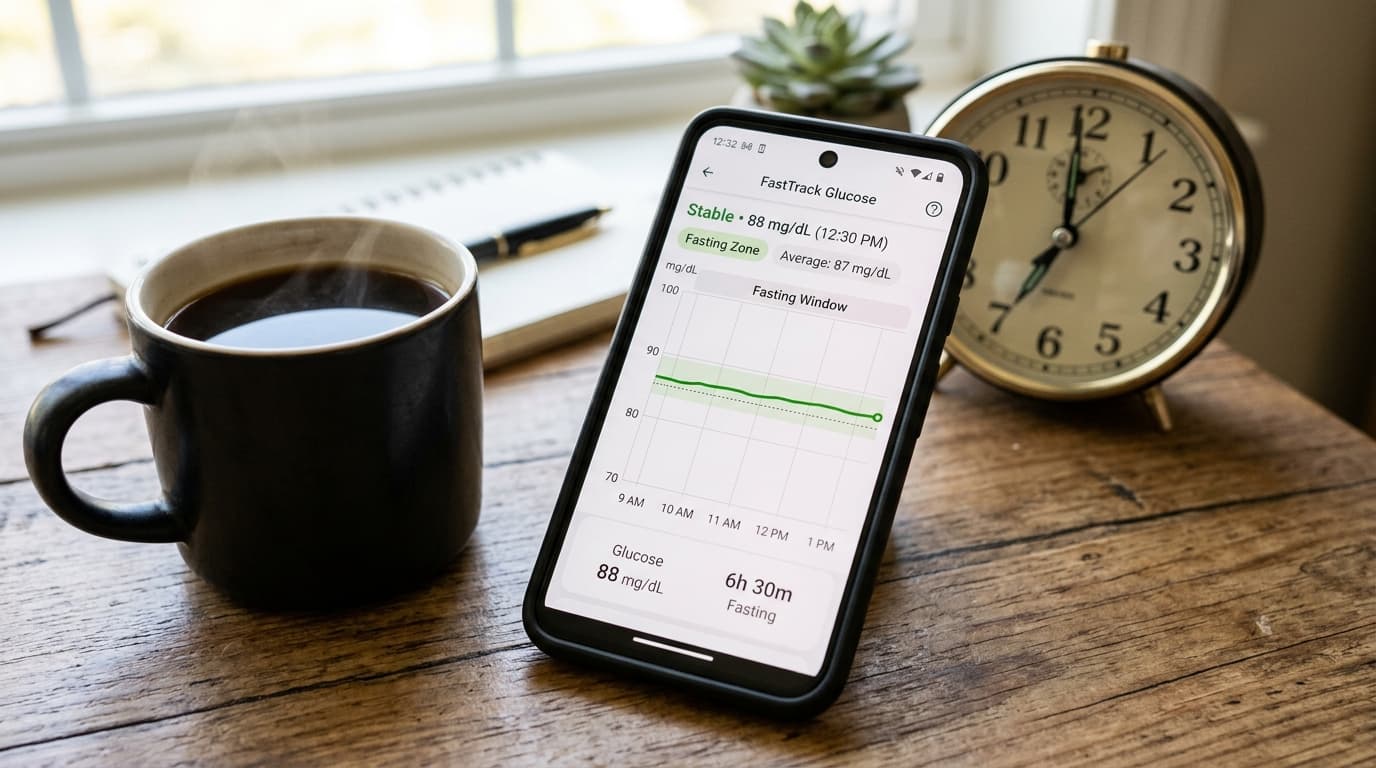
Breakfast is the meal with the most predictable glucose response because it follows an overnight fast when insulin sensitivity is relatively consistent. That makes it the ideal meal for controlled CGM testing. This experiment measured the blood sugar response to 10 popular American breakfasts using an Abbott FreeStyle Libre 3 sensor over 10 consecutive mornings.
Experiment Design
Each breakfast was consumed at 7:30 AM after an overnight fast of at least 12 hours. Fasting glucose was recorded before the first bite. Glucose was tracked continuously for 3 hours post-meal, and the peak glucose value, time to peak, and time to return to baseline were recorded. Portion sizes were standardized to approximately 400 calories per breakfast. The subject: a 38-year-old male, BMI 25.1, no diabetes, fasting glucose 89 mg/dL average.
The Results: 10 Breakfasts Ranked by Peak Glucose
**1. Frosted cereal with skim milk** — Peak: 187 mg/dL (+98 above fasting). Time to peak: 35 minutes. Return to baseline: 2 hours 40 minutes. The combination of refined grains, added sugar (12 g per serving), and skim milk (no fat to slow absorption) produced the highest spike of any breakfast tested.
**2. Orange juice with a plain bagel** — Peak: 179 mg/dL (+90). Time to peak: 40 minutes. Return to baseline: 2 hours 30 minutes. Liquid fructose from the juice combined with refined wheat produced a rapid double spike.
**3. Instant oatmeal with brown sugar** — Peak: 168 mg/dL (+79). Time to peak: 45 minutes. Return to baseline: 2 hours 20 minutes. Instant oats are pre-processed and absorb faster than steel-cut or rolled oats, amplifying the glucose response.
**4. Pancakes with maple syrup** — Peak: 164 mg/dL (+75). Time to peak: 50 minutes. Return to baseline: 2 hours 25 minutes. Refined flour plus concentrated sugar, tempered slightly by the fat in butter.
**5. Toast with jam and butter** — Peak: 151 mg/dL (+62). Time to peak: 45 minutes. Return to baseline: 2 hours. The butter added enough fat to moderate the spike compared to the dry-carb breakfasts above.
**6. Granola with whole milk and banana** — Peak: 148 mg/dL (+59). Time to peak: 50 minutes. Return to baseline: 2 hours 10 minutes. Whole milk fat slowed digestion, but the banana and honey-sweetened granola still drove a substantial elevation.
**7. Steel-cut oatmeal with walnuts and blueberries** — Peak: 132 mg/dL (+43). Time to peak: 55 minutes. Return to baseline: 1 hour 50 minutes. **Steel-cut oats produced a 36 mg/dL lower spike than instant oats**—a dramatic difference for the same base grain, explained by slower gastric emptying from the intact grain structure.
**8. Greek yogurt with berries and almonds** — Peak: 124 mg/dL (+35). Time to peak: 60 minutes. Return to baseline: 1 hour 40 minutes. High protein (20 g) and fat (12 g) from the yogurt and almonds blunted the glucose curve into a gentle hill.
**9. Eggs (2) with avocado and sourdough toast** — Peak: 118 mg/dL (+29). Time to peak: 65 minutes. Return to baseline: 1 hour 30 minutes. The protein-fat-fiber combination produced the second-flattest curve. Sourdough fermentation lowers the glycemic index compared to standard white bread by 25 percent (British Journal of Nutrition, 2022).
**10. Eggs (3) scrambled with vegetables, no toast** — Peak: 106 mg/dL (+17). Time to peak: 70 minutes. Return to baseline: 1 hour 10 minutes. **The lowest spike of any breakfast—barely distinguishable from fasting on the CGM graph.** Without meaningful carbohydrate content, glucose remained nearly flat.
The 81 mg/dL Difference Between Best and Worst
The gap between the highest spike (187 mg/dL from frosted cereal) and the lowest (106 mg/dL from scrambled eggs) is 81 mg/dL. Both breakfasts contained roughly 400 calories. The difference is entirely attributable to macronutrient composition and food processing level.
This finding aligns with glycemic index research but demonstrates something GI tables cannot: the real-world glucose response in an individual body. Published glycemic index values are population averages; a 2015 study in Cell by Zeevi et al. showed that individual glucose responses to identical foods can vary by as much as 60 percent due to differences in gut microbiome composition, insulin sensitivity, and genetics.
Three Principles from the Data
**Protein and fat at breakfast are non-negotiable for glucose stability.** Every breakfast that included at least 15 grams of protein and 10 grams of fat peaked below 135 mg/dL. Every breakfast that was predominantly carbohydrate with minimal protein or fat peaked above 150 mg/dL.
**Processing level matters more than the food itself.** Instant oatmeal spiked to 168 mg/dL; steel-cut oatmeal from the same brand spiked to 132 mg/dL. The grain is identical—the difference is mechanical processing that breaks down the starch structure and accelerates digestion.
**Liquid carbohydrates are the worst offenders.** Orange juice, smoothies, and sugary beverages bypass chewing and gastric processing, delivering glucose to the small intestine faster than any solid food. If you drink juice, pairing it with a high-protein food reduces the spike by 20-30 mg/dL based on published data in the American Journal of Clinical Nutrition (2019).
Practical Takeaway
Choosing steel-cut oats with nuts over instant oatmeal with sugar, or eggs with avocado over cereal with skim milk, does not require willpower—it requires data. A 2-week CGM experiment testing your own breakfasts costs $49-$99 with an OTC sensor like Abbott Lingo or Dexcom Stelo and delivers personalized answers that no glycemic index chart can match. For a comparison of OTC CGM options, see our reviews of the Dexcom Stelo and FreeStyle Libre 3.