
A blood sugar drop from 140 mg/dL to 65 mg/dL triggers the same hormonal cascade as a panic attack: adrenaline surges, cortisol rises, heart rate accelerates, and the hands begin to tremble. For the estimated 40 million Americans who experience anxiety disorders, unstable blood sugar may be an unrecognized contributing factor—and a continuous glucose monitor can reveal whether glucose variability is fueling their symptoms.
The Biochemistry of Glucose and Anxiety
When blood sugar drops rapidly—a condition called reactive hypoglycemia—the body activates the sympathetic nervous system to mobilize emergency glucose from the liver. This counter-regulatory response releases epinephrine (adrenaline) and cortisol, producing physical symptoms that are clinically indistinguishable from a panic attack:
- Rapid heartbeat (palpitations) - Sweating and trembling - Feelings of dread or impending doom - Difficulty concentrating - Irritability and restlessness
A 2020 study published in Psychoneuroendocrinology measured cortisol and anxiety scores in 100 healthy adults wearing continuous glucose monitors. Participants who experienced glucose drops greater than 30 mg/dL within a 60-minute window reported significantly higher anxiety scores on the State-Trait Anxiety Inventory (STAI), with a dose-response relationship: larger drops correlated with more intense anxiety symptoms.
Reactive Hypoglycemia: The Hidden Anxiety Trigger
Reactive hypoglycemia occurs when blood sugar drops below 70 mg/dL within 2-4 hours after eating, typically following a high-glycemic meal that provokes an excessive insulin response. The pattern on a CGM graph is distinctive: a sharp post-meal spike to 160-180 mg/dL, followed by an equally sharp plunge to 60-70 mg/dL.
**An estimated 15-20 percent of people without diabetes experience reactive hypoglycemia,** according to research published in the Journal of Clinical Endocrinology & Metabolism. Many of these individuals have been diagnosed with generalized anxiety disorder, panic disorder, or "unexplained" symptoms without anyone examining their glucose data.
A 2019 study in Nutritional Neuroscience followed 200 patients with diagnosed anxiety disorders and found that 37 percent met criteria for reactive hypoglycemia when tested with an oral glucose tolerance test paired with CGM monitoring. When the reactive-hypoglycemia subgroup modified their diet to reduce glycemic variability (more protein and fiber, fewer refined carbohydrates), anxiety symptom scores improved by 42 percent over 8 weeks—without any change in psychiatric medication.
Glucose Variability and Mood: The CGM Evidence
High glucose variability—frequent large swings between highs and lows—is associated with worse mood outcomes independent of average glucose level. A person with an average glucose of 100 mg/dL who swings between 60 and 180 mg/dL throughout the day experiences more anxiety and fatigue than someone with the same average but a stable range of 85-115 mg/dL.
The coefficient of variation (CV), calculated from CGM data, quantifies this instability. A 2021 study in Diabetes Technology & Therapeutics found that every 5-percentage-point increase in CV was associated with a 1.8-point increase in the Patient Health Questionnaire-9 (PHQ-9) depression score and a 2.1-point increase in the Generalized Anxiety Disorder-7 (GAD-7) score among people with type 2 diabetes.
For non-diabetic individuals, the relationship follows the same pattern at lower glucose values. Research from the Stanford School of Medicine using Dexcom G6 sensors in 500 metabolically healthy adults showed that participants in the highest quartile of glucose variability (CV above 22 percent) reported 31 percent more anxiety symptoms than those in the lowest quartile (CV below 14 percent).
The Cortisol-Glucose Feedback Loop
Anxiety and blood sugar instability create a self-reinforcing cycle. Psychological stress triggers cortisol release, which raises blood sugar by stimulating hepatic glucose output. The elevated glucose then provokes an insulin response, which can overshoot and cause a rebound dip—triggering more adrenaline and more anxiety.
CGM data from stressed individuals shows a characteristic "sawtooth" glucose pattern: repeated rises and falls of 30-50 mg/dL throughout the day, even without significant dietary changes. This pattern is visible on a Dexcom G7 or FreeStyle Libre 3 within 2-3 days of monitoring and distinguishes stress-driven glucose instability from diet-driven variability.
What CGM Data Can (and Cannot) Tell You
A continuous glucose monitor reveals whether blood sugar instability coincides with anxiety symptoms. The correlation is actionable: if your CGM shows a glucose drop to 65 mg/dL every time you experience a panic-like episode at 3 PM, the intervention is dietary (more protein at lunch, fewer refined carbs), not pharmaceutical.
**A CGM cannot diagnose an anxiety disorder.** Glucose variability is one contributing factor among many, including neurotransmitter imbalances, trauma history, genetic predisposition, and environmental stressors. The purpose of glucose monitoring in the context of mental health is to identify and eliminate one modifiable trigger—not to replace psychiatric evaluation.
Practical Steps for CGM Users
For anyone experiencing anxiety alongside blood sugar instability visible on their CGM data, 4 evidence-based strategies reduce glucose variability and may improve symptoms:
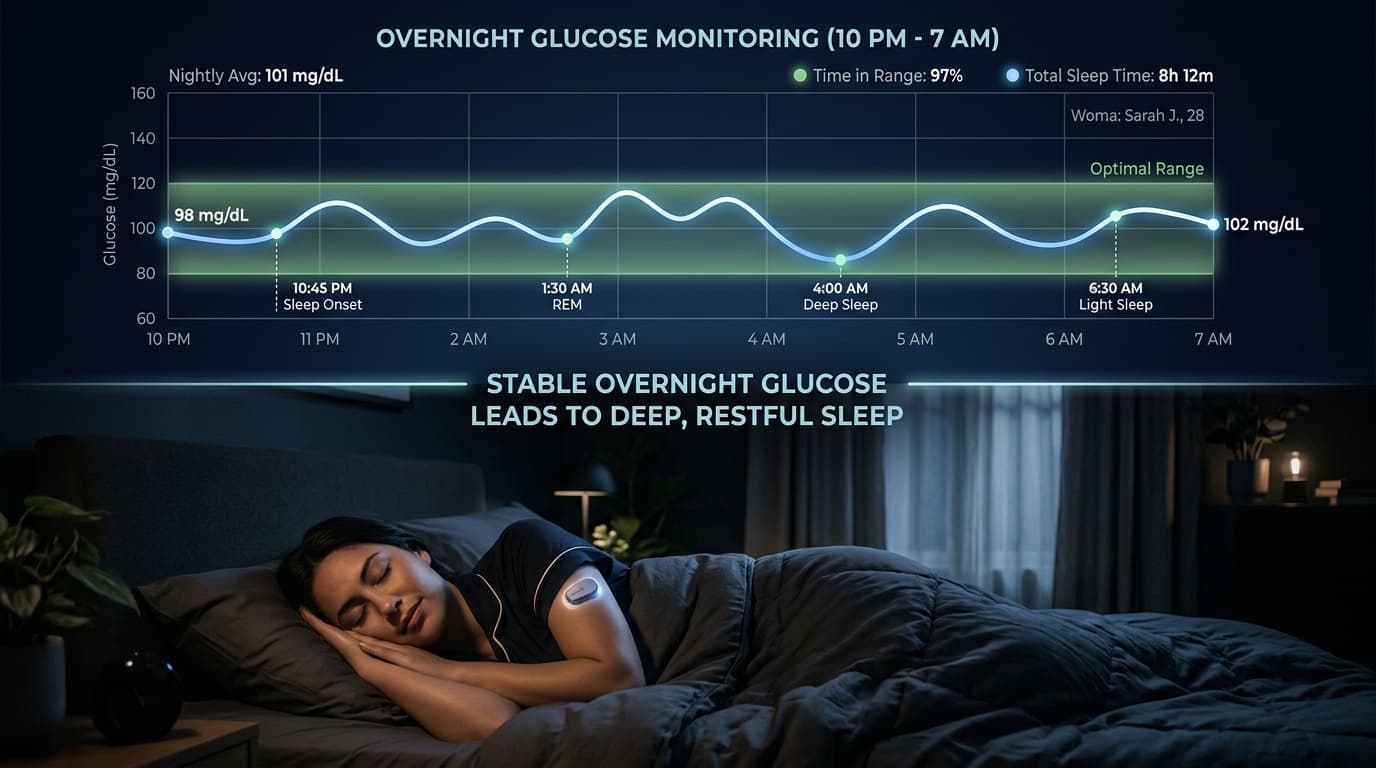
1. **Eat protein with every meal and snack.** Protein slows carbohydrate absorption and prevents the spike-crash cycle. Aim for 20-30 grams per meal. 2. **Eliminate or reduce liquid sugar.** Juice, soda, and sweetened coffee drinks produce the fastest glucose spikes and the steepest subsequent crashes. 3. **Walk for 10-15 minutes after meals.** Post-meal movement reduces peak glucose by 15-25 mg/dL, preventing the overshoot that leads to reactive dips. 4. **Monitor overnight glucose.** Nocturnal hypoglycemia (drops below 70 mg/dL during sleep) disrupts sleep architecture and raises morning cortisol, priming the anxiety response before the day even begins. The glucose-sleep connection is well-documented in CGM research.
The link between blood sugar and mental health is not speculative—it is measurable, and a CGM makes it visible in real time.